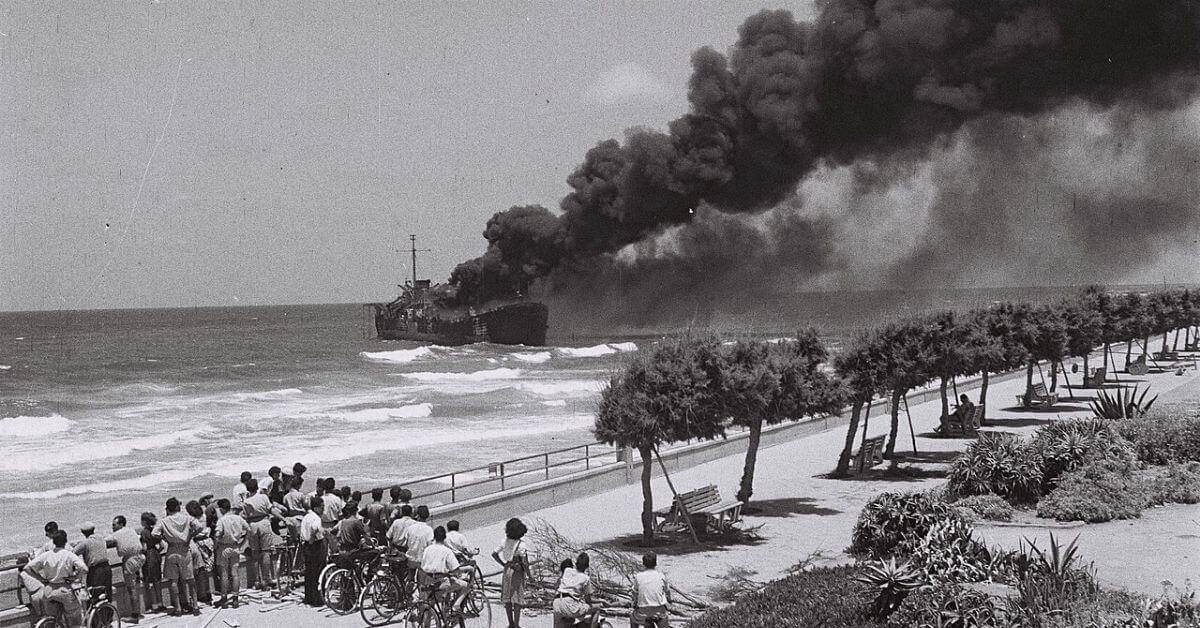
The discovery of the Altalena's wreck, decades after it was scuttled off the Mediterranean coast, is not merely a footnote to a bitter chapter in 1948. It is a reminder that the sea does not forget, and neither should we. The ship, which sailed from Marseille carrying weapons and immigrants for the Irgun, was shelled on then-Prime Minister David Ben-Gurion's orders, a decision that crystallized the fragile line between a nascent state's survival and the specter of civil war. For those of us who study the ocean as an archive of human decisions, this find is less about treasure hunting and more about reading a page of history that was written in gunpowder and saltwater.
This is where the story connects to the broader maritime concerns we track daily. The same waters that hide the Altalena are now the focus of modern security dialogues, from the Protecting Maritime Routes: India and Iran Prioritize Ocean Safety talks to the proposed Joint Navigation Corridor for the Strait of Hormuz. The past was defined by who controlled the guns on the waves; today, it is about who ensures the safe passage of goods and energy. And yet, the underlying tension remains constant: the sea is a strategic arena where missteps have lethal consequences. Even the India Considers Refurbished Kilo Submarines Amidst Fleet Modernization reflects a similar calculus, where naval power is seen as a stabilizing force, though its use always carries the risk of escalation.
Our take is straightforward: the Altalena's wreck is a powerful piece of empirical evidence that the past is never fully buried. For researchers and policymakers, this discovery offers a chance to calibrate our understanding of that conflict with physical data, rather than relying solely on contested memory. It also serves as a practical lesson for our readers involved in marine archaeology or underwater salvage: technology has advanced to the point where we can locate and document these sites, but the harder question is what we do with them. Do we disturb the wreck to extract artifacts, or do we leave it as a war grave and a monument? That decision requires a measured, peer-reviewed approach, not a rush to sensationalism.
If a reader asked us what to make of this, we would say this: the Altalena's discovery is a reminder that the ocean is the ultimate integrated data ecosystem, holding records of our conflicts and collaborations. The concrete point to watch is how Israel chooses to handle the site. Will they declare it a protected heritage zone, or will they permit dives and further study? That choice will set a precedent for how other nations treat their own maritime history, especially in contested waters. The wreck is not just a relic; it is a reference point. And in a region where the sea is increasingly central to both security and identity, how we read that reference point matters more than the thrill of the find itself.