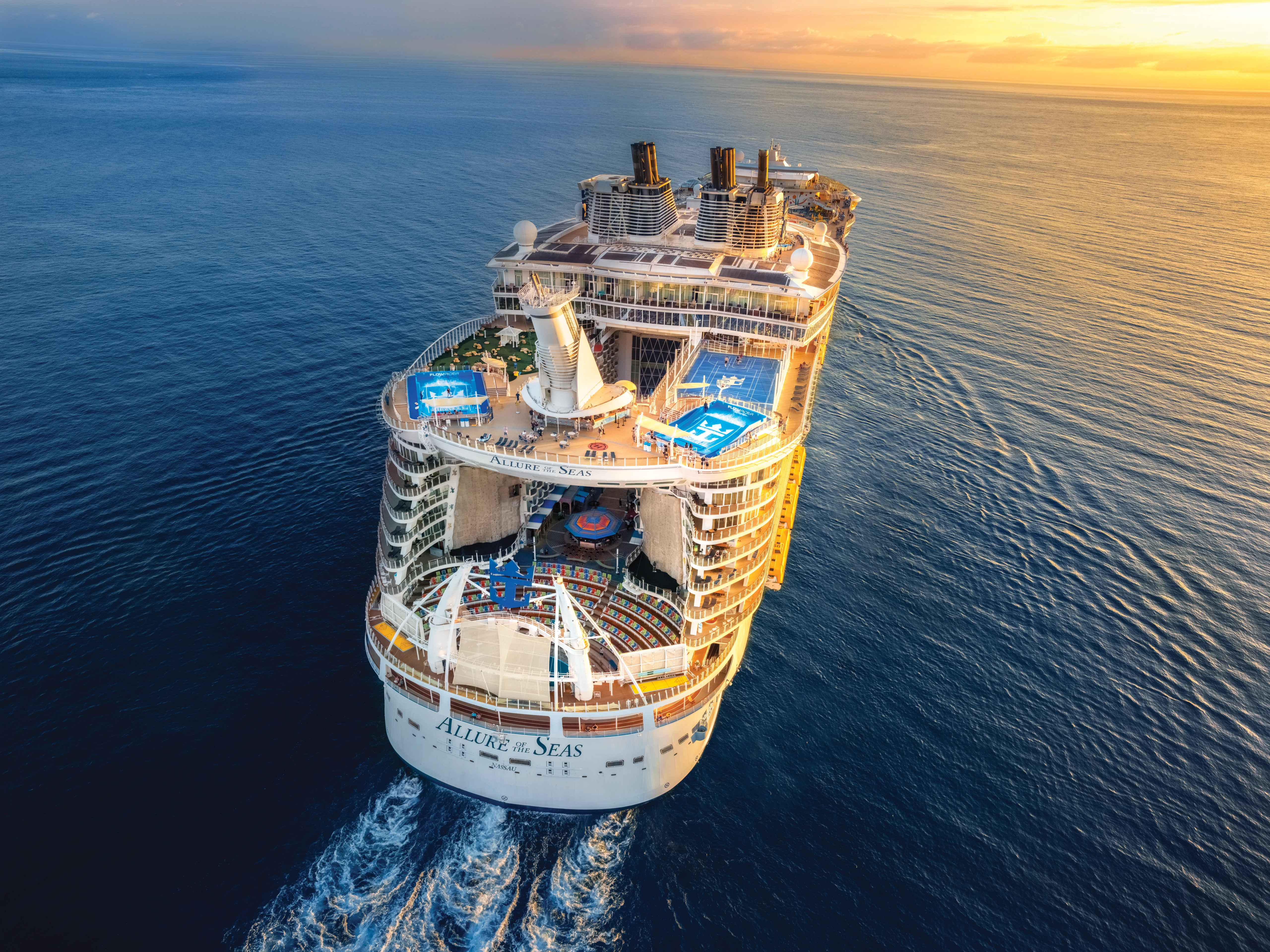
Royal Caribbean Group's decision to extend its collaboration for capturing ocean conservation data aboard its cruise fleet marks a practical evolution in how we gather ocean intelligence. This is not a symbolic gesture; it is a calibrated expansion of the observational network that scientists and policymakers rely on. By embedding data collection into the routine operations of commercial vessels, the initiative transforms a massive, mobile platform into a persistent sensor array, one that can fill critical gaps in our understanding of surface conditions, marine life distribution, and climate indicators.
The approach aligns with the broader push for integrated data stewardship highlighted by Global Experts Calibrate Ocean Decade's Path for Integrated Data Stewardship. That effort, driven by newly appointed global experts, seeks to standardize how ocean data is managed and shared across sectors. Royal Caribbean's fleet-level contribution offers a tangible test case: can commercially operated ships deliver the validated, peer-reviewed measurements that researchers demand? The company's willingness to extend the partnership suggests the initial results are promising. For our readers, whether they are data scientists or conservation advocates, this means a growing pipeline of real-time, empirical observations from regions that are often undersampled by research vessels and buoys.
What makes this development noteworthy is its emphasis on calibration. The press center announcement does not claim to solve ocean monitoring overnight; instead, it reinforces the need for measurements that are repeatable and comparable. This echoes the work behind A calibrated global salinity dataset sharpens ocean intelligence, where quality-controlled salinity profiles demonstrated how rigorous data processing can yield sharper insights. For the cruise fleet, the challenge will be maintaining that standard across dozens of ships, each with varying equipment and crew training. If the data can be properly validated, the fleet becomes a cost-effective complement to dedicated scientific infrastructure, not a replacement, but a multiplier.
The practical consequence for the ocean community is clear: we now have a model for scaling data collection without waiting for new funding cycles or specialized vessels. The open question is whether this model can be replicated across other commercial fleets, cargo, tanker, fishing, to build a truly integrated data ecosystem. For now, the specific takeaway is that every calibrated measurement from a cruise ship strengthens the empirical baseline we need to track climate indicators and guide conservation priorities. The next step is ensuring that data flows into open repositories where it can be analyzed alongside outputs from Eleven data-driven innovations sharpen our ocean intelligence, deepening the collective understanding that drives protection.