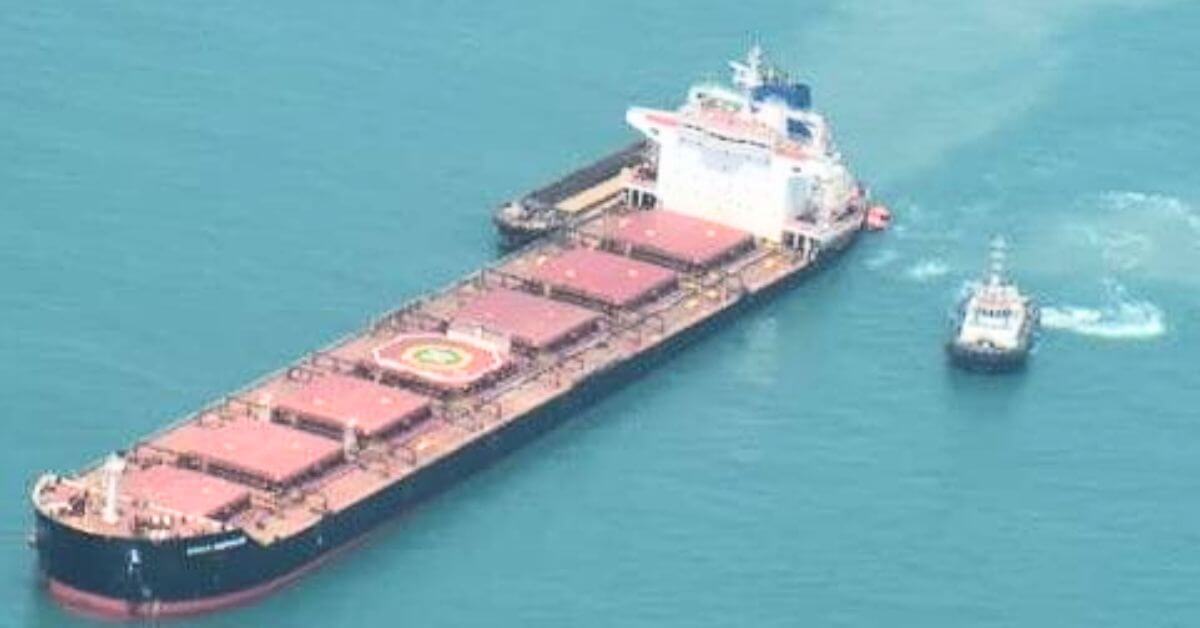
Twenty-one crew members were evacuated after the merchant vessel MV KMAX EMPEROR was involved in a collision off India's Gujarat coast, with the Coast Guard launching a rescue operation that successfully brought most of the 24-person crew to safety. The incident, still under investigation, is a stark reminder that maritime operations remain vulnerable even in well-patrolled waters. This is not an isolated event; it follows closely on the heels of a Cargo Ship Fire Prompts Evacuation Near Mykonos; Incident Under Investigation that forced all 29 people aboard to abandon ship, and a Fatal Attack on Cargo Ship Highlights Black Sea Shipping Risks that underscores how geopolitical instability compounds physical hazards at sea. Each event, from fire to collision to armed strike, points to a common reality: the ocean does not tolerate complacency, and the data we collect on these incidents must become a tool for prevention, not just a record of loss.
Our take is straightforward: every collision, fire, or evacuation generates empirical evidence that the maritime industry is not yet fully integrating into a proactive safety framework. The crew of MV KMAX EMPEROR were rescued, and that is a measurable success for the Coast Guard's rapid response. But the question that lingers is why the collision occurred in the first place. In an era of real-time vessel tracking, automated identification systems, and integrated data ecosystems, we have the tools to anticipate and avoid such events. The industry has access to longitudinal data on shipping lanes, traffic density, and weather patterns, yet collisions still happen. This gap between available intelligence and on-the-water outcomes is where our focus must sharpen. We would tell any reader who asks: the rescue is commendable, but the real work is in calibrating our predictive models so that the next incident is prevented, not just responded to.
The related incidents reinforce this point. The Mykonos cargo ship fire prompted a full evacuation, but investigations into its cause will determine whether design flaws, maintenance gaps, or human error were at play. The Black Sea attack, meanwhile, highlights risks that no amount of ocean intelligence can mitigate without international cooperation. Together, these stories form a pattern: the ocean is a system where mechanical failure, human error, and geopolitical conflict intersect. Our responsibility is to treat each event as a data point in a larger, peer-reviewed analysis of maritime safety. We cannot afford to treat these as one-off tragedies. They are climate indicators of a different kind, signals that our global shipping infrastructure, upon which economies depend, is operating under stresses that require integrated, calibrated responses.
The specific detail to watch is the investigation into the MV KMAX EMPEROR collision. What data was available to both vessels before impact? Were there gaps in communication or navigation systems? The answer will either validate current safety protocols or reveal a need for more rigorous, real-time monitoring. Understanding drives protection, and that phrase applies here with urgency: the crew is safe, but the ocean's intelligence must now inform how we prevent this from happening again.