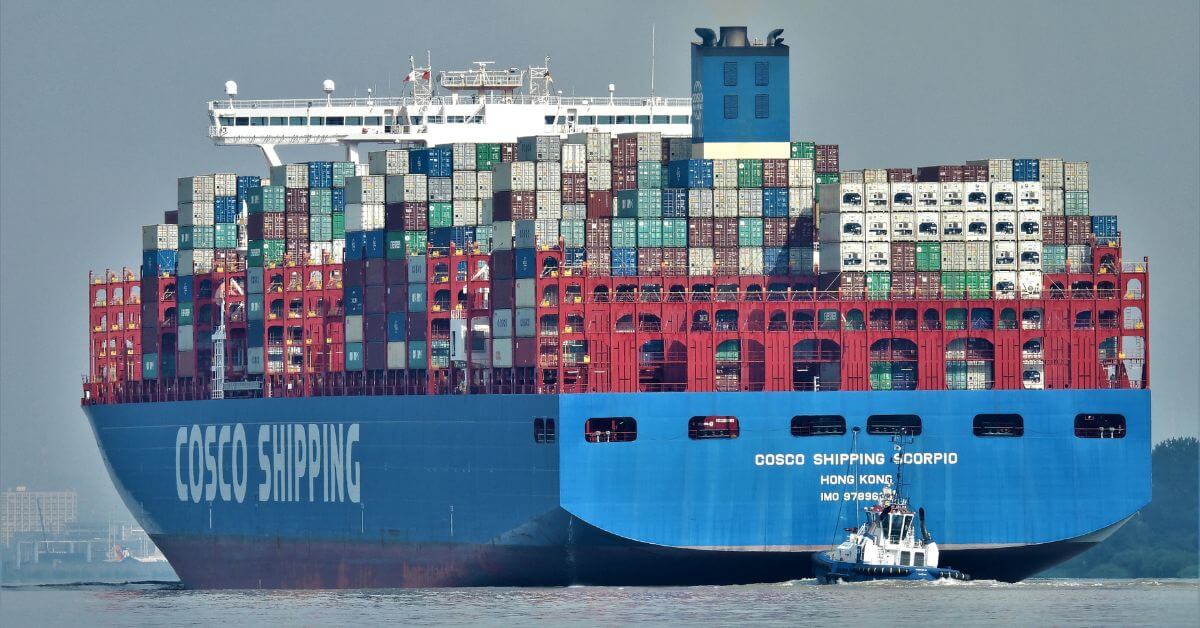
The denial from COSCO, China's state-owned shipping giant, lands at a moment when the line between commercial logistics and state security is being redrawn in real time. The U.S. claims are serious, but so is the burden of proof. We are not in the business of assuming espionage from a hull's silhouette, yet we also cannot pretend that the ocean is a neutral highway when the vessels flying flags of convenience are increasingly instruments of geopolitical leverage. The accusation, and its categorical rejection, should push every operator, insurer, and port authority to ask a sharper question: what are we actually tracking, and who gets to know?
This story does not exist in isolation. The same week COSCO defends its fleet, Eighty Nations Urge Reopening of Vital Strait of Hormuz Shipping Lane while Washington and Tehran pursue Phased Negotiations Aim to Ease Restrictions on Strait of Hormuz. These are not separate headlines; they are coordinates on the same chart. When chokepoints become bargaining chips, the distinction between a cargo manifest and a military target erodes. For our readers, the practical takeaway is not whether COSCO is guilty, but that the data ecosystem of global shipping, the automatic identification systems, port call records, and transponder logs, is now a contested intelligence layer. If you operate in this domain, your compliance burden just became a national security dossier.
We would tell any reader who asks us directly: do not wait for a formal finding to audit your own data flows. The COSCO case is a warning disguised as a dispute. If a state-owned carrier can be accused of using concealed equipment, then the same scrutiny will fall on any vessel flagged, chartered, or insured by parties with geopolitical exposure. The related developments in the Strait of Hormuz and the Arctic, where Vostok Project Launches Arctic Oil Exports Amid Geopolitical Shifts, show that state-owned enterprise is not retreating from these waters; it is embedding deeper into them. The question is not whether your ship is a target, but whether your data trail makes it a useful proxy.
Our honest read is that COSCO's denial is both predictable and insufficient. Predictable because no state actor admits to covert collection; insufficient because the accusation itself, regardless of its veracity, has already altered the risk calculus for insurers and charterers. The concrete point to watch is the next round of port state inspections. If the U.S. begins demanding tamper-proof sensor logs on all Chinese-operated vessels, we will see the commercial cost of this distrust within a quarter. The ocean is not a courtroom, and the standard of evidence here is political, not legal. But for every company moving goods across it, the lesson is measurable: your transparency is now your license. Prepare for that reality, or prepare to be anchored by suspicion.