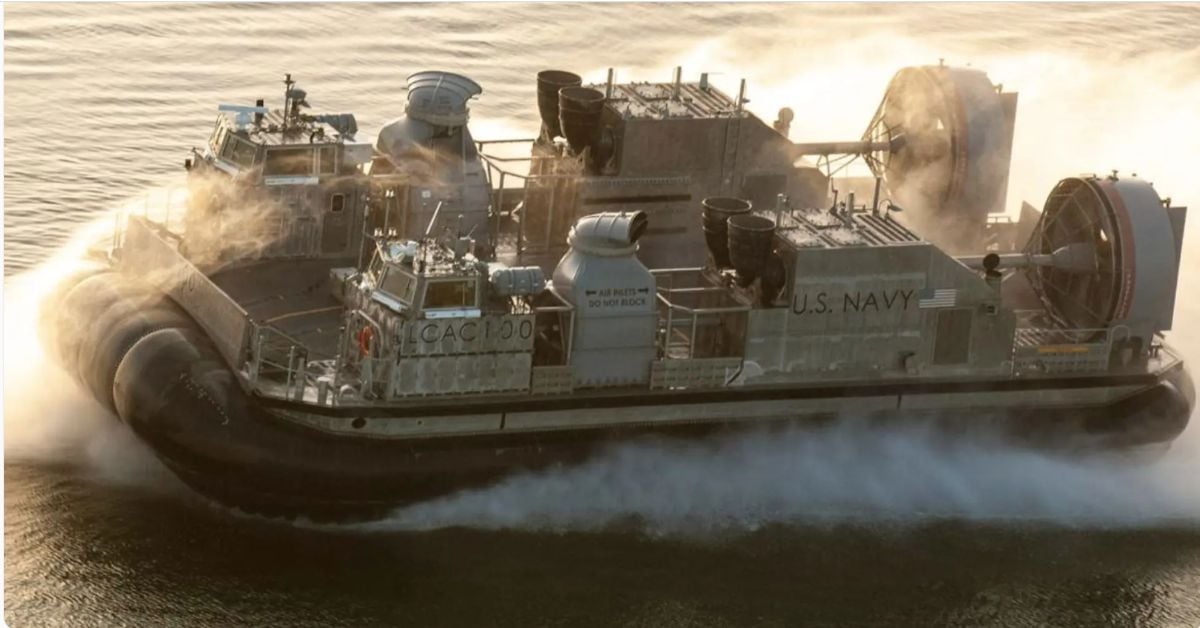
The Navy's decision to invest $230 million in two new ship-to-shore connectors from Textron Systems is a measured, strategic bet on mobility, and it is the right one. This is not about flashy new hardware; it is about quietly expanding the operational envelope for amphibious forces. By replacing the aging hovercraft fleet with vessels that can reach roughly 80 percent of the world's coastlines, the service is acknowledging that fixed infrastructure is a liability in contested environments. The practical effect is straightforward: more options, more flexibility, and a logistics chain that does not depend on a friendly port being available when you need it.
The design improvements matter as much as the contract value. A 74-tonne payload and 1,600 square feet of deck space mean these craft can move reconnaissance vehicles and substantial supplies in a single trip, while the extended time between overhauls directly addresses fleet availability. That last point is worth emphasizing. Maintenance backlogs are a chronic constraint across naval operations, and any platform that reduces downtime while sustaining high-speed delivery is an asset, not just a replacement. Textron has already delivered 18 of these craft, with 13 more in production or testing, so this is a mature program being scaled, not a prototype gamble. The same logic of sustainment applies elsewhere, as seen with the forward-deployed destroyer that recently entered a Spanish dry dock for maintenance, a reminder that keeping existing ships operational is as critical as building new ones.
There is also a humanitarian dimension that often gets overshadowed in discussions of amphibious warfare. These connectors can deliver aid to remote regions after natural disasters, where traditional ports are damaged or nonexistent. That dual-use capability aligns with the Navy's broader role in disaster response, and it is a point worth remembering when assessing the value of the contract. The ability to move personnel and material from offshore ships to land is not solely a combat function; it is a relief function with real-world consequences. This is consistent with the service's pattern of leveraging naval assets for missions beyond warfighting, a theme also reflected in the upcoming missile-tracking vessel slated for a 2030 launch, which extends the Navy's reach into new domains of observation and deterrence.
The open question is whether 80 percent coverage is enough. The Navy is betting that this capability, combined with existing platforms and the ongoing production pipeline, will cover the most likely operating areas without requiring a larger fleet. But contested environments are unpredictable, and the margin between 80 percent and 90 percent could be decisive in a specific theater. Watch how the remaining 13 craft in production are prioritized and whether the Navy exercises options for additional units. The contract is a signal, but the real test will be in the operational tempo these connectors can sustain over the next decade. For now, the takeaway is clear: validated, measurable improvements in amphibious logistics are being fielded, and that is a concrete step toward keeping forces ready where the map runs out.