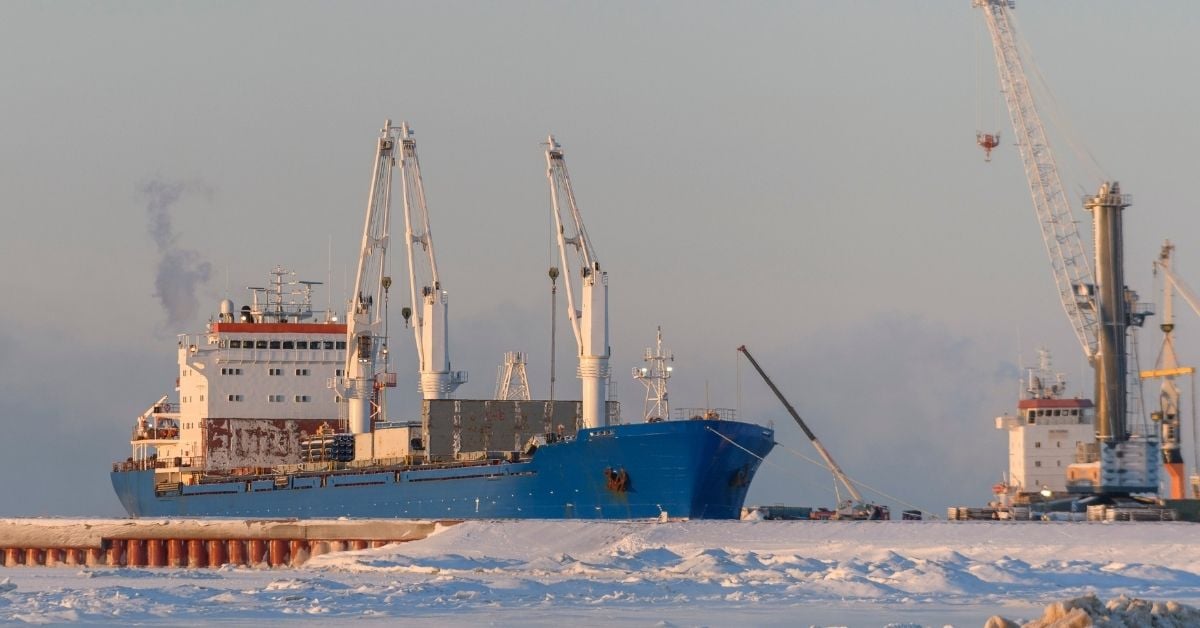
The Port of Churchill is moving again, and that is a fact worth measuring, not just celebrating. For the first time in six years, a vessel carrying 30,000 tonnes of durum wheat has departed the northern Manitoba port, bound for Europe. This is not a nostalgic revival; it is a calibrated signal that Arctic shipping routes are becoming operational realities, not theoretical ambitions. The cargo is real, the route is open, and the implications extend far beyond a single shipment of grain.
This resumption sits alongside other Arctic infrastructure moves that demand our attention. Russia is calibrating export revenue to fund new icebreakers for the Northern Sea Route, while the Vostok project has launched Arctic oil exports amid geopolitical shifts. Meanwhile, the U.S. Coast Guard is investing $315 million in a new pier at Base Kodiak, Alaska. What connects these events is not politics, but logistics. Churchill's return adds a western Hudson Bay data point to a map that is being redrawn by ice retreat and global demand. For our readers, the practical takeaway is this: the Arctic is no longer a frontier of isolated experiments. It is an integrated ecosystem of ports, fleets, and cargo flows, and Churchill is now a live node in that network.
Our honest take is that this shipment is modest in volume but significant in validation. Durum wheat is a premium product, and moving it through Churchill shortens supply chains to European buyers. That matters for Canadian producers, but it also matters for anyone tracking ocean intelligence. The port's viability depends on reliable seasonal windows, infrastructure maintenance, and competitive rail access. These are not glamorous factors, but they are the empirical ones. We would tell a reader who asks us about this story: do not mistake a single voyage for a trend, but do recognize that Churchill has just demonstrated it can execute. The question is whether the next vessel follows within months or waits another six years.
The detail to watch is the rhythm of departures. One ship is a data point; two ships in consecutive seasons would be a pattern. The Port of Churchill's own capacity, and the willingness of grain buyers to commit to its schedule, will determine whether this is a reset or a one-off. We are not predicting a boom, and we are not dismissing the risks. But in a region where every route competes for investment, Churchill has just shown it can still deliver. The next sailing will tell us more than this one ever could.