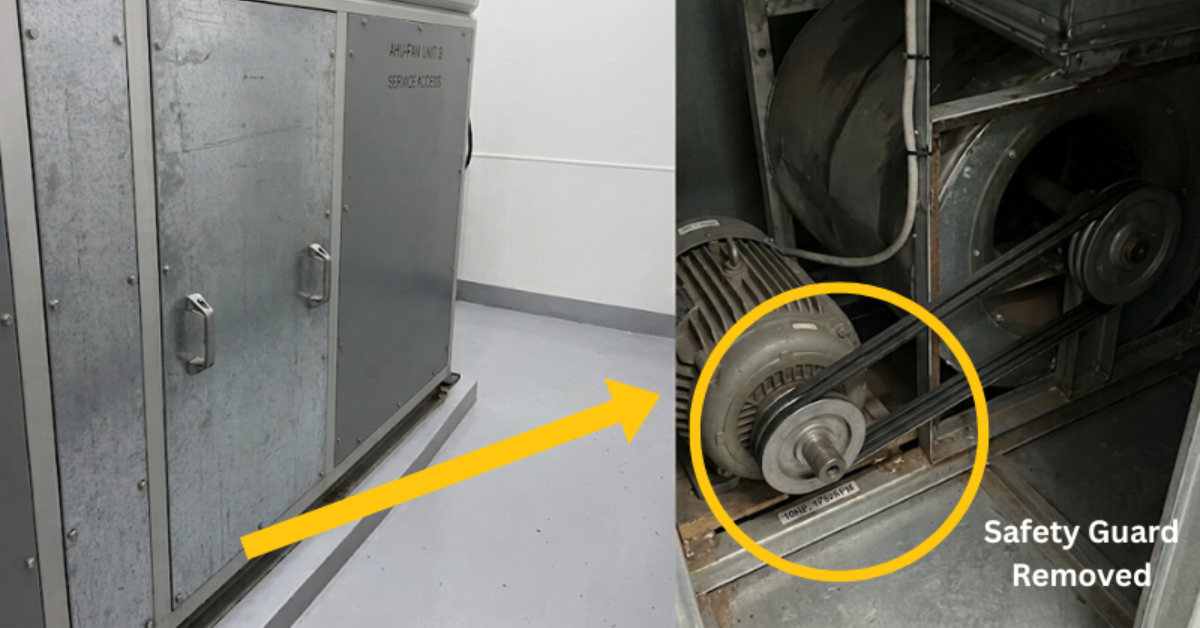
A routine check of an A/C compressor, a vessel pitching in rough seas, and one misstep: an engineer is now recovering from serious injuries after losing balance and making contact with a running belt. The incident, reported by our colleagues, is a stark reminder that the ocean does not care about checklists. It cares about physics, momentum, and the fact that a ship is never a stable platform, even when it feels like one. We have spent considerable effort building calibrated ocean intelligence, now within reach through integrated data discovery, but no dataset can replace the fundamental, unglamorous work of guarding a human body from a spinning machine part.
Our take is not that this was a failure of procedure, but a failure of assumption. The engineer was likely following a protocol that assumed the compressor could be approached while running, or that the motion of the vessel would remain within a tolerable range. In bad weather, that assumption is a gamble. We have seen how an unidentified marine structure sparks debate in Port Phillip Bay, and how easily attention shifts to the unknown. But here, the threat was entirely known: a belt, a pulley, and a moving deck. The question is not whether the crew knew the equipment was dangerous; it is whether the safety protocol accounted for the specific combination of a rolling hull and a human's need to brace themselves. In practical terms, this means revisiting every "routine" task that requires proximity to rotating machinery, especially when sea state is elevated.
What would we tell a reader who asks about this? We would say that the takeaway is not to stop doing maintenance, but to re-engineer how it is done. If a task can only be performed while the equipment is live, then the vessel's motion should be a hard gate: no approach when pitch or roll exceeds a defined threshold, regardless of how far behind schedule the maintenance falls. If the equipment can be shut down, then the protocol should demand it, without exception. And if neither is possible, then the task should be redesigned, perhaps with a guard, a remote monitoring point, or a second person whose sole job is to watch the horizon and the engineer's feet. This is not about being alarmist; it is about being empirical. We have seen how a drone strike impacts an LPG tanker near the Strait of Hormuz, where the threat was external and asymmetric. Here, the threat was internal and mundane, which makes it more dangerous because it is easier to ignore.
The specific detail to watch is whether the vessel's safety management system has a provision for "motion-induced work stoppage." If it does not, this incident will repeat. If it does, then the question becomes why it was not enforced. We would wager that the next step is not a new policy, but a better metric: tracking how many near misses occur when a ship is rolling more than five degrees. That number will tell us more than any incident report. The ocean will keep moving; our procedures must move with it, not after it.