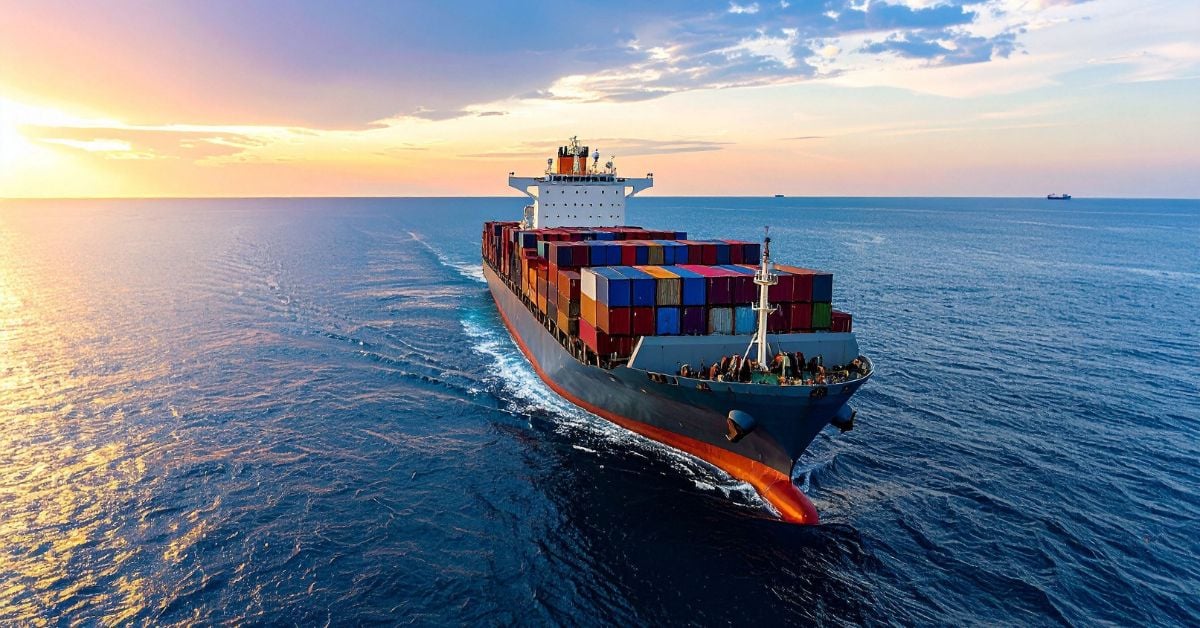
The first container ship powered by Brazilian-made ethanol has left the port of Santos, and the event deserves more than a routine nod toward decarbonization. It is a practical demonstration that alternative fuels can move from pilot projects to commercial reality without waiting for a single silver-bullet solution. The vessel's departure is not a claim that ethanol will replace every marine fuel, but it is a measured, testable step toward reducing emissions in a sector that has struggled to find viable near-term options. For our readers, the takeaway is straightforward: this is the kind of incremental, empirically grounded progress that actually moves the needle.
The maritime industry has spent years chasing future fuels that remain stuck in regulatory limbo or infrastructure gaps. Meanwhile, this voyage uses a fuel that is already produced at scale in Brazil, with an existing supply chain and a proven energy density. That matters because it shifts the conversation from abstract potential to operational reality. The same logic applies to the broader shifts we are tracking, such as the Gulf of Oman STS Transfers Max Out Amid Rising Saudi Oil Exports, where infrastructure is being pushed to its limits by current demand rather than future ambition. Similarly, the expansion of Integrated Subsea Infrastructure Shifts to Enhance Indian Ocean Connectivity shows how logistics networks adapt to real-world pressures. These stories are connected by a common thread: infrastructure and fuel choices are being tested today, not in some distant scenario.
What makes the ethanol-powered voyage notable is not that it solves the climate challenge on its own. It does not. The fuel's carbon intensity depends heavily on how the ethanol is produced, and the land-use questions around biofuel feedstocks remain legitimate. But dismissing it because it is not a complete answer misses the point. The shipping sector needs a portfolio of options, and this trial provides calibrated data on performance, emissions, and operational feasibility. It also signals something about commercial appetite. When a major port like Santos becomes the site for a first-of-its-kind fueling, it tells us that investors and operators are willing to bet on solutions that are available now, not just on concepts that promise more. That is a measurable signal in an industry often criticized for cautious inertia.
Our honest take is that this event should be watched for what it reveals about scalability, not celebrated as a final victory. The real test will come in the next few months, when operators release data on fuel consumption, engine wear, and emissions reductions compared to conventional heavy fuel oil. We would tell a reader who asks about this story to treat it as a useful data point, not a turning point. The specific consequence to track is whether other ethanol-producing nations, particularly in Southeast Asia or the United States, begin to explore similar trials. If they do, the Santos departure will look less like a novelty and more like the beginning of a credible alternative fuel corridor. If they do not, it will remain a well-executed experiment with limited reach. Either way, the ship has left port with real cargo and a real engine, and that is worth more than another white paper.