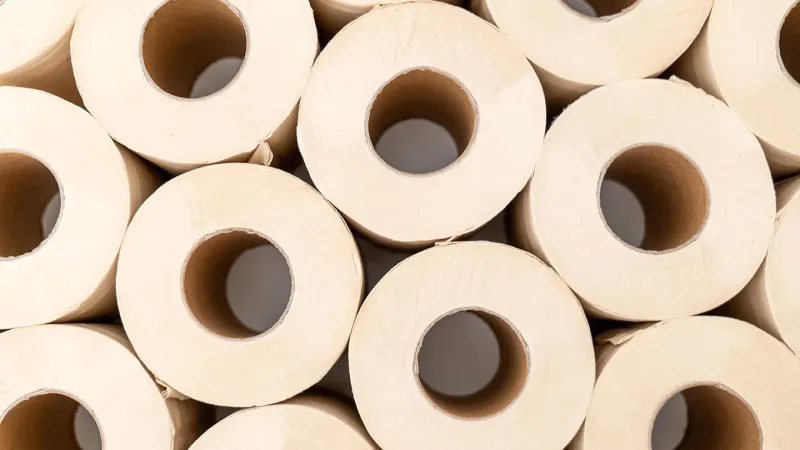
The decision to switch to bamboo toilet paper feels like a straightforward win for the environmentally conscious consumer. It grows quickly, requires no irrigation, and regenerates from the root after harvesting. But as researchers now point out, the full picture is more complicated. The available carbon footprint data for bamboo products remains surprisingly limited, and the ecological risks of large-scale monoculture farming are not trivial. We are making a choice based on a narrative of sustainability that has not yet been fully validated by the kind of longitudinal, peer-reviewed research we should demand.
This matters because our purchasing habits, when multiplied across millions of households, shape land use and supply chains. The same logic that drives interest in bamboo toilet paper also drives interest in the invisible infrastructure that connects our daily lives to the ocean. Consider the data cables that carry our digital decisions across the seafloor, or the port activity that moves physical goods between continents. These systems are not separate from environmental stewardship; they are part of the same integrated ecosystem of consumption and consequence. As we reported on Integrated Subsea Cables Enhance Data Transmission Across the Indian Ocean, our digital lives already depend on ocean resources in ways we rarely acknowledge. Similarly, the Record Port Activity Reflects Rising Chinese Exports Amid Trade Uncertainty reminds us that global trade drives demand for raw materials, including bamboo, at scales that outpace our ability to measure environmental impact.
Here is our honest take: do not mistake a single-attribute improvement for holistic sustainability. Bamboo toilet paper may indeed be better than virgin tree pulp, but that is a low bar. The real question is whether the industry can provide calibrated, empirical data on land use change, water consumption, and processing emissions. Until then, we are making decisions based on partial information. That is not a reason to reject bamboo outright, but it is a reason to ask harder questions. What we would tell a reader who asks is simple: look for third-party certifications, demand transparency, and treat any claim of "eco-friendly" as a starting point for inquiry, not a conclusion.
The practical takeaway is this: the next time you reach for a product marketed as green, ask whether the evidence matches the label. If the data does not exist, push for it. The ocean, like the bamboo forests, cannot afford our assumptions. Watch for the release of new lifecycle assessments in the coming years; they will tell us whether we made the right call or simply swapped one problem for another. That is not a vague hope. It is a specific detail worth tracking.