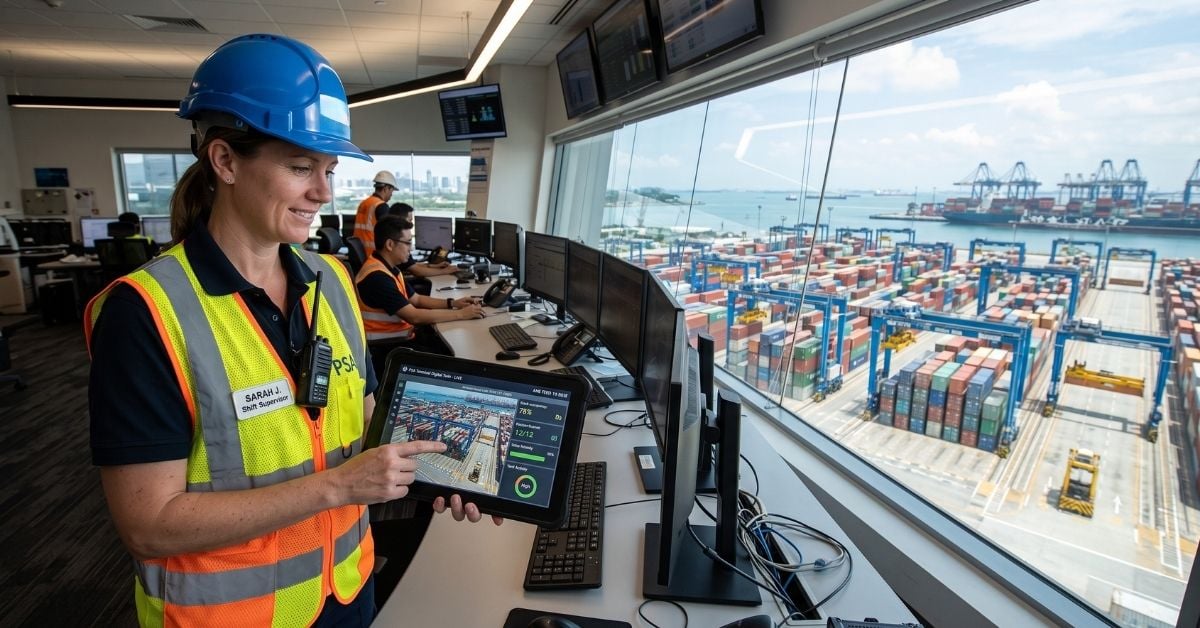
The shipping sector's conversation about port efficiency tends to fixate on artificial intelligence as if deploying a model were the finish line. The reality is more grounded and, in some ways, more demanding. The article on Infyz iTOMS makes a crucial distinction: automation succeeds only when paired with workforce capability and a phased implementation strategy. This is not a headline-grabbing claim, but it is the empirical truth that terminal operators have to live with. The technology itself is modular and measurable, yet its value is calibrated by the people who operate it and the sequence in which it is introduced.
This is where the broader pattern becomes clear. Consider the related reporting on AI Reasoning Explored: Novel Model Omits Words to Reduce Computation. That piece examines an experimental model designed to cut computational load by skipping intermediate reasoning steps. The parallel to port operations is direct: efficiency gains come from knowing what to omit, not from doing everything faster. Similarly, the Integrating AI and Robotics to Enhance Maritime Production Capacity story highlights a shipyard's plan to hire more skilled workers while upgrading its use of robotics. These are not isolated cases. They reinforce a single, evidence-based conclusion: the bottleneck in maritime digitalization is rarely the algorithm. It is the organizational capacity to absorb change without disrupting the human systems that keep operations running.
For our readers, the practical takeaway is direct. If you are evaluating terminal operating systems, do not ask only about AI capabilities. Ask about the training burden, the rollout timeline, and whether the vendor supports incremental integration. The article makes clear that phased automation reduces risk and builds internal confidence. A workforce that understands why a system changes is more likely to use it correctly. That is not a soft-skill afterthought; it is a measurable factor in turnaround times. We would tell a port operator this: treat your team as the primary integration layer. The technology is the enabler, not the solution. The difference between a failed deployment and a successful one is often the number of weeks spent on change management, not the sophistication of the neural network.
The honest assessment here is that the industry is maturing past the hype cycle. The related story on AI-Enabled Research Targets US Naval Assets in the Middle East serves as a sobering reminder that AI is a tool with dual-use implications, but it also illustrates how quickly capabilities are being weaponized and defended. Ports face a different but analogous challenge: they must defend against disruption while adopting automation that changes job functions. The specific consequence to watch is whether terminal operators begin publishing workforce retention and retraining metrics alongside their throughput numbers. If they do, that will be the clearest signal that the sector has moved beyond the novelty of AI and into the disciplined work of building an integrated data ecosystem. Until then, prioritize the phased path. It is the only one that leads to sustained efficiency.