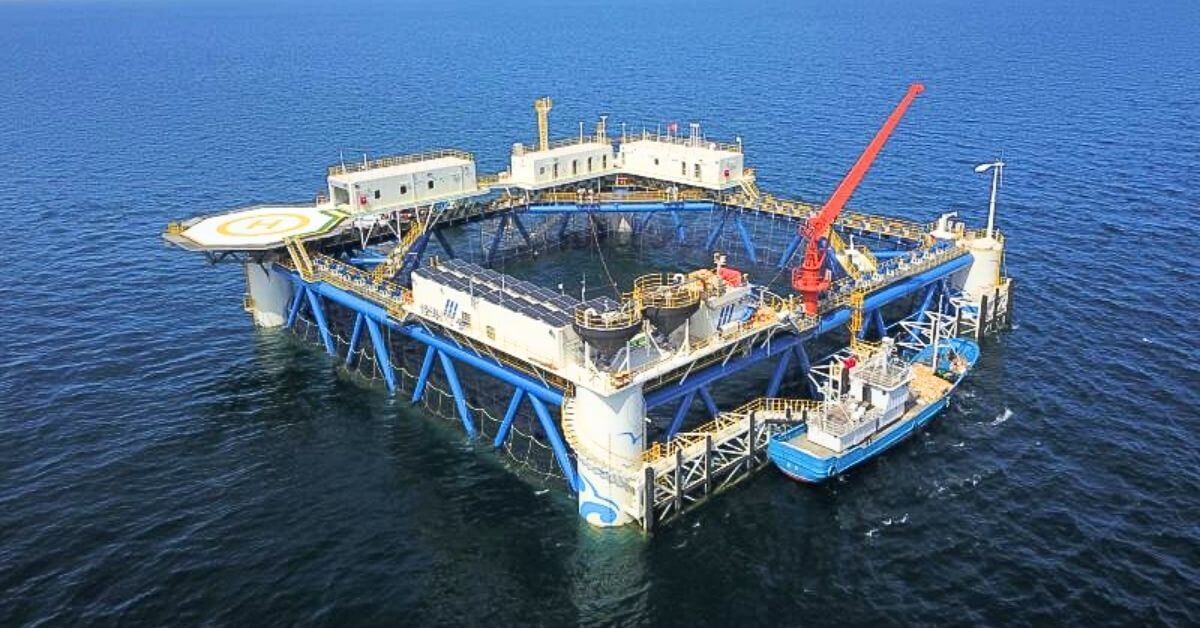
The world's first 100-kilowatt offshore solar platform built from bamboo is now bobbing in tested waters, and it deserves more than a passing glance. The premise is straightforward: replace the steel and plastic frames that dominate floating solar with a renewable, fast-growing grass. It is a pilot project, not a declaration of victory. But it is a meaningful question asked at full scale, and that matters more than the modest kilowatt figure suggests. The platform is a deliberate experiment in whether we can decouple marine infrastructure from the very materials that make it heavy, corrosive, and expensive to maintain. Record Port Activity Reflects Rising Chinese Exports Amid Trade Uncertainty shows a nation doubling down on export throughput, while Integrated Subsea Infrastructure Shifts to Enhance Indian Ocean Connectivity reveals a parallel drive to control blue-water logistics. Add a bamboo hull to that formula, and you have a country quietly testing whether its maritime ambitions can be built on materials that do not require a century to degrade.
Our take is not that bamboo will replace steel in every marine application. It will not. But this test forces us to ask a sharper question: why have we accepted material choices in ocean engineering without interrogating their full lifecycle cost? Steel corrodes. Plastic sheds. Bamboo, when properly treated and engineered, offers a compressive strength-to-weight ratio that earns a second look. The platform is a controlled attempt to gather longitudinal data on durability, biofouling, and structural fatigue under real wave loads. That is the right way to approach innovation. It is not a marketing stunt; it is a calibrated experiment. The Gulf of Oman STS Transfers Max Out Amid Rising Saudi Oil Exports reminds us that the current energy system still runs on steel-heavy logistics, but that does not make the search for alternative materials in renewables any less urgent. It makes it more strategic.
What would we tell a reader who asks whether this matters? Yes, but not for the reason you think. The value is not in proving bamboo is superior. It is in validating whether we can reduce the embedded carbon and industrial energy required to build ocean infrastructure. Every ton of steel avoided is a measurable step toward lowering the footprint of renewable energy itself. That is the real metric to watch. If this platform survives its test window, if the data holds up under peer review, it opens a lane for natural fiber composites in other marine settings: aquaculture frames, breakwaters, even secondary structures on larger platforms. The takeaway worth quoting is this: the ocean will not be saved by a single wonder material, but every validated alternative that reduces our reliance on steel and plastic is a data point we cannot afford to ignore.
The open question is scalability. Bamboo grows fast, but it must be treated, transported, and fabricated to consistent standards. That supply chain does not exist yet at industrial scale. The platform in the water is the easy part. The harder task is proving that bamboo can meet the same safety and longevity standards we demand from conventional materials, and that its production does not create new environmental pressure points on land. Watch for the release of inspection data after the first storm season. If the platform holds, we will see a second, larger deployment. If it fails, we will learn where the limits are. Either outcome is useful. That is what empirical progress looks like, and it is happening now, one bamboo beam at a time.