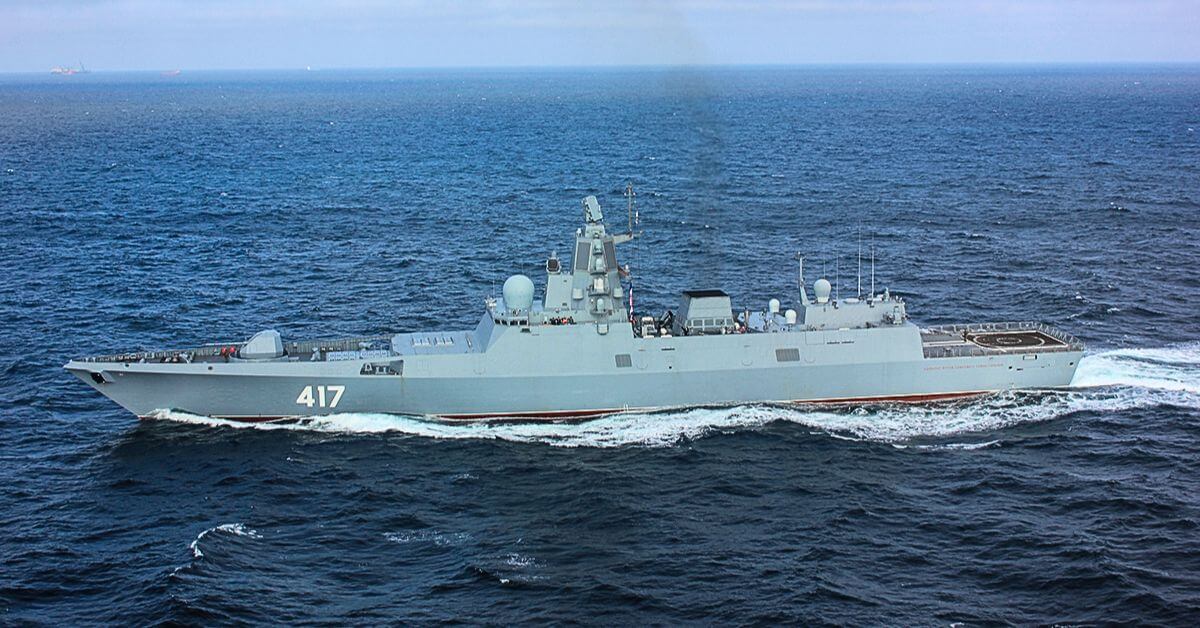
The Baltic Sea incident involving a Russian warship firing flares at a Danish military helicopter is not an isolated headline; it is a data point in a pattern of escalating maritime tension that demands more than diplomatic condemnation. The European Union's assessment of the behavior as "reckless and dangerous" is accurate, but from a scientific and operational standpoint, it is also incomplete. For those of us who track ocean intelligence, this is a reminder that the rules-based order at sea is only as strong as the empirical evidence we gather to enforce it.
This flare firing occurred in a region already crowded with competing interests. Russia's calibrated approach to maritime aggression is visible across its broader strategy, from Russia Calibrates Export Revenue for Northern Sea Route Icebreaker Fleet to the suspected drone operations detailed in Russian Maritime Activity Raises Concerns of Drone Operations in Mediterranean. None of these actions occur in a vacuum. They are deliberate, measurable moves in a chess game where the board is the global ocean. The Baltic incident, while serious on its own, is best understood as a pressure test of NATO's response protocols and the transparency of European waters.
Our take is straightforward: this is not about alarmism but about accountability. The practical consequence for our readers, whether you are a researcher, a policy advisor, or a student of maritime affairs, is that we need better real-time data to de-escalate these situations before they spiral. The current reliance on post-incident reports is insufficient. We need integrated data ecosystems that can track vessel behavior, AIS gaps, and close-quarters maneuvers as they happen. The technology exists. What is missing is the political will to share that intelligence openly across allied navies.
We would also caution against reading this event solely through a military lens. The economic dimension is equally telling. Russia's need to fund icebreakers for the Northern Sea Route, as noted in the related article, reveals a state stretching its naval and logistical capacities. Incidents like the flare firing can be interpreted as a display of strength, but they also signal vulnerability. A navy that must resort to intimidation in a confined sea like the Baltic is not projecting power; it is advertising its constraints. The same logic applies to the Mediterranean, where suspected drone operations from commercial ships suggest a willingness to innovate outside conventional military doctrine. These are not independent threads; they are part of a single fabric of maritime coercion.
What would we tell a reader who asks us about this? We would say: watch the patterns, not just the headlines. The flare incident is a symptom, and the underlying condition is a growing disregard for the norms that have kept shipping lanes safe and marine environments protected. The specific detail to track in the coming months is whether European naval forces increase their patrol frequency in the Baltic and whether they mandate automatic identification system data sharing in real time. If they do, we will have turned a moment of tension into a lesson in resilience. If they do not, we should expect more of the same, not because the Russians are invincible, but because our collective memory is short and our data is still too fragmented. The ocean is a source of life and commerce, but it is also a stage for conflict. The only question is whether we will watch it unfold with better instruments or continue to react with blinders on.