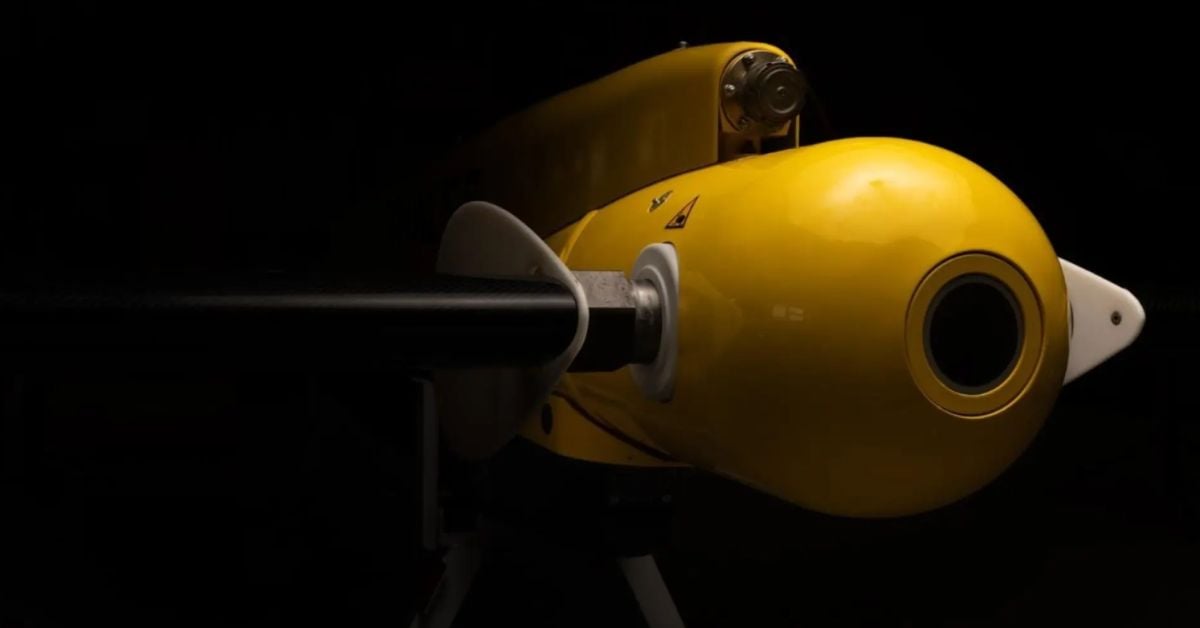
The U.S. Navy's $53.9 million investment in robotic mine hunting systems is a pragmatic step toward reducing human risk in one of the most dangerous maritime operations, and it underscores a broader shift we are tracking: the integration of autonomous, data-driven tools into ocean stewardship. As we have argued in our coverage of From observation to action: measuring maturity in ocean practices, the gap between collecting ocean data and acting on it is where progress stalls. This contract, awarded to Thales subsidiary AAC for two Remote Mine Hunting (RMH) Modules, closes that gap by embedding validated detection and classification directly into operational decision-making.
What matters most here is not the dollar figure, but the technological architecture. The RMH system's Synthetic Aperture Sonar (SAS) produces high-definition images by assembling multiple acoustic measurements as the sensor moves, effectively building a larger sonar aperture than traditional methods. This allows operators to distinguish a mine from marine flora and fauna with measurable precision, reducing false-target identification. The AI-powered target recognition software then processes, maps, and categorizes the massive data streams generated during long missions. For our readers, whether naval strategists, ocean data scientists, or policy analysts, this represents a calibrated response to a persistent problem: the time and risk involved in scanning contested waters for explosives. The Navy's "Find, Fix and Finish" approach gains a real-time feedback loop that was previously impossible with low-resolution acoustic images.
This development also connects to the challenge of validating systems under real-world conditions, a theme we explored in Validating Submarine Design Through Integrated Ocean Intelligence. The RMH modules are designed to operate from both manned and unmanned surface platforms, meaning their sensor data must be integrated into a broader ocean intelligence ecosystem. Thales is working to unify the sonar with target classification and neutralization suites into a single operational unit. That integration is the hard part, and the part most likely to determine whether this system shortens the timeline from detection to action as promised. The contract's potential ceiling of $196.2 million suggests the Navy expects iterative upgrades, not a one-time deployment.
One concrete takeaway: the shift from human-interpreted sonar to AI-assisted classification at the point of collection will force navies to rethink crew training and data management protocols. The RMH system does not eliminate the need for skilled operators; it changes their role from scanning images to validating machine-generated classifications. The open question is whether the AI's target recognition software can maintain accuracy in the cluttered acoustic environments of shallow coastal waters, where civilian debris and biological noise are highest. That empirical answer will determine if this technology becomes a standard for mine countermeasures or remains a specialized tool for high-risk corridors.