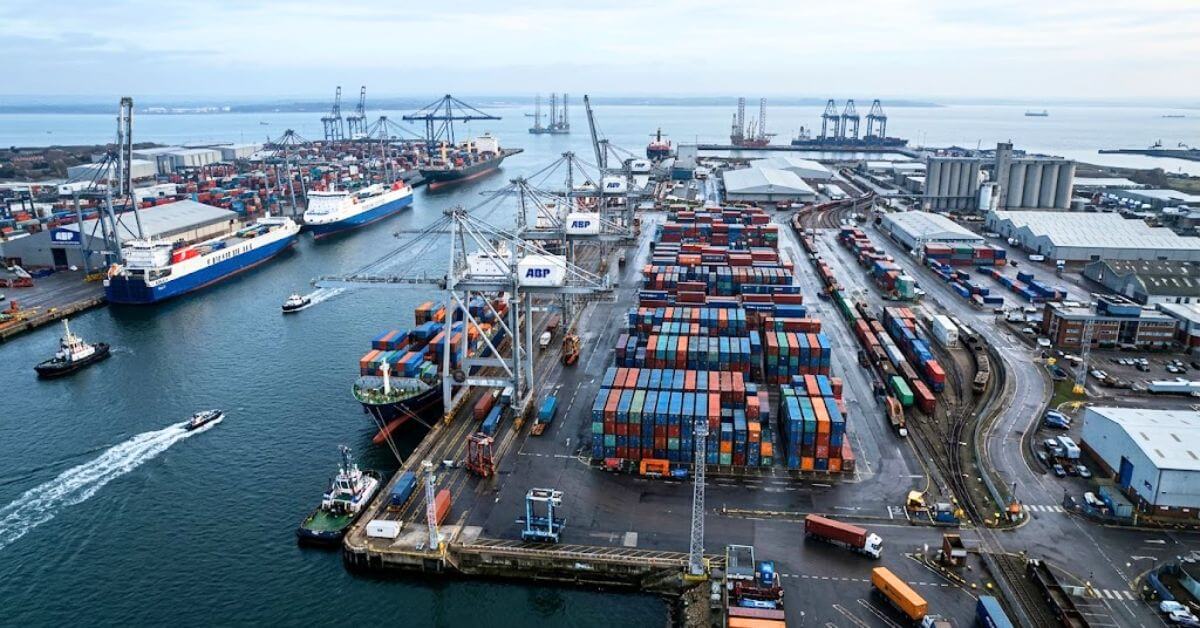
The acquisition of a majority stake in Associated British Ports (ABP) by an Australian fund managed by IFM Investors is a signal worth watching, not for the financial engineering but for what it reveals about the physical arteries of the energy transition. This is not merely a portfolio reshuffle; it is a bet on the strategic value of infrastructure that connects offshore wind to the national grid and seaborne trade to industrial heartlands. Our view is that this deal underscores a simple truth: the future of climate action will be built on integrated, real-world systems, and ports are where that work becomes tangible.
ABP handles roughly a quarter of the UK's seaborne trade and supports more than half of the country's offshore wind sector. That dual role makes it a calibrated node in a larger system. As we have noted in our coverage of the UK's investment in next-generation offshore wind testing at EMEC, the technology to generate clean energy is advancing rapidly. But generation is only half the equation. The other half is logistics: the ability to stage, assemble, and deploy turbines, and to manage the supply chains that keep those projects moving. This is where ports like those operated by ABP become critical infrastructure, not just for trade but for the empirical metrics of decarbonisation. The fact that IFM Investors, owned by Australian and UK pension funds, is willing to commit capital here suggests a long-term view that aligns with the kind of validated, measurable progress our readers track.
The deal also raises practical questions about data and decision-making. When a single operator controls 19 ports across three nations, the flow of information through that network becomes a matter of national interest. How will real-time data on vessel movements, cargo volumes, and energy demand be managed and shared? For researchers and policymakers who rely on ocean intelligence to calibrate climate indicators, the ownership structure of a port operator matters. It determines who controls the data that feeds into models of trade, emissions, and renewable energy integration. The UK's recent investment in EMEC and the validated milestone of the largest expedition ship docking at the Port of Ipswich both point to a need for transparent, peer-reviewed metrics. A private equity-style owner may prioritise returns over openness; a pension fund with a long horizon may take a different view.
What remains to be seen is how IFM Investors will balance the operational demands of a major port group with the broader need for integrated data ecosystems that support ocean stewardship. The company has stated it plans to support ABP's operations and invest in its infrastructure. That is a statement of intent, not a plan. The specific consequence to watch is whether this investment translates into measurable improvements in port-side data collection and sharing, particularly for the offshore wind supply chain. If it does, this deal could become a case study in how long-term infrastructure investment supports the kind of empirical, collaborative progress that defines the work of our community. If it does not, the opportunity to build a truly integrated system will have been traded for a balance sheet entry.