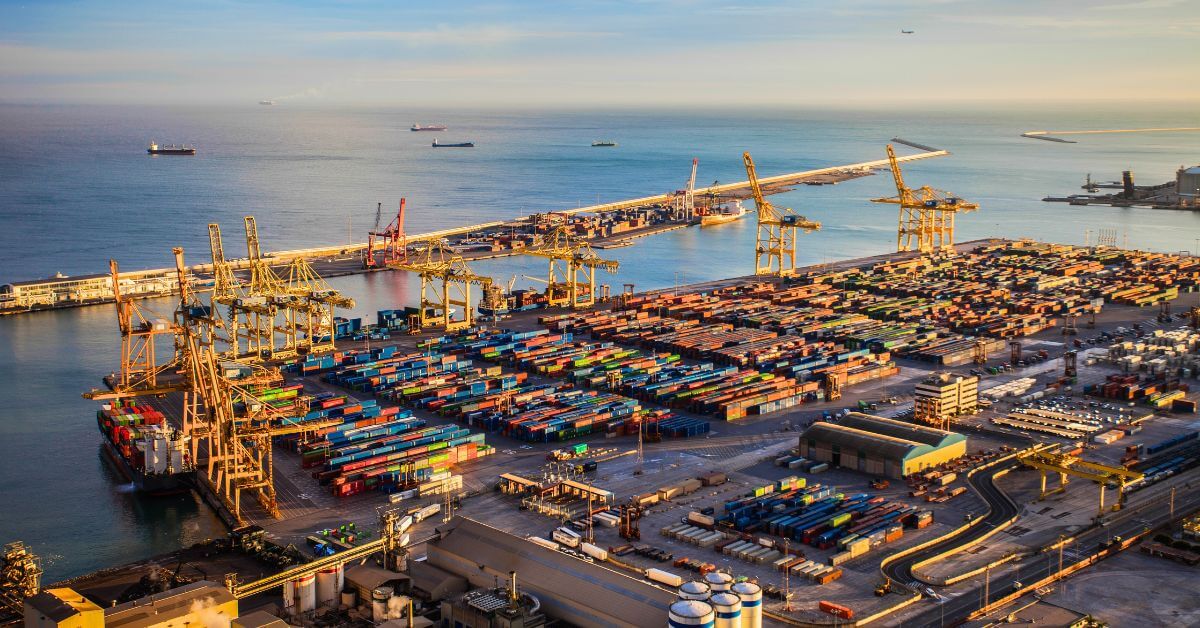
The sharpest drop in global vessel reliability since 2021 is not a footnote in the shipping calendar. It is a calibrated signal. When all 14 of Asia's busiest ports reported lower on-time arrival rates in July, the cause was not weather, labor action, or a single infrastructural failure. It was congestion, and it rippled outward with the precision of a measured current. For an industry that depends on predictability, this is not an anomaly to be managed; it is a climate indicator of sorts, albeit one measured in berth windows and dwell times rather than barometric pressure.
We should resist the urge to frame this as a crisis of a single region. Asia's ports are not isolated chokepoints; they are the integrated data ecosystem of global trade, and their performance calibrates schedules from Rotterdam to Los Angeles. The Integrated Response Saves 25 Seafarers After Container Ship Distress reminds us that when vessels face emergencies, the response is a coordinated, real-time operation. Congestion is a slower emergency, but it is no less demanding of that same collaborative infrastructure. The lesson is not that Asian ports are failing; it is that the system's resilience is only as strong as its most congested node.
For our readers, the practical takeaway is not about tracking delay statistics. It is about recalibrating expectations. If you are a charterer, a beneficial cargo owner, or a logistics planner, July's data is not a reason to panic. It is a reason to validate your buffer times, to review your contingency routing, and to question whether your current service contracts account for a 14-port decline in reliability. The India Establishes Support Network to Safeguard Seafarers in Conflict Zones shows what proactive, state-level coordination can achieve in high-stakes maritime environments. Congestion demands a similar, though less dramatic, form of preparedness: integrated planning across ports, feeders, and inland transport, rather than reactive scheduling.
We would tell a reader who asks, "What should I do with this information?" the following: treat it as empirical evidence, not as a forecast. The July drop is measurable, but it does not predict August or September. What matters is whether the industry treats this as a prompt to build redundancy into its supply chains, or as a reason to return to the same fragile schedules that produced the delay in the first place. The related ENSO Impacts Guangdong's Coastal Wave Exposure: A Longitudinal Assessment offers a useful parallel: short-term variability, when studied longitudinally, reveals longer-term patterns. We should be collecting this congestion data with the same rigor, not to assign blame, but to understand which ports recover quickly and which ones transmit delays downstream.
The specific number to watch is not July's on-time rate, but the duration of the recovery. If August shows a sharp rebound, this was a blip. If it persists, we will need to ask a harder question: have we built a global network that is too efficient to be reliable? The answer will be written in the next schedule, not in the next press release.