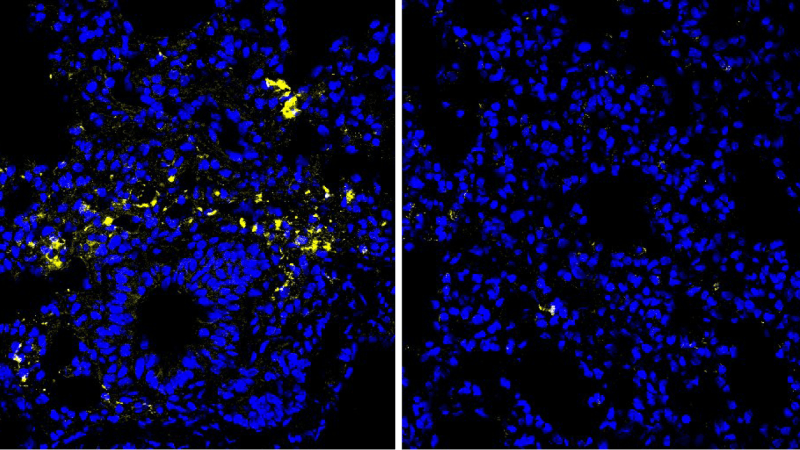
The immune system does not operate on autopilot. It responds to what we feed it, literally. A new study in mice shows that dietary arginine, an amino acid found in protein-rich foods, reduces tumor formation and viral load by boosting key immune proteins. The finding is straightforward, but its implications are not small. It suggests that a single nutrient can shift the body's ability to fight two very different threats, cancer and infection, through a shared mechanism. That is the kind of result that deserves attention, not because it rewrites immunology overnight, but because it points to something more practical: nutrition as a lever we can actually pull.
This is not the first time we have seen diet steer biology in measurable ways. Our own reporting has tracked how Stable Isotope Analysis Reveals Dietary Links in Ocean Food Webs, showing that what an organism consumes leaves a traceable mark on its entire system. And earlier, we covered how Longitudinal Data Links Early Sugar Restriction to Reduced Dementia Risk, where wartime rationing provided a natural experiment on metabolic programming. Both stories share a through line: inputs matter, especially early or consistently. Arginine fits that pattern. It is not a drug being developed in a lab; it is a component of ordinary diets, and it appears to influence immune surveillance. That makes the study a reminder that we often overlook the obvious tools already on our plates.
What we would tell a reader who asks about this is simple: do not rush to supplement stores just yet. The study was in mice, and the dose and timing will matter in humans. But the mechanism is biologically plausible and aligns with a growing body of work on immunometabolism, the idea that immune cells rely on specific nutrients to function properly. Arginine is already known to support T cell activity, and this study adds weight to the idea that availability of the nutrient can set the threshold for immune response. The practical takeaway is not a prescription but a principle: immune health is not only about avoiding pathogens or taking the next vaccine. It is also about maintaining the metabolic conditions that let immune cells do their job. We would quote this as the core insight: "What we eat changes how our immune cells are primed, and that is a lever we can study and, eventually, use."
The open question is whether this translates beyond the lab. We are not suggesting that arginine is a standalone therapy. But if dietary modulation can enhance the effectiveness of existing treatments, from vaccines to checkpoint inhibitors, that changes how we think about clinical protocols. Our related piece on an Experimental Vaccine Shows Promise Without Refrigeration Requirements already pushes the field toward more practical, scalable interventions. Arginine could fit a similar niche: a low-cost, low-tech adjunct that improves outcomes without requiring a new molecule. The next step is to watch for human trials that measure not just immune markers but hard endpoints like tumor progression or infection clearance. If those results hold, the story stops being about a single amino acid and becomes about a broader principle: the body's defenses are not fixed, and we are only beginning to understand how to feed them.