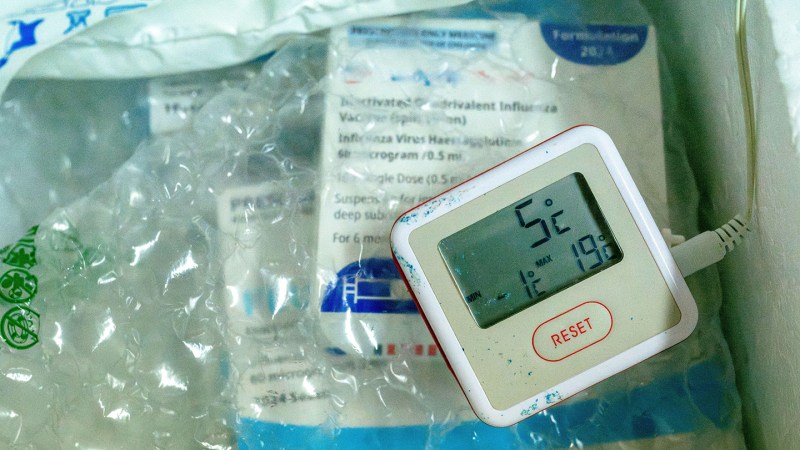
The development of a vaccine that confers protection without refrigeration is the kind of quiet breakthrough that rarely commands headlines, yet its implications are profound. In early trials, this experimental formulation protected against tetanus and diphtheria, two pathogens that remain persistent threats in regions where the cold chain is unreliable. We are not talking about a marginal improvement in convenience; we are talking about redefining what is possible in global health logistics. The ability to move a vaccine from a calibrated cold storage facility to a backpack carried by a community health worker changes the calculus of disease prevention entirely.
This story resonates with a theme we have explored before: the power of longitudinal, real-world data to reshape our understanding of health outcomes. As we noted in our coverage of Longitudinal Data Reveals Enduring Health Impacts of 9/11, the most valuable scientific insights often emerge not from a single dramatic moment, but from sustained observation over time. Similarly, the promise of this vaccine lies not just in its initial efficacy, but in its potential to be deployed consistently and equitably, without the logistical burden that has historically favored wealthy nations. It is a reminder that our integrated data ecosystem must extend beyond tracking climate indicators and into the practical delivery of medicine.
Our honest take is that this is a signal, not a finish line. The trials are early, and the path from a promising experimental result to a validated, peer-reviewed public health tool is long. We would caution against the urge to celebrate prematurely; the rigor of the scientific method demands that we measure what happens when this vaccine is exposed to real-world temperature fluctuations, transportation delays, and the biological diversity of human immune responses. However, the direction is undeniably correct. We see a parallel in the work on Microbiome Manipulation Reveals Coral Health and Resilience Insights, where a nuanced understanding of a complex system is yielding practical interventions. Here, too, the complexity of the problem is yielding to empirical, measurable progress.
For our readers, the practical implication is this: watch the logistics, not just the immunology. The next few years will tell us whether this approach can be scaled, whether it remains potent across different climates, and whether it can be manufactured affordably. The specific takeaway to quote is this: **The end of the cold chain is the beginning of true vaccine equity.** We would tell a curious reader that this is a development worth tracking precisely because it addresses the least glamorous, most stubborn obstacle in global health. The open question that remains is not whether this works in a lab, but whether it will hold up in the field, where the real test of any innovation begins. That is the detail to watch.