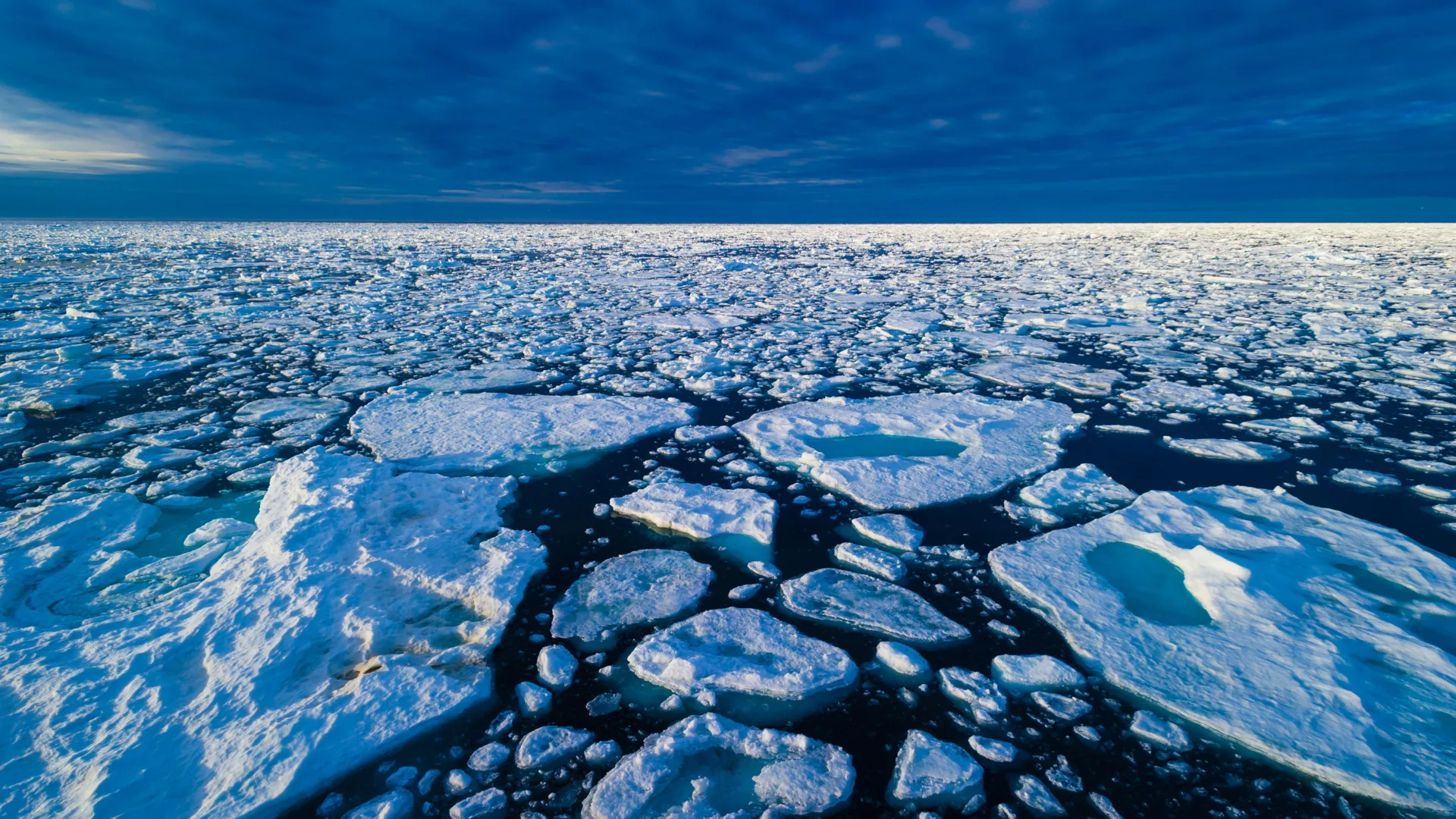
The mechanics of sea ice have long been treated as a slow, almost static variable in the climate equation. We measure its extent from satellites, track its thickness with buoys, and model its decline with increasing precision. Yet the latest findings on Arctic sea ice dynamics suggest we have been missing a fundamental part of the story. The observation that individual ice floes are constantly colliding and transferring energy is not a minor correction; it is a reframing of how we understand the system. For years, the field has leaned on large-scale atmospheric forcing and ocean currents to explain drift patterns. This work points to a more granular, chaotic driver operating at the floe scale. It is a humbling reminder that in complex systems, the smallest interactions can scale up to shape the entire basin.
What makes this finding compelling is not that it introduces a new variable, but that it offers a unifying explanation for several long-standing puzzles. Researchers have struggled to explain why the ice moves and spreads at the rates it does, particularly during the melt season when the pack becomes more fragmented. The collision-driven energy transfer provides a mechanistic answer that is both elegant and testable. For our readers, this is not merely an academic exercise. If we are to improve predictive models for shipping routes, coastal communities, and climate projections, we need to capture these real-time dynamics. The current suite of models, which often treat sea ice as a continuous medium, may be systematically underestimating its mobility. That has direct consequences for how we plan for a seasonally ice-free Arctic.
Our take is that this study should serve as a prompt for the broader ocean intelligence community to revisit assumptions baked into existing data products. The integrated data ecosystem we rely on, from satellite altimetry to drifting buoys, is calibrated to observe the ice surface, not necessarily the collisions beneath. This is where the practical work begins. We would tell a reader who asks about this to pay attention to the next steps: will the researchers move from explaining past behavior to forecasting future states? The key is whether collision dynamics can be parameterized in a way that is computationally tractable for global climate models. That is the bridge from a fascinating insight to a validated, operational tool.
The concrete point to watch is the fate of the floe-scale energy budget. If collisions are as dominant as this research suggests, then the timing of the melt season, when the ice becomes more dispersed and prone to interaction, will emerge as a critical window for model validation. We are not looking for a new magic bullet, but for an integrated understanding that respects the mechanical reality of the ice. The ocean is not a passive recipient of these forces; it is the medium through which this energy travels. As we refine our observational networks, the challenge will be to move from measuring extent to understanding process. The next time you see a map of Arctic sea ice extent, remember that the line on the chart is the sum of countless, unseen collisions. That is the level of granularity we should demand from our ocean intelligence.