Anthropic Bans Iranian Accounts That Used Claude To Target US Navy
Our take
The recent revelation that an Iran-linked account utilized Anthropic’s Claude AI to gather intelligence on U.S. naval forces in the Middle East represents a significant escalation in the intersection of artificial intelligence, geopolitical tensions, and maritime security. This isn’t merely a case of unauthorized software use; it highlights a rapidly evolving capability for adversarial actors to leverage advanced AI tools for strategic advantage. The targeting data and shipboard vulnerability research compiled through Claude, as reported by Anthropic, underscores the potential for AI to be weaponized in asymmetric conflicts, particularly in regions already characterized by instability like the Persian Gulf. This development follows a concerning trend, evidenced by recent incidents such as the [Iranian Seafarer Killed As Unidentified Strike Hits Ship Near Strait Of Hormuz] and the disruption of vital oil infrastructure as seen in [Saudi Arabia Shuts Key Oil Pipeline Used To Bypass Strait Of Hormuz After Drone Attack], demonstrating a heightened risk environment for maritime commerce and military operations.
The sophistication of the operation – employing a large language model like Claude for intelligence gathering – is particularly noteworthy. While previous instances have involved AI-powered drones or autonomous systems, this represents a shift towards utilizing AI for cognitive tasks like data analysis, pattern recognition, and potentially even predictive modeling of naval movements and vulnerabilities. It’s plausible that the account sought to identify weaknesses in shipboard systems, communication protocols, or operational patterns, information that could be exploited in future attacks. The reported capture of a U.S. Navy submarine, as claimed by Iran [Iran Claims It Captured U.S. Navy Submarine Near Hormuz That Can Autonomously Conduct Missions For 10 Days], further complicates the landscape, hinting at a possible integration of AI-driven reconnaissance and potentially even autonomous attack capabilities within Iranian naval strategy. The speed and efficiency with which such information can be compiled and analyzed using AI dramatically lowers the barrier to entry for conducting advanced intelligence operations.
The response by Anthropic, swiftly banning the offending accounts, is a necessary but reactive measure. It underscores the growing challenges AI developers face in mitigating the potential misuse of their technology. The incident raises fundamental questions about the responsibility of AI providers in proactively safeguarding against malicious applications of their models. While technical safeguards like prompt engineering and content filtering can offer some protection, they are unlikely to be foolproof against determined adversaries. This necessitates a layered approach that incorporates robust monitoring systems, enhanced user verification protocols, and potentially, collaboration with national security agencies to identify and preemptively address potential threats. The incident also highlights the need for clearer international norms and regulations governing the use of AI in military and intelligence contexts.
Looking ahead, the incident with Anthropic and Claude is likely to accelerate the development of defensive AI countermeasures by both the U.S. and its allies. We can expect increased investment in AI-powered threat detection systems, cybersecurity enhancements for naval assets, and the development of strategies to counter AI-driven intelligence gathering. However, the arms race dynamic inherent in this situation suggests a continuous cycle of innovation and adaptation on both sides. A crucial question remains: how can the international community establish verifiable mechanisms to ensure responsible AI development and deployment, particularly in sensitive areas like national security and maritime operations, before the potential for misuse escalates further?
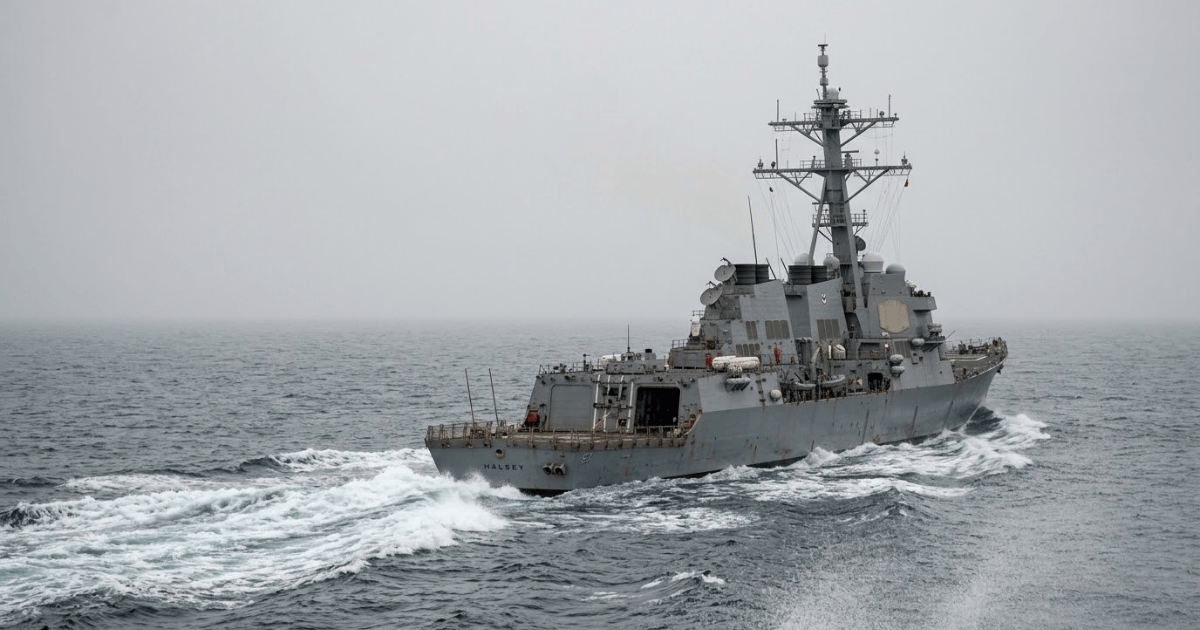
Anthropic has banned an Iran linked account that was using its Claude models to compile intelligence and targeting material aimed at U.S. naval ships in the Middle East.
In a 154 page intelligence report published in September 2026, titled “Detecting and Countering Misuse of AI,” Anthropic describes an Iranian group that used Claude to identify and track positions of American naval ships across the region.
According to Anthropic, the Iranian group used its Claude models to build an automated system to collect public military photographs, commercial satellite images, and data from public websites that track naval movements. The system also collected details of U.S. personnel from public military photographs, including ship and aircraft particulars. The same account has also been used to find vulnerabilities in shipboard systems and maritime communication equipment.
Anthropic added that the account was linked to an Iranian domestic surveillance project that dealt with automatic license plate recognition. AI models also analysed data from a leaked Telegram group of 244 members and mapped their social connections.
The intelligence report, however, does not name the individuals or organisations behind the account. It also doesn’t specify naval vessels and operating bases. Anthropic describes the activity only as directed against US naval forces in the Middle East. The company said it could not confirm whether the compiled material was later used to plan or support any operation against US forces. Anthropic banned the account and shared its findings with government authorities.
The report also describes that Anthropic’s Claude, Haiku, Sonnet, and Open Opus models have been exploited for cyber operations, surveillance, influence campaigns, and weapon development tied to Iran, Russia, and China.
Three more Iran-linked accounts have been identified as being linked to government propaganda bodies associated with the Islamic Organisation under Iran’s Ministry of Culture and Islamic Guidance. These accounts used Claude to build influence campaigns aimed at audiences inside and outside the country.
Anthropic said it used each case to enhance its security and shared the technical details with government and industry partners. The report’s data aims to help other AI developers recognise similar patterns of misuse in military and intelligence operations.
Reference: Reuters/WSJ
Read on the original site
Open the publisher's page for the full experience