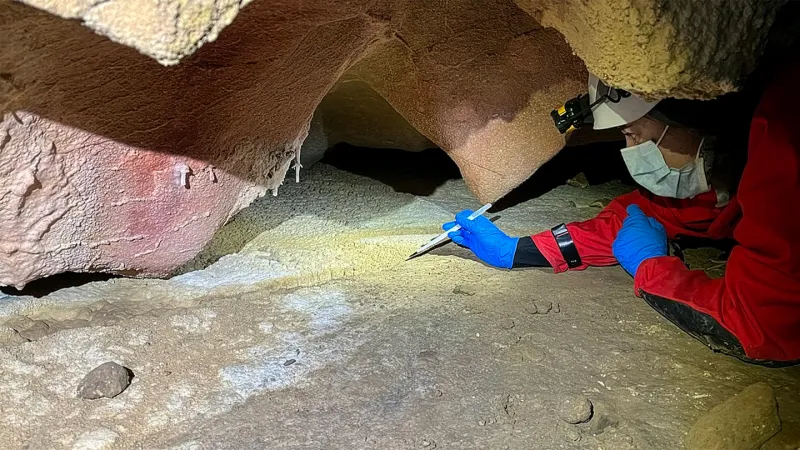
For the first time, researchers have pulled ancient human DNA directly from the sediment of cave walls, not from bones or teeth, but from the very surface where prehistoric artists once worked. The method, still being refined, offers a way to connect specific paintings to the people who made them. This is not a flashy discovery in the usual sense. It is a quiet calibration of technique, and that is exactly why it matters.
The breakthrough sits naturally alongside other recent work in genetic archaeology. Our own coverage of Denisovan Life Unveiled: Fossil Discoveries Offer New Insights showed how bone fragments and stone tools can sketch a portrait of a vanished population. And Genetic Sequencing Reveals Novel Viruses Within Sea Turtle Populations demonstrated how far environmental sampling has come in other habitats. What the cave wall work adds is a layer of precision: the genetic material is not just nearby, it is embedded in the very surface that holds the art. That distinction is worth pausing on. It means the same sample that yields a date or a species ID might also tell us who was in the room, and potentially who held the ochre.
For our readers, many of whom are tracking careers in marine and environmental science, the practical takeaway is direct. The techniques used to recover DNA from cave sediment are the same family of methods being applied to seawater, sediment cores, and even the surfaces of submerged structures. The recent work on sea turtle viruses is a reminder that genetic tools are rapidly becoming standard in fieldwork, not just in the lab. If you are a student mapping out a path, consider that the skills in sample handling, contamination control, and bioinformatic analysis are transferable across ecosystems. A method refined in a cave in Spain or Indonesia will likely find its way into marine sediment sampling within a decade. The Navigating a Marine Studies BA: Pathways to a Marine Biology Career discussion is relevant here because it speaks to the kind of interdisciplinary training that makes these transitions possible.
Our honest take: this is not a revolution, and it does not need to be. It is an incremental improvement in a field that has spent decades learning to read the past through fragments. The real value will come when the method is applied broadly, not just to famous painted caves but to ordinary sites where people lived, worked, and left traces we have previously overlooked. The open question is whether the DNA on those walls reflects the artists themselves or later visitors who sheltered in the same spaces. That distinction matters, and it will require careful cross-referencing with other evidence. We would tell a reader who asks: do not expect a single answer to who painted what. Expect a new layer of questions, better calibrated and more precise than before. Watch for the first large-scale application of this method to a site with clear stratigraphy. That is where the claim will be tested.