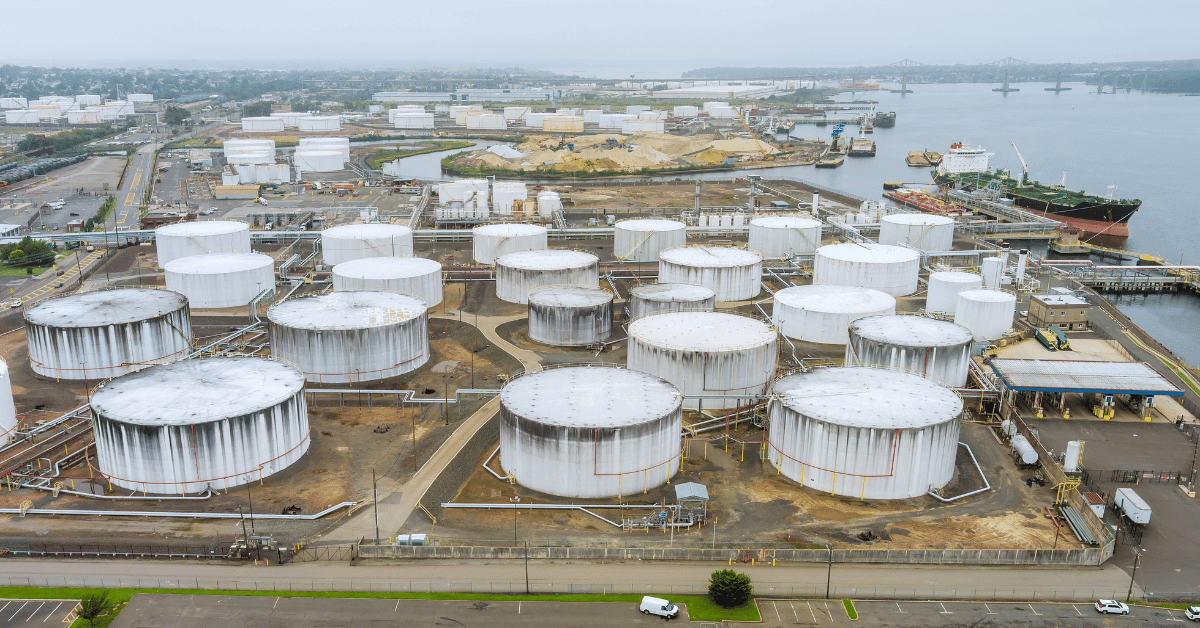
Adani Ports' €2.56 billion acquisition of Evos is not merely a land grab for European tank space; it is a calibrated bet on the long-term geography of energy transition. By securing the second-largest independent liquid storage operator on the continent, APSEZ gains eight terminals, 452 tanks, and direct pipeline connections to Schiphol Airport and the Central Europe Pipeline System. This gives it a physical foothold in the Amsterdam-Rotterdam-Antwerp cluster, Hamburg, and the Mediterranean, precisely the industrial nodes where marine fuels, biofuels, and sustainable aviation fuel will flow for decades.
The practical consequence for our readers is clear: the infrastructure that moves tomorrow's fuels is being assembled today, and it looks a lot like the infrastructure that moved yesterday's. Evos's tanks currently hold marine fuels, gasoil, gasoline, and jet fuel alongside methanol, bioethanol, and SAF. That dual capability matters. As India's marine fuel potential measured in new IMO competitiveness study shows, the subcontinent is positioning itself as a competitive hub for alternative marine fuels. Adani's move effectively links that emerging Indian supply chain to Europe's established demand centers via dedicated storage, an integrated data ecosystem of physical assets rather than just data.
We see this deal as a purposeful signal that the energy transition will be built on existing port infrastructure, not greenfield experiments. APSEZ's managing director stated the goal of moving 1 billion tonnes of cargo and becoming an integrated global transport business. That ambition aligns with the operational realism reflected in Motion-compensated crane lifts heavy platform operations into safer sea states, where engineering advances enable heavier marine operations in marginal conditions. Both stories point to the same truth: measurable progress in ocean-based industries depends on validated, real-world hardware, not theoretical commitments.
What remains to be watched is the regulatory timeline. The acquisition requires approvals and works council consultation, and no completion date has been shared. For an operator that now spans India, Israel, Tanzania, Sri Lanka, Australia, and five European countries, the question is whether the operational integration of these terminals can keep pace with the strategic narrative. The 37 million metric tonnes that moved through Evos terminals in 2025 represent a validated baseline. The real test will be whether those same tanks can calibrate their product mix toward new-age fuels fast enough to meet climate indicators without stranding conventional capacity.