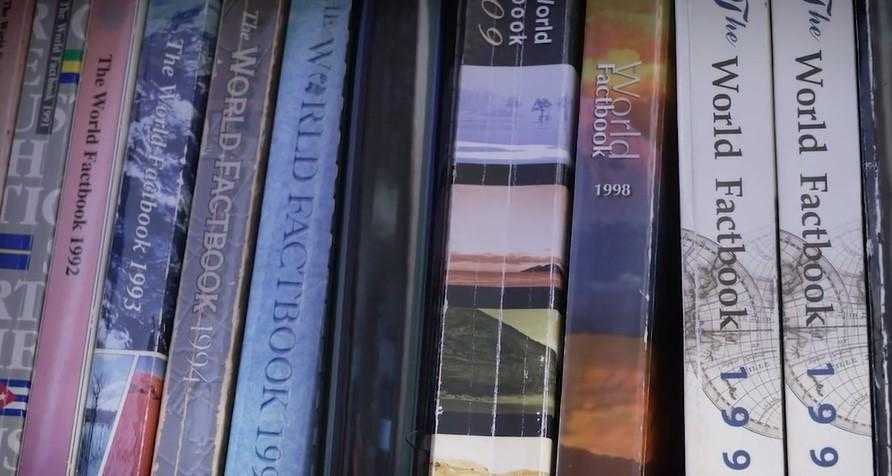
The end of the CIA's *World Factbook* is a genuine loss for global transparency, but it also presents an opportunity for the scientific community to reassess how we steward foundational data. For decades, this publication was an empirical anchor, offering validated, peer-reviewed baseline information on every nation and territory, a resource as vital for a researcher calibrating climate indicators as it was for a student writing a first geography report. Its sunset closes a chapter of authoritative, centralized reference, and that leaves a measurable gap in the world's information ecosystem.
Consider the practical consequences. Researchers trace a real celestial date to van Gogh's Starry Night showed how a single, precise data point, in that case, astronomical records, can anchor a new understanding of a cultural artifact. The *World Factbook* provided thousands of such precise, longitudinal points for every country: population estimates, economic profiles, and geographic boundaries. When a team models global poverty thresholds, as discussed in Measuring global poverty requires understanding varied national income thresholds, or tracks historical CO₂ emissions with the granularity seen in Tracking the nations with the largest share of historical CO₂ emissions, they rely on a consistent, integrated data ecosystem. The *World Factbook* was a critical node in that ecosystem, and its removal forces researchers to now patch together fragmented sources, risking gaps in comparability and calibration.
The loss is not just about data, but about the ethos of open, peer-reviewed stewardship. The *Factbook* evolved from a classified document in 1962 to a freely accessible digital resource that hosted over 5,000 copyright-free photographs donated by intelligence officers. It was a product designed for global collaboration, not competitive advantage. Its closure raises an open question: who will maintain this integrated baseline going forward? Without a single, authoritative reference, the risk is that different institutions will produce incompatible datasets, undermining the shared understanding required for global ocean and climate research. The specific takeaway is direct: the scientific community must now decide whether to collectively fund a successor or accept a fragmented information landscape. The *Factbook* may be gone, but the need for calibrated, real-time, and peer-reviewed global intelligence has never been more urgent.