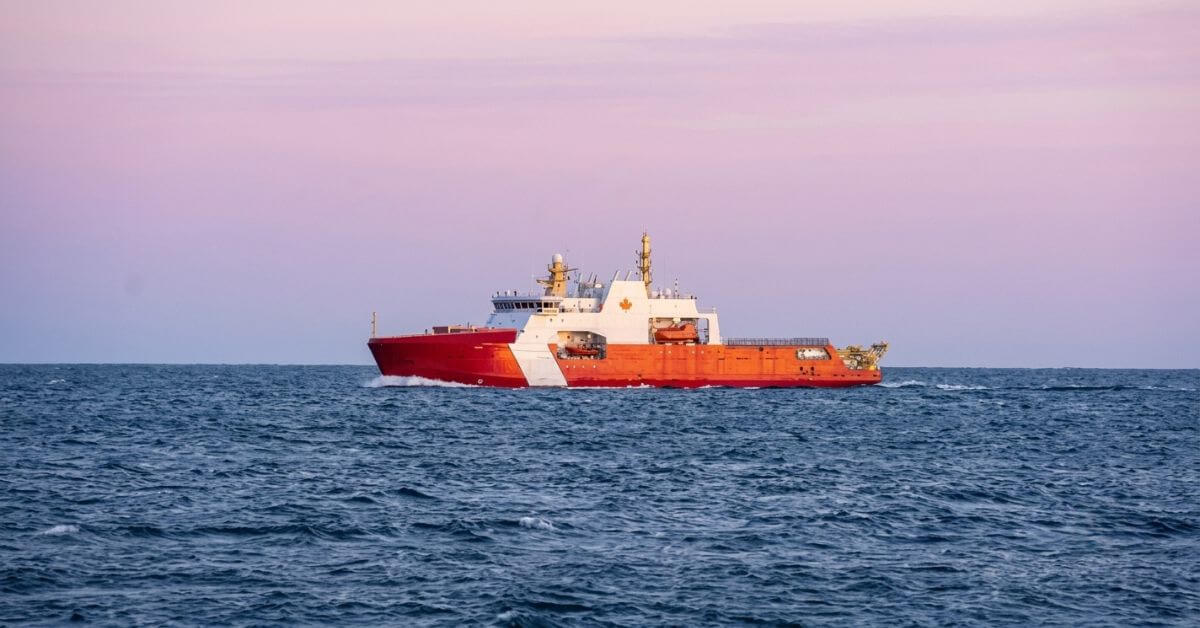
The delivery of CCGS *Donjek* is a validated step forward for Canada's ocean intelligence, but its real value lies in how it integrates into a larger, measurable data ecosystem. This is not just a new hull for the Coast Guard; it is a calibrated platform designed to extend empirical observation into the low Arctic, a region where climate indicators demand persistent, peer-reviewed monitoring. For our readers, whether researchers, policymakers, or marine operators, this vessel represents a tangible asset that turns patrol hours into longitudinal datasets.
The ship's specifications matter here. With a 48-day endurance and a 6,677-tonne displacement, CCGS *Donjek* can sustain the kind of long-duration missions that produce real-time ocean intelligence, not just occasional snapshots. Its A-frame for scientific missions and helicopter deck for Bell 429 and 412 EPI aircraft mean it can deploy sensors and air assets in tandem, creating an integrated data ecosystem from the sea surface to the shoreline. This operational profile contrasts with the semi-autonomous prototype recently launched in the Baltic, a €95 million vessel designed to safeguard cables with reduced crew presence. That project prioritizes remote surveillance; Canada's approach prioritizes human-led, multi-mission presence. Both are forward-thinking, but *Donjek* is built for the kind of empirical, hands-on science that the Arctic demands. The vessel also joins a fleet that already includes three Offshore Fishery Science Vessels and one Offshore Oceanographic Science Vessel, all built under the National Shipbuilding Strategy. That consistency of design and procurement is itself a form of calibration, each new ship strengthens the integrated whole rather than introducing a one-off capability.
The practical consequence for Canada's ocean intelligence is measurable. The AOPS program adds $459 million annually to the Canadian economy and sustains over 3,400 jobs, but the operational takeaway is more direct: CCGS *Donjek* and its sister ship CCGS *Sermilik*, due in 2027, will replace two aging offshore patrol vessels. That replacement cycle is not merely administrative. It means the Coast Guard will field a younger, more capable fleet for fisheries enforcement under NAFO, environmental response, and icebreaking on the East Coast and in the lower Arctic. The ship's 20-tonne stern crane and container capacity also support resupply missions, a capability that becomes critical as climate change extends the navigation season in remote waters. The question to watch is how the Coast Guard and Navy will coordinate their respective Harry DeWolf-class ships at sea, both fleets now share a common design lineage, which could streamline joint operations but also demands clear protocols for data sharing and mission deconfliction. That integration, if done well, will turn a pair of patrol ships into a genuine force multiplier for Arctic sovereignty and scientific observation.