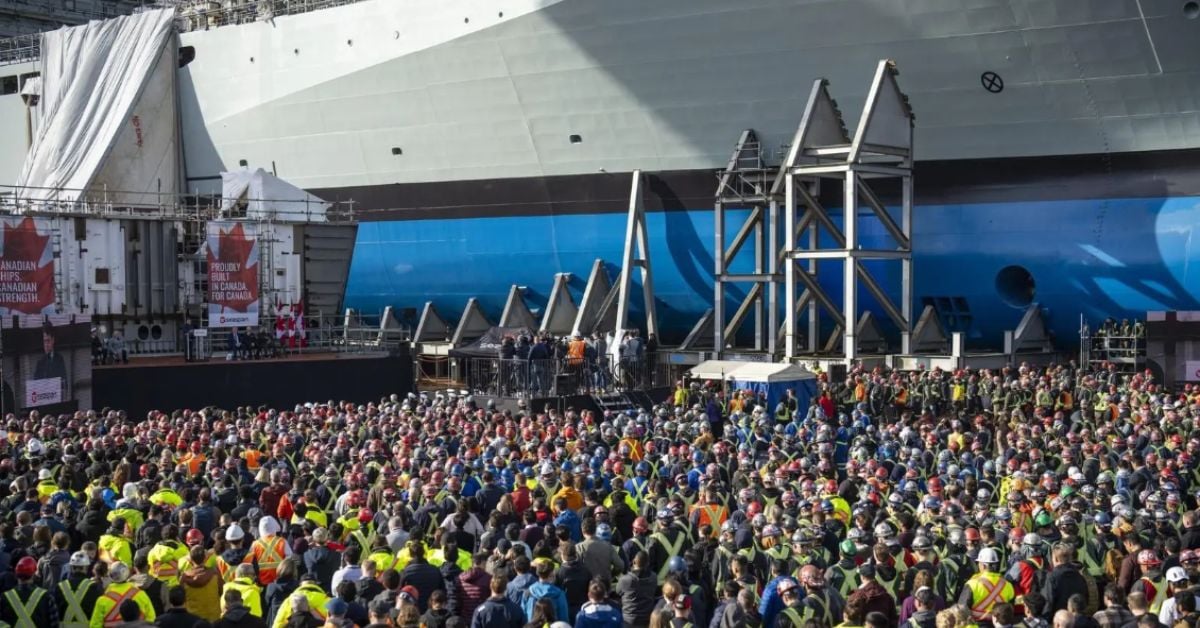
The keel of the future CCGS *Imnaryuaq* has been laid, and this is not merely a shipbuilding milestone, it is a deliberate expansion of Canada's capacity to gather ocean intelligence in the high Arctic. We believe this vessel represents a tangible commitment to empirical, year-round observation of a region that remains critically under-sampled in our climate models. For researchers and policymakers who rely on Understanding drives protection: microscale environments reveal new pathways for coral reef restoration, the *Imnaryuaq* offers a platform to extend similar precision monitoring into one of the planet's most extreme environments.
The vessel's Polar Class 2 rating is the technical detail that matters most. It means the *Imnaryuaq* can operate farther north, in thicker ice, and for longer periods than any Canadian icebreaker before it. That capability translates directly into extended seasonal access for deploying calibrated instruments, validating satellite observations, and collecting longitudinal data on sea-ice thickness, ocean temperature, and freshwater fluxes. Unlike the autonomous, AI-driven systems being integrated at Fincantieri commits nearly €100 million to robotic shipyard intelligence, this is a human-crewed, sovereign asset designed for self-sufficient operation year-round along 162,000 kilometres of Arctic coastline. The distinction matters: robotic systems excel at repeated measurements in fixed locations, but a heavy icebreaker can reach the dynamic ice edge and the marginal ice zone where the most rapid changes occur.
What this means in practical terms is a measurable increase in Canada's ability to contribute peer-reviewed data to the global ocean-observing system. The vessel will support the deployment and recovery of subsurface moorings, conduct seafloor mapping in uncharted waters, and serve as a mobile laboratory for real-time analysis of climate indicators such as carbon uptake and primary productivity. For the ocean intelligence community, the *Imnaryuaq* is not a patrol ship with a science deck bolted on; it is an integrated data ecosystem designed from the keel up to operate as a research platform. The ceremonial placement of coins designed by Squamish and Inuit artists, blessed in a Coast Salish purification ceremony, reinforces that this vessel carries a shared responsibility, not just to assert sovereignty, but to steward the knowledge we gather.
The question we are watching is how this new capacity will be prioritized. The vessel will not arrive until the early 2030s, and by then the Arctic sea-ice regime will have changed again. Will the icebreaker's schedule be driven primarily by sovereignty patrols, or will a dedicated science mission be embedded from the start? The *Imnaryuaq* will be one of up to 21 icebreaking vessels built under the National Shipbuilding Strategy, and each keel laid represents a choice about how we allocate national resources. The specific takeaway is this: the ship's value will be measured not by its size or its icebreaking power, but by the quality and duration of the oceanographic time series it enables. A vessel that can stay on station through the polar night and transmit real-time data back to shore is a vessel that can finally close the winter data gap in the Arctic, and that is a measurable outcome worth tracking.