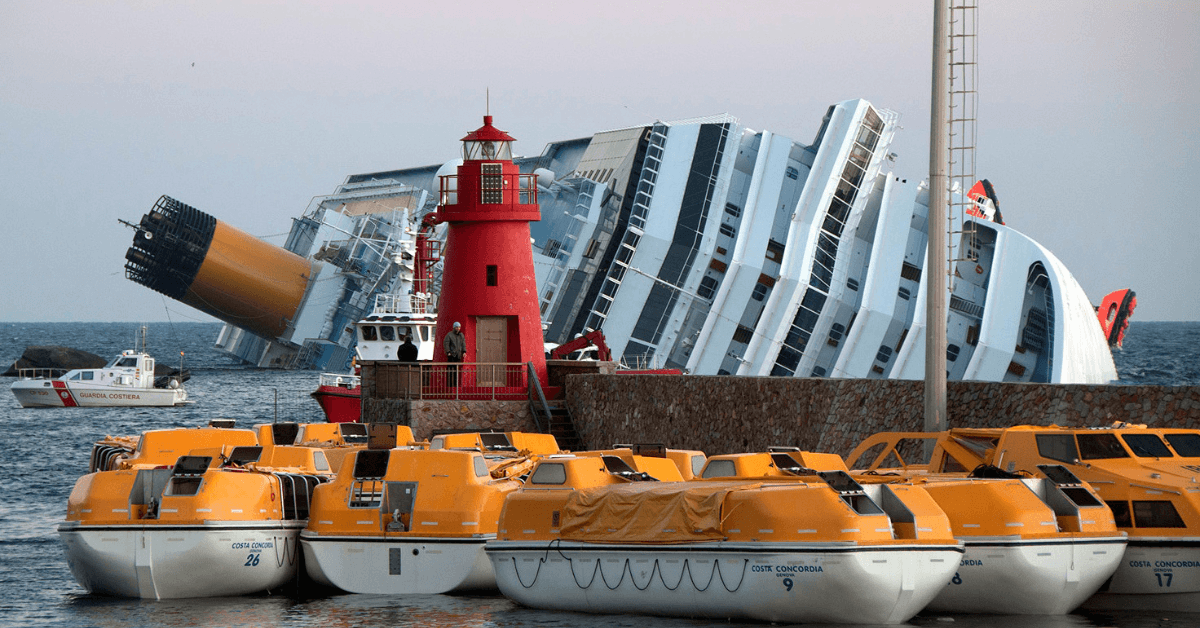
The early release of Francesco Schettino, the Costa Concordia captain who abandoned 4,200 passengers and crew while his ship sank, is a failure of accountability that diminishes the principle of command responsibility at sea. Schettino served less than ten years of a sixteen-year sentence for multiple manslaughter, causing a shipwreck, and abandoning his vessel, a dereliction of duty that cost 32 lives. His return to society on probation, with a job as an office worker and a 10 p.m. curfew, is not justice; it is a bureaucratic conclusion to a case that demanded an unequivocal statement about what we expect from those entrusted with lives at sea.
This outcome stands in sharp contrast to the conduct of other mariners who have faced similar moments of crisis. Consider the story of Captain Stewart stayed on the bridge as ship capsized, last to leave despite injury, who remained on the bridge of a river cruise ship as it capsized in New Orleans, ensuring he was the last to leave despite his own injury. That is the standard. Schettino's defense, that he tripped and fell into a lifeboat as the ship listed at 60 to 70 degrees, was never credible, and the court that convicted him agreed. Yet the legal system has now effectively halved his sentence, sending a message that abandoning one's post in a maritime disaster carries consequences that can be served with an office job and a nightly curfew.
For researchers, policymakers, and seafarers who follow these cases closely, the practical implications are sobering. The Costa Concordia disaster spurred reforms in cruise ship safety, including mandatory musters and improved lifeboat access, but the human factor, the captain's refusal to return to the ship despite direct orders from the Italian Coast Guard, remains the hardest variable to regulate. Schettino's release may influence how future crews view the gravity of abandonment charges, and it certainly shapes public trust in maritime accountability systems. Meanwhile, the discovery of historical wrecks like Australia's first home-built warship located after 128 years reminds us that the sea preserves evidence of both competence and failure. The Spitfire's crew, lost 128 years ago, could not be held to account; Schettino was, but the accounting now feels incomplete.
The specific detail to watch is whether Italian authorities impose any conditions on Schettino's probation that restrict his ability to work in or near the maritime industry. If he is permitted to hold a shore-based role with any connection to vessel operations, the precedent weakens the deterrent effect of abandonment laws. Justice is not only about punishment; it is about reinforcing the norm that a captain's duty does not end when the ship begins to sink. On this point, the system has come up short.