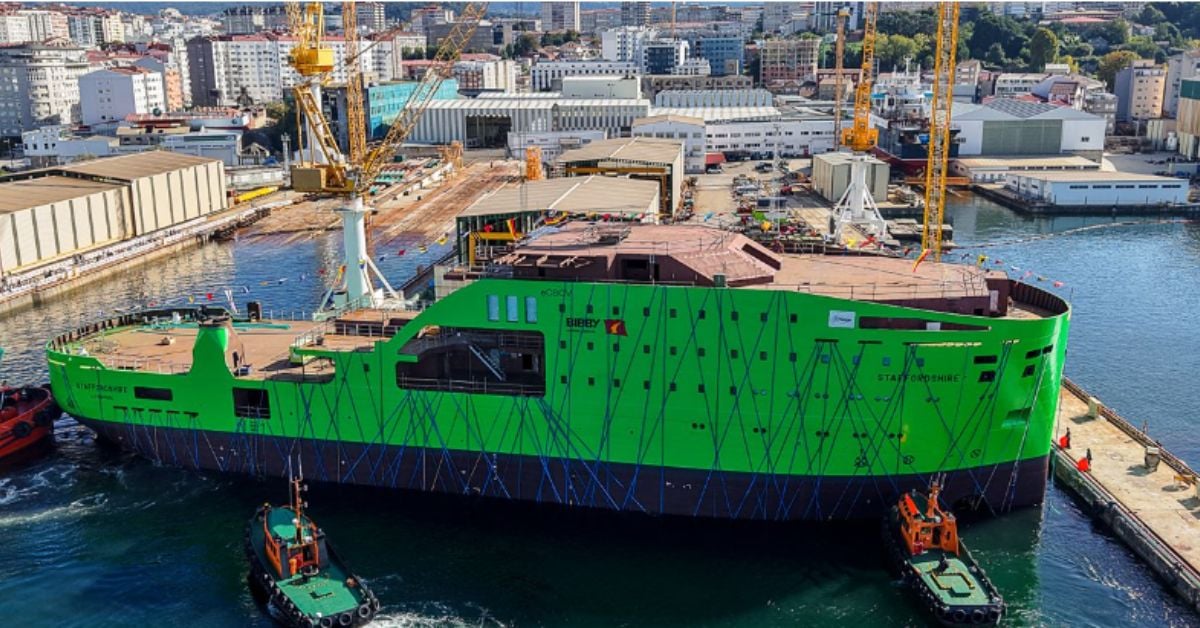
The offshore wind industry has long faced a fundamental tension: the need for low-emission operations versus the practical realities of working far from shore. Bibby Marine's launch of the eCSOV *Staffordshire*, with its battery-first propulsion system, does not merely tweak that equation, it recalibrates it. This vessel represents a validated, measurable step toward making low-carbon offshore operations not just possible, but economically superior.
What sets the *Staffordshire* apart from conventional hybrid-assist vessels is that its batteries serve as the primary power source, not a supplement. The design is built around a simple but powerful premise: operate on stored energy first, and recharge onboard using dual-fuel methanol engines only when necessary. This integrated approach addresses the most persistent objection to electrification in marine settings, the lack of offshore charging infrastructure, by embedding the solution within the vessel itself. The result is an estimated 40% reduction in operational costs. That figure is not speculative; it is a direct consequence of running generators at a consistent, calibrated load rather than ramping them up and down to match variable demand. This practical efficiency aligns closely with the kind of validated thinking we see in other corners of the industry, such as Ørsted consolidates ownership of 172 MW Gunfleet Sands in UK waters, where long-term ownership models reward operational predictability. The *Staffordshire* simply applies that same logic to the vessels that service those turbines.
The project, backed by £20 million from the UK's Zero Emission Vessels and Infrastructure programme, represents a deliberate move from theory to application. Bibby Marine is collaborating with Corvus Energy for battery systems, Kongsberg for propulsion, and Stillstrom for future offshore charging compatibility, an integrated data ecosystem in hardware form. Yet the vessel is not yet complete. It remains in outfitting and battery installation, with a formal naming ceremony scheduled for 2027. That timeline matters. It means the industry now has a clear window to observe whether battery-first propulsion, combined with dual-fuel methanol recharging, can withstand the cumulative demands of real offshore service. For researchers and operators tracking climate indicators and operational efficiency, the *Staffordshire* is a live experiment, not a finished product.
The name itself, carried by previous Bibby vessels in 1894, 1929, 1950, and 1977, connects this leap to a longer maritime heritage. But the question that matters most is not about lineage, it is about scalability. Can this battery-first architecture be replicated across a fleet? The Validated efficiency: battery-first vessel design cuts offshore wind OPEX analysis suggests the operational model holds promise. The *Staffordshire* will answer whether that promise survives contact with the North Sea.