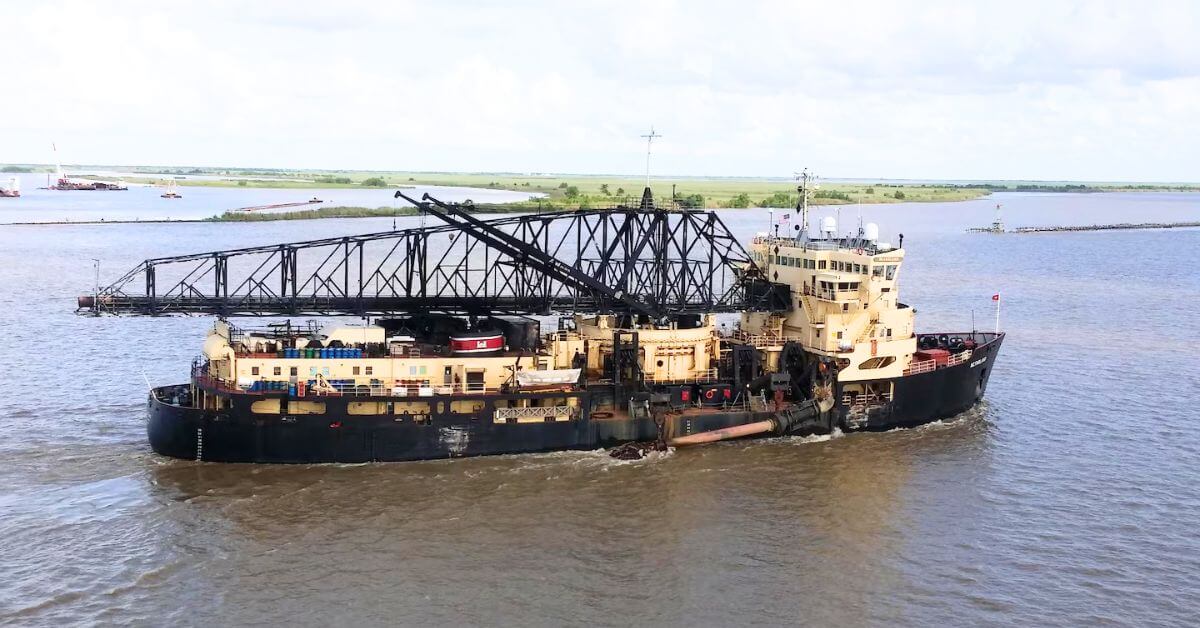
A calibrated era of service deserves a calibrated farewell, and the Dredge McFarland received one. The U.S. Army Corps of Engineers Philadelphia District honored the vessel on Oct. 23 at Fort Mifflin, marking the end of nearly six decades of dredging that moved more than 100 million cubic yards of material. For our readers, whether researchers tracking sediment transport, policymakers managing navigation corridors, or maritime professionals who rely on maintained channels, this retirement is not merely ceremonial. It represents the closing of a chapter in how we generate the empirical, longitudinal data that underpins safe waterways. The McFarland's final mission completes a record of service that, like the US Forces Neutralize Iranian-Affiliated Vessel in Gulf of Oman, underscores the enduring value of sustained maritime presence, though the McFarland's work was measured in cubic yards dredged rather than threat neutralized.
The vessel's legacy is one of integrated, real-world data collection. Launched in 1966 at Bethlehem Steel's Sparrows Point yard, the McFarland served under three districts, Galveston, Jacksonville, and Philadelphia, before entering Ready Reserve status in 2010. Its design allowed bottom discharge, sidecasting, or direct pumpout, giving engineers calibrated flexibility. This is the kind of operational intelligence that cannot be simulated. When the vessel's crew rescued a boater in distress near Morehead City in 2012 or helped extinguish a shipboard fire in the Mississippi River Gulf Outlet in 2001, they demonstrated the readiness that defines a truly integrated data ecosystem, one where human judgment and mechanical reliability converge. The Malaysia restricts tanker traffic and bunkering in new Strait marine protected zone reminds us that navigation is increasingly governed by measured restrictions; the McFarland's work ensured those channels remained viable for decades.
What does this mean practically? The McFarland now enters pierside standby status at Fort Mifflin while the Army Corps' medium-class hopper dredge, the Donnelly, is under construction. This transition period creates a measurable gap in dredging capacity on the Delaware River and Bay. The Corps plans to preserve the vessel's legacy through documentation, videography, artifact curation, and public interpretation, valuable for historical record, but no substitute for the vessel's hopper capacity. The 6.6 Billion Maryland Shipyard Marks Largest U.S. Maritime Investment Since WWII signals a national commitment to rebuilding maritime infrastructure, yet the McFarland's retirement reminds us that replacing a vessel that dredged more than 100 million cubic yards is not simply a matter of steel and welds. It is about the crew knowledge that cannot be transferred in a drydock manual. The specific takeaway: the Donnelly's construction timeline now becomes a critical climate indicator for every shipper, port authority, and environmental monitor along the Delaware. Watch the delivery date, because calibrated service does not pause without measurable consequences.