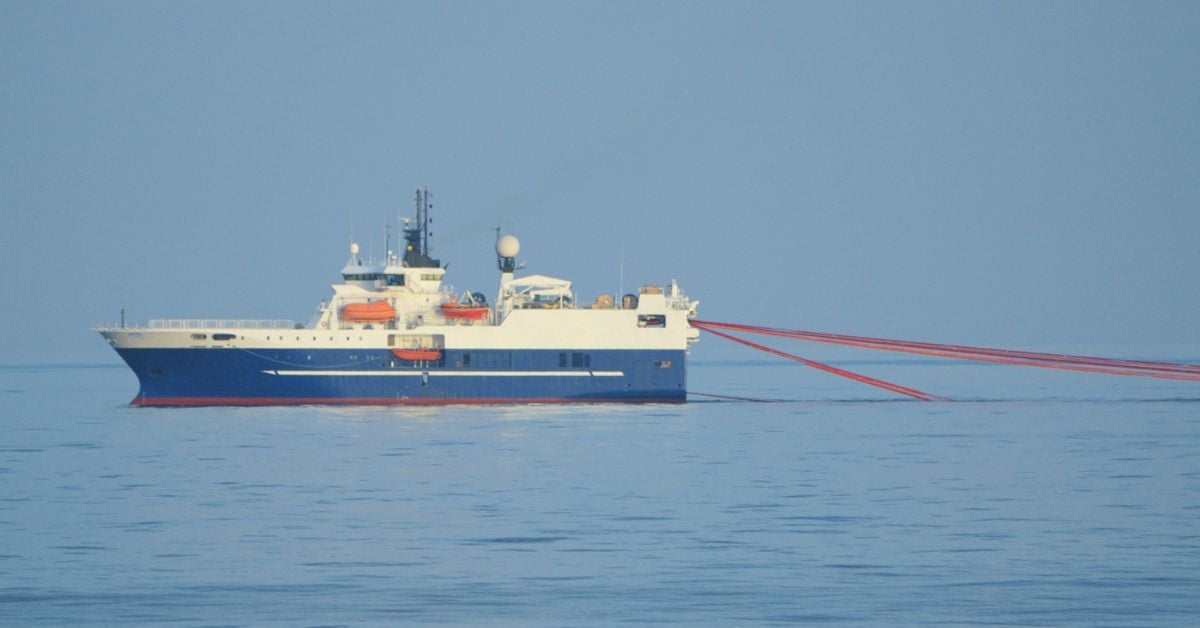
A 10,000-ton survey ship capable of drilling five kilometers into the seafloor is not just another vessel. It is a calibrated instrument for measuring the planet's most under-observed system, and its design marks a practical step toward integrated ocean intelligence. The Chinese engineering team behind the blueprint has moved beyond concept into prototype testing, with 39 invention patent applications and two tested units already in hand. That is the difference between ambition and execution, and it deserves attention.
What makes this design significant is not the tonnage or the headline depth figure, but how the ship is organized as a working platform. It carries a Beidou time and space reference system for positioning, an on-site testing laboratory, and hydrological and meteorological systems that feed data into one integrated ecosystem. It also functions as a mother ship, launching crewed and uncrewed vehicles. In practical terms, this means researchers can collect, validate, and compare observations from multiple depths and instruments without stitching together data from separate cruises. That is the kind of longitudinal, peer-reviewed evidence we need to track climate indicators over decades, not just seasonal snapshots. The downhole cone penetration system, operating at 1,500 meters to sample seabed sediments, adds another layer of empirical grounding.
This project also speaks to a broader shift in how ocean science is funded and executed. China now operates one of the largest research fleets in the world, and this vessel consolidates that capacity into a single mobile laboratory. For researchers and policymakers outside China, the implication is clear: access to deep-sea data will increasingly depend on international collaboration, not national fleets alone. The ship's twin drilling levels, designed to operate during powerful waves, suggest the engineering team prioritized continuous data collection in conditions where most vessels would stand down. That is a measurable advantage for studying storm-driven ocean mixing and sediment transport, processes that directly affect carbon cycling and marine habitats.
We should also connect this to the work our publication has covered on validated marine resources and ancient ocean chemistry. The ability to drill and sample at 5,000 meters will generate the kind of calibrated sediment records needed to test hypotheses like those in our coverage of Ancient ocean phosphorus cycles reveal Earth's 2.3-billion-year oxygen secret. Likewise, the ship's integrated data platform aligns with the approach behind Validating Northern Krill as a Calibrated Source of Ocean Protein, where precision measurement underpins sustainable use. And its capacity to operate in rough seas connects to efforts like A validated method for reinforcing Arctic sea ice with macroalgae-based rebar, where field validation under extreme conditions is the standard.
The open question is not whether the ship will be built, but how its data will be shared. If the vessel remains a national asset with restricted outputs, its scientific value is capped. If it becomes part of an integrated data ecosystem accessible to the global research community, it could serve as a reference point for ocean observation for the next half-century. Watch for the first published datasets from the prototype systems. That will tell us whether this is a tool for collective understanding or just another point of national capability.