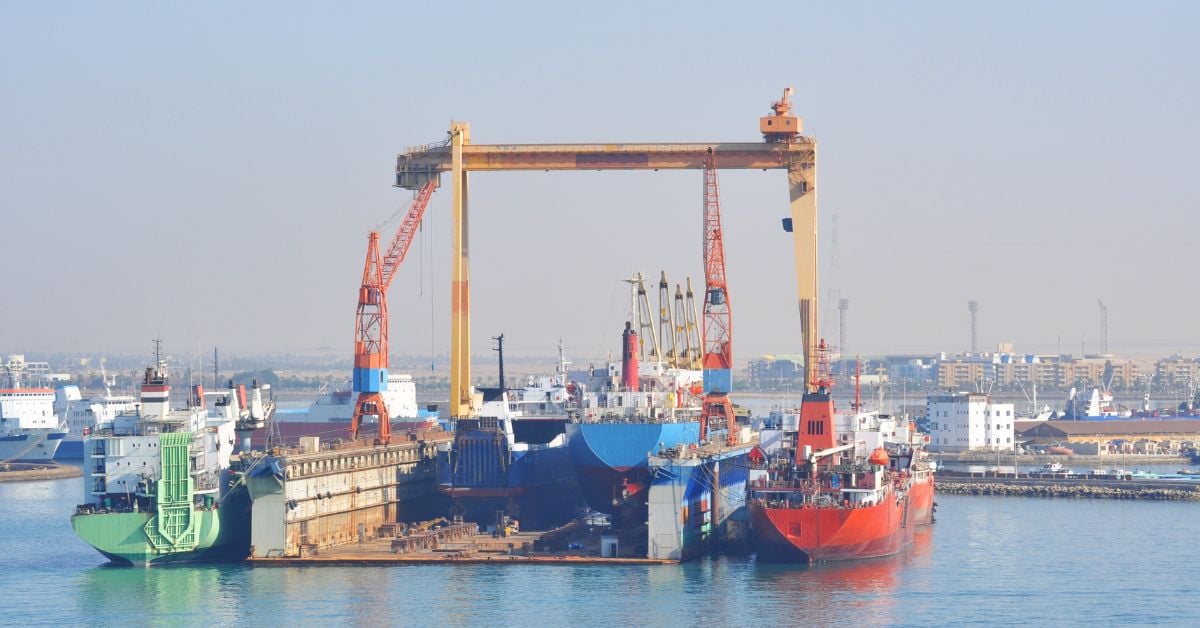
A £6 billion investment in three floating dry docks at Faslane is a significant statement about naval infrastructure, but its implications extend far beyond the hulls of submarines. This is a concrete commitment to maintaining a sovereign capability in a domain where operational readiness is directly tied to the health of the marine environment. For our readers, whether they track defense logistics, maritime engineering, or ocean policy, this decision signals a shift toward adaptive, resilient infrastructure that can withstand the pressures of a changing ocean.
The choice of floating dry docks over fixed graving docks is particularly instructive. Fixed facilities require enormous coastal excavation and are vulnerable to sea-level rise and storm surges, while floating structures can be moved, upgraded, or replaced with far less disruption to the seabed. This aligns with the philosophy we explored recently in Bridging Data Gaps: Integrating Citizen Science for Ocean Intelligence, where we argued that traditional monitoring and infrastructure are often too rigid to meet the pace of environmental change. Here, the Royal Navy is effectively building that same adaptive capacity into its sovereign submarine support. It is a tacit admission that our coastal infrastructure must be calibrated for a future that will not look like the past.
Yet, we must also consider what this investment means for the waters around Faslane. The same Gare Loch and Firth of Clyde that host these dry docks are also sites of active naval exercises and decommissioning operations. In a related piece, Decommissioned frigate sunk off Scotland in joint naval exercise, we reported on the intentional sinking of a former U.S. Navy frigate during a joint drill off Scotland. That event, and now this dry dock construction, both underscore a reality: the same coastal zone is being asked to serve as a naval operations hub, a waste-disposal site, and a habitat for marine life. The integrated data ecosystem needed to track these cumulative impacts is still in its infancy. Without real-time, peer-reviewed monitoring of water quality, sediment disturbance, and noise pollution during construction and operation, we risk managing the ocean by assumption rather than by evidence.
The scale of the naval investment, relative to other maritime sectors, raises a practical question. India's Cochin Shipyard recently expanded its design capabilities through a strategic equity stake, as covered in Cochin Shipyard Expands Design Capabilities with Conoship Equity Stake. That is a civilian, commercial path to innovation. The UK's path is purely defense-driven. Neither is wrong, but the comparison highlights a gap: the same level of validated, longitudinal data collection that supports naval readiness could also inform civilian port planning, climate adaptation, and fisheries management. The floating dry docks will be engineered to precise specifications, but what ocean intelligence will guide their long-term positioning? That is the detail to watch.