shipping
130 stories filed under shipping on World Data Ocean. The newest of them: “Multinational Task Force Maintains Maritime Security in the Indian Ocean.”, “Maritime Traffic and Revenue Sharing Agreement Reached Between Iran and Oman.”, and “Expanding India's Fleet: A Push for Maritime Independence and Cost Parity”. Six months after deployment, Combined Task Force 151 has effectively suppressed piracy activity in the Indian Ocean, a success that warrants attention. Iran and Oman have reached a maritime traffic and revenue sharing agreement, a practical step toward regional coordination. A Global Hub for Ocean Intelligence 4 World Data Ocean is a centralized digital platform where researchers, scientists, and ocean enthusiasts converge to… The list below is every shipping story on World Data Ocean, newest first.
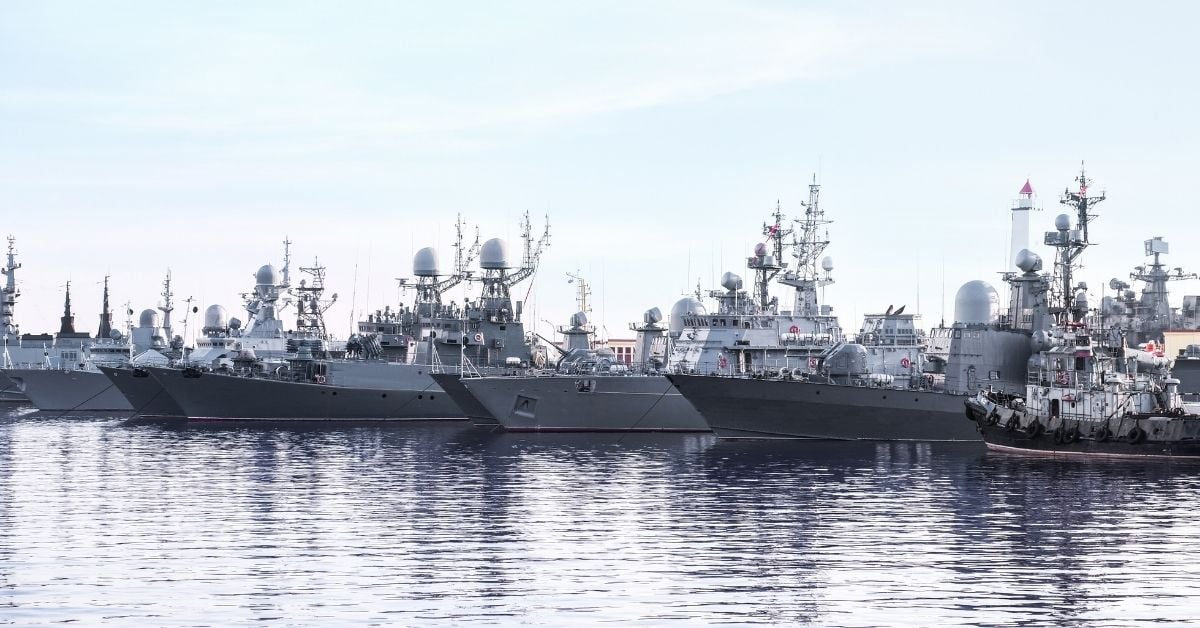
Multinational Task Force Maintains Maritime Security in the Indian Ocean.
Six months after deployment, Combined Task Force 151 has effectively suppressed piracy activity in the Indian Ocean, a success that warrants attention. This isn't merely a routine patrol; it reflects a calibrated, integrated approach to maritime security that holds up under real-world conditions. When operational discipline meets clear objectives, the results are measurable. For readers tracking the region's shifting dynamics, our coverage of the Gulf of Oman STS transfers offers a useful counterpoint.
Maritime Traffic and Revenue Sharing Agreement Reached Between Iran and Oman.
Iran and Oman have reached a maritime traffic and revenue sharing agreement, a practical step toward regional coordination. Yet commercial shipping continues to face genuine risk in these waters, even as direct US-Iran hostilities have cooled in recent weeks. We view this pact as a measured, useful move, but not a cure-all. For context on the broader pressures, our related piece on Gulf of Oman STS transfers maxing out shows how strained regional logistics have become. Understanding drives protection.
Expanding India's Fleet: A Push for Maritime Independence and Cost Parity
Indian ship owners face a 16-20% cost penalty flying the national flag, a gap that undermines maritime self-reliance before it can scale. Closing that differential is not merely fiscal; it is strategic. Lower operational costs would shift tonnage back to Indian registry, strengthening supply-chain security and bargaining power. The push toward cost parity aligns with broader regional momentum, including Russia's calibrated export levies for its icebreaker fleet. This is a practical, measurable step toward independence, and one worth watching closely.
Strait of Hormuz Incident Raises Concerns Over Maritime Security and Trade.
New tolls and targeted attacks in the Strait of Hormuz are not abstract threats; they are live disruptions to the trade routes that move global energy. Iran's actions against vessels it accuses of bypassing its preferred path introduce a volatile new layer of risk, turning a critical waterway into a flashpoint. This escalation demands measured, empirical observation.

Securing Vital Sea Lanes: Commitment to Straits of Malacca and Singapore.
The Straits of Malacca and Singapore carry a third of global maritime trade, and their security is not negotiable. Indonesia, Malaysia, and Singapore have now made that priority explicit, committing to keep these vital sea lanes open for all nations. This is a calibrated, practical move that reinforces stability where it matters most. For readers tracking how regional infrastructure evolves, our related piece on integrated subsea cables enhancing Indian Ocean connectivity offers useful context.

Strait of Hormuz Transit Costs Soar, Impacting Global Energy Flows.
The Strait of Hormuz carried roughly a fifth of global oil flows before the Iran war, and now transit costs are soaring. That shift does not just redraw shipping economics; it tightens the margins on every barrel and LNG cargo moving through a chokepoint the world still depends on. The pressure is measurable, and the implications for energy security are immediate. For deeper context on how nearby routes are adapting, our piece on Gulf of Oman STS transfers is worth reading.

Maritime Security Concerns Rise: Gulf of Aden Sees Renewed Piracy Risks
The Gulf of Aden's renewed piracy risk demands immediate attention. IMO Secretary-General Mr. Arsenio Dominguez spoke out after the SEAMULL was hijacked on 20 August 2026, a stark reminder that maritime threats remain persistent. This is not a distant problem; it directly endangers crews and global trade routes. Measured, decisive action is required to protect these waters. For broader context on regional security efforts, our related coverage on the eighty nations urging the reopening of the Strait of Hormuz offers critical perspective.

Red Sea Shipping Disrupted: Missile Strike Impacts Oil Tanker Near Yanbu
A ballistic missile strike has disrupted shipping near Yanbu, with the Houthis reporting that the tanker Amzan, operated by Bahri, was hit. The incident underscores how fragile Red Sea transit has become for energy flows. This is not an isolated disruption; it follows reports of Gulf of Oman STS transfers maxing out amid rising Saudi exports. The interconnected pressure on these routes demands attention.

Black Sea Grain Shipments Limited as Truce Proposal Fails.
The Black Sea Grain Shipments Limited's collapse, following the failed truce, leaves Ukraine's agricultural lifeline critically constrained. Since August, only 500,000 tonnes have moved, a mere fifth of what could ship. This is not a stalemate; it is a calibrated strangulation. The measured volume signals deliberate pressure, not logistical failure. While Russia calibrates its own maritime leverage elsewhere, as our piece on Northern Sea Route icebreaker funding shows, the immediate cost here is global food security.

Safer Red Sea Route Calibrates Oil Exports Amid Geopolitical Shifts
Shipowners are rerouting Saudi crude through the safer northern Red Sea corridor, a calibrated response to persistent Houthi threats that recalibrates export flows without disrupting global supply. The move reflects pragmatic maritime adaptation, not alarm. It is a measured shift, one that keeps oil moving while reducing risk to tankers and crews. For context on how regional pressures are reshaping tanker operations, our related piece on Gulf of Oman STS transfers maxing out offers a useful counterpoint.

Shipping Traffic in Strait of Hormuz Declines Amid Geopolitical Tensions
Tracking shipping through the Strait of Hormuz has become a sharper exercise in reading the gaps. Recent data shows a decline in transiting vessels, but the figures carry a caveat: some ships have switched off their transponders while crossing this critical waterway. That means the true volume is likely higher than reported, a reminder that geopolitical tension distorts even our most reliable metrics.

Geopolitical Tensions Impact Shipping Lanes: Assessing Risks in the Strait of Hormuz
Iranian President Masoud Pezeshkian has called for an end to the months-long war, framing Iran's position from one of "power and dignity." The statement lands as the Strait of Hormuz remains a flashpoint for global shipping, where geopolitical friction translates directly into maritime risk. Negotiations may be stirring, but the calculus is far from settled.

Escalating Tensions: Sanctions Aim to Preserve Stability in the Hormuz Strait.
Sanctions targeting the Hormuz Strait are designed to reinforce the existing US blockade, not replace it. Treasury Secretary Bessent stated these measures could prevent a return to large-scale military conflict, a goal that demands precision over posturing. This is strategic pressure, carefully calibrated. For context on regional energy flows, our related coverage of Gulf of Oman STS transfers offers useful perspective. The objective remains stability, achieved through measured economic deterrence rather than escalation.

South Korea Charts Arctic Route, Balancing Commerce and Geopolitical Concerns
South Korea's first Arctic-bound ship to Europe is a calculated test, not a statement. The route's commercial viability hinges on ice-free seasons and cost efficiency, yet the geopolitical undertow is undeniable. Western backlash over Russian cooperation complicates what might otherwise be a straightforward logistics calculation. We see a nation weighing measurable gains against diplomatic friction, a balance requiring calibrated judgment. For deeper context on Moscow's Arctic ambitions, our related piece, "Russia Calibrates Export Revenue for Northern Sea Route Icebreaker Fleet," outlines the financial stakes.

Heightened Tensions: Iran and US Navigate Strait of Hormuz Instability
A vessel was struck as it departed the Strait of Hormuz on Tuesday, while the UAE reported two ballistic missiles launched from Iran. The incident underscores a fragile moment in a waterway that carries a third of global oil trade. Tension is not new here, but the precision of these actions raises the stakes. For readers tracking the region's shifting dynamics, our coverage of phased negotiations to ease restrictions on the strait offers essential context.

Shifting Shipping Patterns: Omani Route Gains Prominence Through Strait.
A month ago, the Omani route saw almost no commercial traffic. Now, it is gaining prominence through the Strait, a shift that speaks to how quickly maritime dynamics can change. Kpler's data makes the pivot measurable, and that matters. This is not speculation; it is empirical movement. For deeper context on the pressure building in these waters, our piece on Gulf of Oman STS Transfers Max Out Amid Rising Saudi Oil Exports tracks the capacity constraints driving such realignments.

Record-Breaking Green Methanol Bunkering Fuels Sustainable Shipping in Shanghai
A single bunkering operation in Shanghai has set a global record for green methanol supply, marking measurable progress in the shipping sector's shift toward lower-carbon fuels. The scale of this milestone is significant, but the real signal is repeatability: the more ports integrate green methanol into routine logistics, the faster the industry can move beyond pilot projects. For broader context on regional energy flows, our coverage of Gulf of Oman STS transfers offers a useful contrast in how different fuel systems are evolving.

Strait of Hormuz Incident: Vessel Damaged, Crew Member Injured
A vessel was struck while making an outbound transit of the Strait of Hormuz, leaving a crew member injured, according to the Company Security Officer. The incident underscores how quickly risk can escalate in a waterway where geopolitical tension already runs high. Such disruptions are not isolated events; they are part of a broader pattern affecting regional energy flows. For deeper context on these dynamics, our coverage of phased negotiations aimed at easing restrictions on the Strait offers useful perspective.

Strait of Hormuz Traffic Plummets Amidst Escalating Tensions and Attacks
The Strait of Hormuz is tightening under pressure. Ship traffic has plummeted after attacks on five commodity tankers, a stark reminder that instability directly chokes global energy lifelines. While U.S.-Iran negotiations for a peace agreement remain stalled, the cost of inaction is measurable in real-time data. The parallel rise of Gulf of Oman STS transfers, covered in our related piece on maxed-out ship-to-ship operations, underscores how trade adapts, but never without risk.

India Eyes Northern Sea Route for Expedited Trade with Russia
India is charting a new course to the Arctic. With plans to send its first cargo ship along Russia's Northern Sea Route in 2027, New Delhi is looking to bypass the Suez Canal and cut transit time as bilateral trade with Moscow expands under sanctions. It is a pragmatic, data-driven move, one that reflects how geopolitical pressures are redrawing maritime logistics. For readers tracking parallel disruptions, our coverage of strikes targeting ports and vessels in confirmed military action offers broader context on the region's volatility.

Black Sea Truce Proposal Aims to Stabilize Global Food Supply.
A third-party channel has carried the Black Sea truce proposal to Moscow, yet Ukraine still awaits a reply. The asymmetry is telling: one side engages, the other delays. A stable food corridor is not a favor; it is a global necessity, and every idle day carries measurable cost. For context on how maritime pressure is being applied, our related report, "Russia Calibrates Export Revenue for Northern Sea Route Icebreaker Fleet," offers a useful counterpoint. The signals are mixed, but the proposal stands.

Iran Asserting Control Over Vital Strait of Hormuz Passage
Iran's assertion that it manages and controls the Strait of Hormuz is a statement of strategic fact, not posturing. For a nation whose economy and security are tied to the waterway, claiming this position is both logical and consequential. The strait's role as a global energy artery makes such declarations inherently significant, and we should treat them with the gravity they demand. For broader context on regional shipping pressures, our coverage of Gulf of Oman STS transfers offers a useful parallel.

New Ice-Class Vessel Joins Global Shipping Fleet, Built to DNV Standards
A new 7,000 DWT ice-class vessel has entered the global fleet, engineered by Groot Ship Design and built to DNV classification standards. This is precisely the kind of measured, purpose-built advancement that keeps maritime trade both efficient and responsible. Ice-class capability is not a luxury; it is a calculated response to expanding polar routes and shifting climate realities. For deeper context on how ship design capabilities are evolving internationally, our coverage of Cochin Shipyard's recent design expansion with Conoship offers a useful parallel.

Geopolitical Tensions Ease: US and Iran Dialogue Advances in Strait of Hormuz
The Strait of Hormuz remains a flashpoint, yet Tuesday's talks in Tehran signal a measured step toward de-escalation. Iranian Foreign Minister Abbas Araqchi's meeting with Pakistan's Interior Minister Mohsin Naqvi underscores that dialogue, however tentative, is advancing. We view this as a pragmatic move; the region's stability depends on such channels. For context on how pressure is building elsewhere, our piece on Gulf of Oman STS Transfers Max Out Amid Rising Saudi Oil Exports highlights the logistical strains already reshaping tanker traffic.