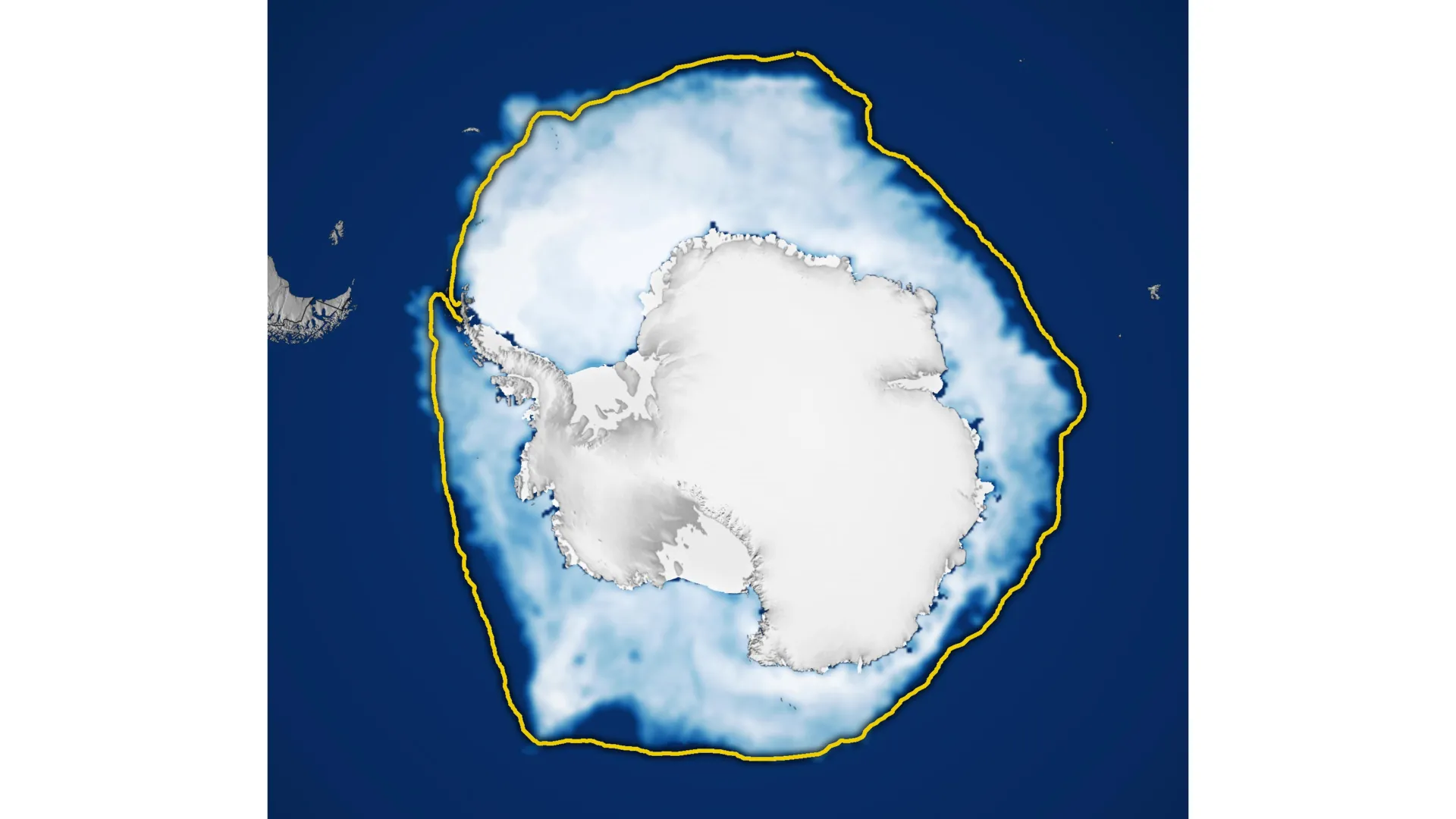
Antarctica's sea ice is no longer behaving as it once did, and the evidence demands that we treat this as a measurable shift rather than a temporary fluctuation. The 2026 winter maximum, the third-lowest on record, extends a decline that stands in stark contrast to the decades of modest growth that preceded it. This is not a headline to file away; it is a signal that polar dynamics may have crossed a threshold, and our monitoring systems need to be calibrated to detect what comes next.
The reversal matters because Antarctic sea ice plays a role in global climate regulation that is distinct from the Arctic. It reflects solar radiation, drives deep-water circulation, and supports unique ecosystems. When winter ice fails to recover to historical norms, the consequences ripple outward, altering albedo, heat exchange, and nutrient cycles. The open question, which scientists are now investigating, is whether this marks a long-term regime shift or a multi-year anomaly. We cannot afford to wait for the answer to emerge from sparse data. This is precisely the moment when integrated, real-time observation systems prove their value. As Phenological data confirms warming springs drive earlier cherry blossoms in Japan demonstrates, long-term empirical records can reveal patterns that short-term variability obscures. The same logic applies to Antarctica: we need sustained, calibrated measurements to distinguish a trend from noise.
Satellite platforms are essential to this effort. The recent first views from Sentinel-3C are a reminder that orbital sensors can track sea ice extent, thickness, and surface temperature with a precision that ground-based stations alone cannot match. When those data streams are peer-reviewed and integrated into climate models, they become ocean intelligence, actionable information that guides policy and research. The urgency of this work is amplified by the fact that other climate indicators are also converging. For example, Redwoods' photosynthesis slows under heat, imperiling a key carbon sink shows how terrestrial carbon sinks are responding to warming. Antarctica's sea ice decline, if sustained, would represent a parallel vulnerability in the marine system, one that could accelerate feedbacks we have only begun to quantify.
The specific consequence to watch is the potential for reduced winter ice to precondition the following summer's melt season. Thinner, less extensive winter ice is more vulnerable to breakup and melting under spring sunlight, which in turn lowers albedo and traps more heat in the upper ocean. That process, once underway, can become self-reinforcing. The 2026 data point is not a crisis in isolation, but it is a validated observation that should sharpen our focus on the coming austral summer. Whether this winter's low maximum becomes the new baseline depends on whether the integrated data ecosystem we have built, from satellites to buoys to ice-core records, can track the transition in real time. That is the practical question our readers, from researchers to policymakers, should be asking now.