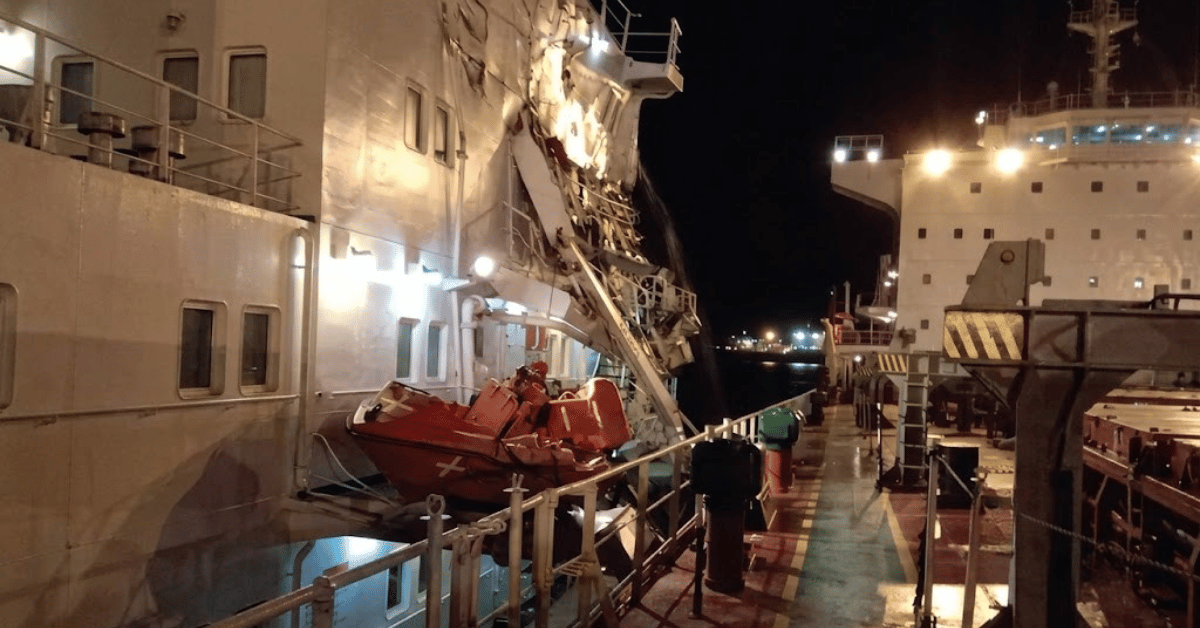
The collision between a bulk carrier and an oil tanker in a Traffic Separation Scheme was not a failure of technology, but a failure of communication and procedure. This incident underscores a dangerous and persistent misperception in maritime operations: that a VHF radio call can substitute for the unambiguous, decisive action required by the Collision Regulations. For a community that values validated, empirical data and integrated systems, this event is a stark reminder that human factors remain the most variable component in any safety equation.
The core of the problem was a cascading series of judgment errors, each compounding the last. The bulk carrier's bridge team was focused on individual overtaking situations rather than maintaining the long-range radar and ECDIS scanning that the regulations require. When the Master finally recognized the tightening CPA, he delegated a critical VHF exchange to the OOW, who then relayed the conversation second-hand in a different language. The result was a perfect misunderstanding: each vessel's Master believed they had agreed to the opposite side of passage. This is not a novel problem. As we have explored in our analysis of Quantifying human factors in vessel loss-of-control risk models, the quantitative risk models that underpin modern maritime safety often struggle to account for the subtle, cumulative effects of fatigue, language barriers, and procedural drift. Here, the tanker's Master had been on the bridge for over 14 continuous hours, a fatigue factor that likely contributed to his failure to conduct a visual check astern before ordering a hard-to-port turn.
The lessons are practical and direct. A VHF exchange, if used at all, must occur early enough to establish a resolved, unambiguous plan. The officer with the con must listen to the exchange directly, not rely on a summary passed through a language relay. Course alterations should be decisive and large enough to be noticed, not a gradual series of small helm movements that go undetected. This is not a matter of equipment; it is a matter of doctrine. The bulk carrier's incremental turn to port was missed by the tanker's bridge team, and the tanker's full round turn was initiated without a check astern. Compare this to the fatal chain of events in the Fumigated Cassava Cargo: 13 Crew Lost to Unmonitored Phosphine Gas incident, where an unmonitored chemical process led to catastrophic loss of life. In both cases, the hazard was known, and the monitoring procedure existed, but it was not followed. The difference here is that the collision resulted in no injuries or pollution, which should be treated as a warning, not a relief.
The specific takeaway for every bridge team is this: before any major alteration of course, perform a deliberate visual and radar check in the direction you intend to swing, including astern. This single action, mandated by the Collision Regulations but often bypassed in the rush of a closing CPA, would have revealed the bulk carrier on the tanker's port quarter. The question that remains open is whether the industry will treat this near-miss as a data point for procedural reform, or as just another anecdote lost to the next incident report.