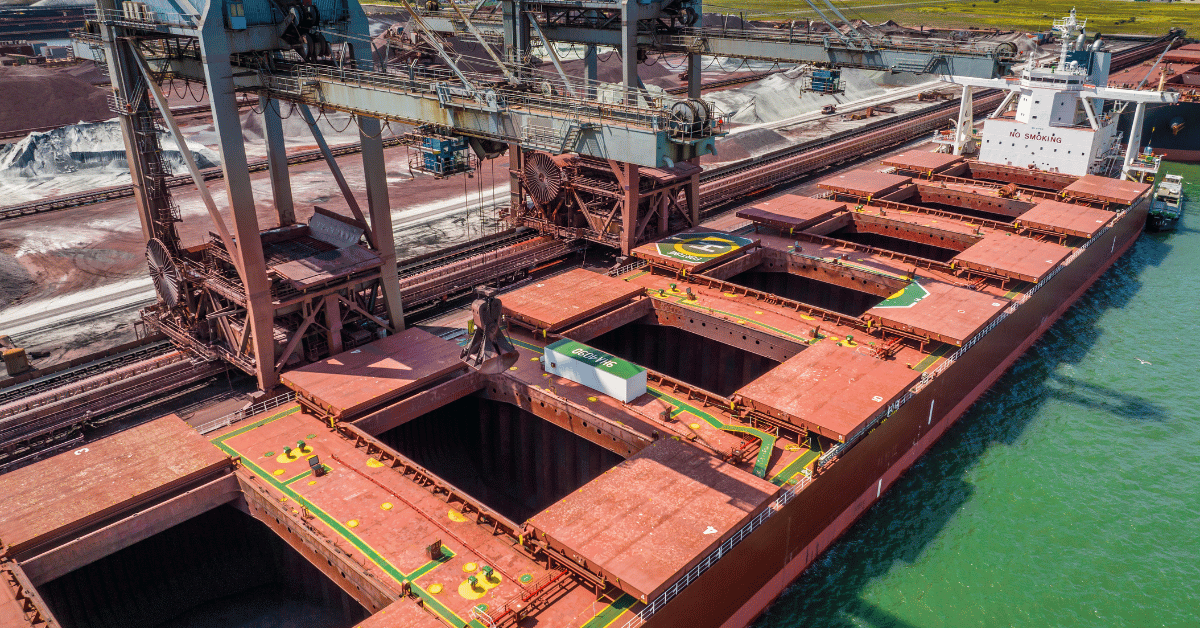
Thirteen crew members lost their lives not to a storm, a structural failure, or a collision, but to an invisible, unmonitored poison slowly pulled into their own living quarters. The loss of the bulk carrier's crew to phosphine gas from fumigated cassava cargo is a devastating failure of procedure, communication, and basic safety culture. Our view is clear: this was not an inevitable tragedy of the sea; it was a predictable consequence of treating a hazardous chemical operation as routine cargo handling. For the maritime industry, the lesson is not merely about gas detectors, it is about what happens when risk assessment becomes a checkbox rather than a practice.
The investigation revealed that the crew was not familiar with the IMO's Recommendations on the Safe Use of Pesticides on Board Ships. No phosphine detection equipment was onboard, and no gas concentration monitoring occurred after departure. The fumigation contractor handed over paperwork to the Chief Officer but did not explain the specific risks of the fumigant to the crew. When symptoms began, chest tightness, nausea, vomiting, the Master and crew attributed them to food poisoning or Covid-19. Negative antigen tests reinforced that assumption. By the time anyone connected the illness to the fumigant, it was too late. This tragedy sits in stark contrast to the kind of forward-looking safety innovation we see elsewhere in the industry, such as the recent 1 000 Metric Tons of Green Ammonia Delivered in First Ship-to-Ship Bunkering, where new fuel types demand rigorous, pre-planned safety protocols from the start. That project treated a novel hazardous operation with the caution it deserves; this one treated a well-known hazardous operation with complacency.
The mechanics of the disaster are instructive. The vessel was steaming with the wind astern at a speed slightly exceeding the wind, so gas escaping from the hatch covers accumulated on the forward deck rather than dispersing. The air conditioning was running in recirculation mode, placing the accommodation under negative pressure. Several weathertight doors could not fully close. Contaminated air was drawn into the accommodation and recirculated through every space served by the system. The wheelhouse, with the highest air-change rate, caused watchkeepers to fall ill first. This is not a freak chain of events; it is a set of conditions that any competent risk assessment should have identified and mitigated. Compare this to the drift of an Drone-Struck Abandoned Cargo Ship Drifts Through Black Sea Toward Bulgaria, a vessel disabled by external force beyond its control. Here, the vessel was fully operational, and the danger was introduced by the crew's own cargo operation. The difference between an accident and a catastrophe is often the margin between awareness and ignorance.
The practical takeaway for every vessel operator, charterer, and fumigation contractor is direct and measurable: if aluminium phosphide is used for underway fumigation, the vessel must carry phosphine gas detection equipment, and gas concentrations must be checked regularly throughout the voyage, not just at loading. Route and speed planning must account for wind direction relative to the accommodation. Weathertight integrity of accommodation doors must be treated with the same scrutiny as hatch covers. And the crew must receive a clear, verbal safety briefing on the specific symptoms of phosphine poisoning, not just a signed handover form. The overlap between phosphine symptoms and common illnesses like seasickness or food poisoning is a known hazard; it must be explicitly addressed in pre-departure safety briefings. The question that remains open is whether the industry will treat this as a wake-up call or as a report to file away. The next vessel carrying fumigated cargo will provide the answer.