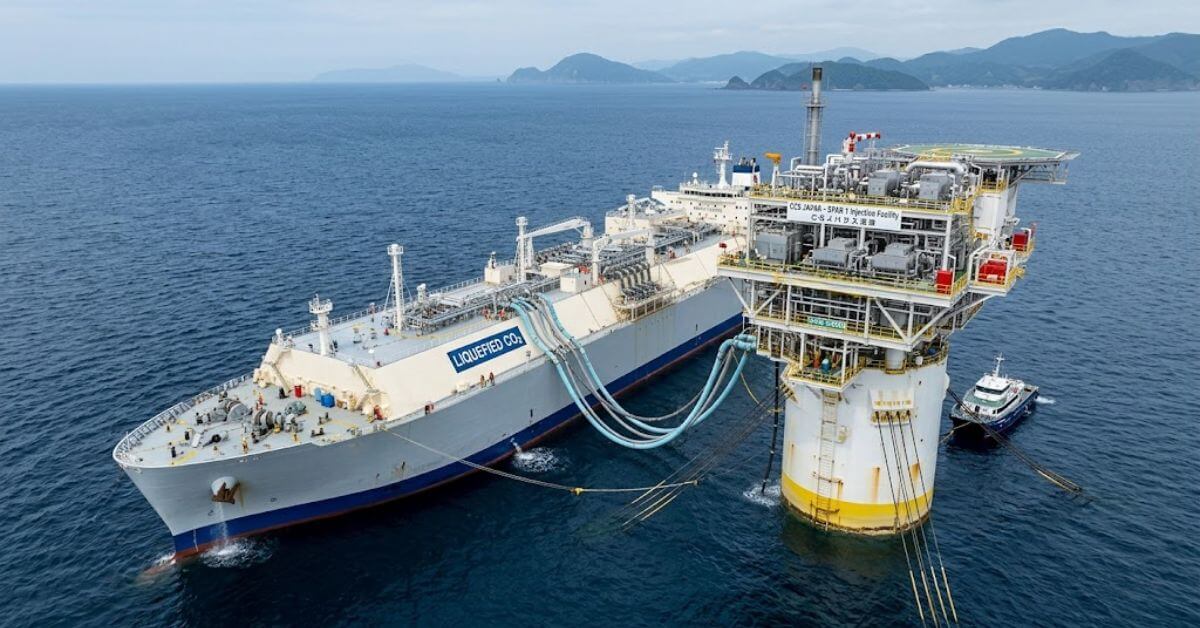
The recent Approval in Principle granted by ClassNK for a liquefied CO2 carrier design, specifically engineered for injection via a Socket SPAR Unit, represents a significant stride in the practical application of ocean-based carbon management strategies. This development is not merely an incremental improvement in maritime logistics; it signifies a crucial step towards realizing the potential of the ocean as a vital component in global carbon cycle solutions. World Data Ocean views this as a testament to the power of focused innovation, where precise engineering addresses the complex challenges of transporting and deploying captured carbon dioxide for sequestration. The validated design underscores the increasing maturity of technologies that are essential for transitioning to a net-zero future, emphasizing the need for robust and reliable infrastructure to support these ambitious environmental goals.
The integration of specialized carriers with injection facilities like the Socket SPAR Unit is fundamental to the success of ocean-based carbon sequestration. Such integrated systems offer a pathway to move beyond theoretical possibilities and into tangible, measurable actions. The emphasis on a validated design, as recognized by ClassNK, instills confidence in the safety and efficiency of these operations. It highlights a commitment to rigorous scientific and engineering standards, which are paramount when dealing with large-scale environmental interventions. This kind of meticulous approach ensures that advancements are not only technically feasible but also environmentally sound, aligning with our core principle that understanding drives protection. The development of such specialized transport solutions is a direct outcome of the growing imperative to manage atmospheric CO2 levels, and it is heartening to see the marine industry respond with such purpose-driven innovation.
At World Data Ocean, we believe that the future of ocean stewardship hinges on our collective ability to foster collaboration between scientific inquiry, technological development, and practical implementation. This approved CO2 carrier design exemplifies this collaborative spirit, bringing together classification societies, engineering firms, and ultimately, the need for effective climate solutions. It serves as a tangible example of how innovation, when guided by scientific rigor and a clear purpose, can unlock new avenues for addressing the climate crisis. As we continue to expand our understanding of oceanographic processes and carbon dynamics through integrated data ecosystems, technologies like these will become increasingly vital. They provide the operational backbone necessary to translate data-driven insights into impactful actions, reinforcing the shared responsibility we all hold for the health of our planet.