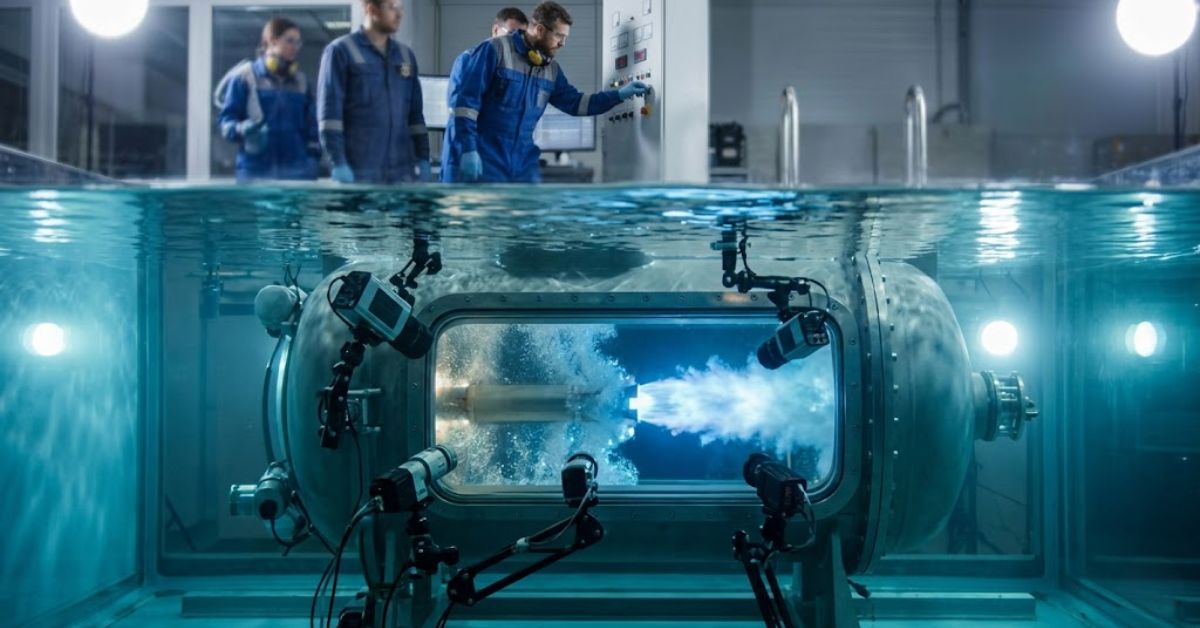
Our oceans are vast, complex, and increasingly vital to the health of our planet. As we deepen our understanding of these environments, the need for innovative tools and methodologies becomes paramount. Recent advancements in underwater rocket engine testing, as demonstrated by researchers in China simulating pressures equivalent to 200 meters beneath the surface, represent a significant stride in our capacity to explore and operate within the deep sea. This development, while seemingly niche, underscores a broader trend: the relentless pursuit of scientific and technological frontiers to unlock new possibilities for ocean stewardship and scientific inquiry.
The ability to conduct robust testing of propulsion systems in high-pressure underwater environments opens doors to a range of applications. From the development of advanced underwater vehicles capable of sustained deep-sea exploration to the potential for novel infrastructure deployment and resource management, such innovations are critical. This research aligns with World Data Ocean's core mission of fostering a global, collaborative approach to understanding and protecting our oceans. By pushing the boundaries of what is technologically feasible, we not only gain new tools but also expand our conceptual framework for interacting with and studying the marine realm. The data generated from such experiments, once validated and integrated into broader ocean intelligence platforms, can provide invaluable insights into the performance of equipment under extreme conditions, informing future design and operational protocols.
This progress serves as a potent reminder that our commitment to ocean health requires a multifaceted strategy. It necessitates not only rigorous data collection and analysis, but also the development of cutting-edge technologies that enable us to reach, study, and protect even the most inaccessible parts of our planet. The scientific authority and clarity that World Data Ocean champions are intrinsically linked to the innovative spirit demonstrated by these researchers. By embracing technological advancements and fostering a spirit of shared progress, we can collectively build a more comprehensive and actionable understanding of our oceans, thereby strengthening our resolve and our capacity for effective ocean stewardship. The pursuit of such ambitious research highlights the critical role of ongoing investment in scientific exploration and technological innovation for the future of our blue planet.