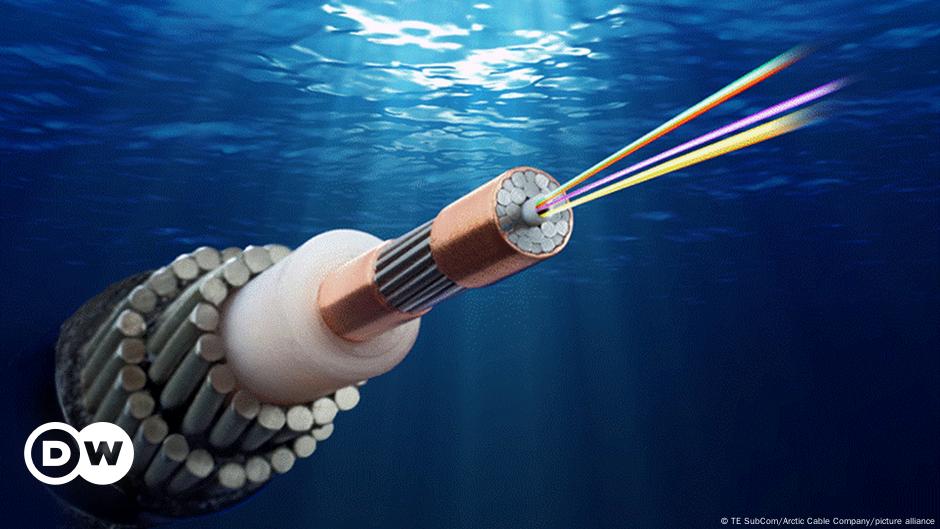
The sabotage of undersea cables by a Russian "shadow fleet" confirms what many in ocean intelligence have long warned: the infrastructure that carries 95% of global data traffic sits on the seabed with no meaningful defense against deliberate attack. This is not a hypothetical risk, it is a present vulnerability with direct consequences for scientific monitoring, economic stability, and climate research. The data pathways we depend on for everything from financial transactions to 2024 Follows 2023, a Second Record Year of Rising Climate Indicators are the same cables that transmit the empirical measurements we need to track ocean warming, acidification, and carbon flux. When those cables are compromised, our integrated data ecosystem, the calibrated, real-time information that underpins climate indicators, becomes unreliable at the moment we most need it to be validated and peer-reviewed.
The practical implication for our readers is straightforward: the security of these cables is not a telecom issue; it is a climate and ocean data issue. The ECCO‑Darwin model delivers first multi‑decadal global ocean CO₂ flux estimates, but those estimates rely on data transmitted through fiber-optic cables that run along the same seabed corridors being targeted. Attacks on cables in the Red Sea or the Baltic do not merely disrupt internet searches, they sever the connections between research buoys, ocean observatories, and the supercomputers that produce longitudinal climate projections. If a cable linking a critical sensor array to a data center is cut, the gaps in our empirical record become permanent, and the measurable signals of accelerating change, already documented in our Ocean's early warnings grow urgent as climate signals accelerate, risk becoming blind spots.
No existing legal framework addresses this intersection of submarine cable sabotage and climate data integrity. International law protects cables primarily as commercial assets, not as critical infrastructure for shared global knowledge. The solution cannot be left to cable operators alone. Governments, oceanographic institutions, and tech companies that own the majority of new cables must develop coordinated protection strategies that treat undersea fibers as part of the climate monitoring infrastructure. Acoustic sensor systems and underwater drones offer a measurable, technological path forward, but they require investment calibrated to the threat, not to the insurance value of the cable itself. Satellite backup, while improving, cannot replace the bandwidth or cost-efficiency of submarine cables for transmitting the multi-decadal datasets that climate models require.
The detail to watch is not the next attack, but the response. If nations treat cable protection as a maritime security issue separate from ocean science, the data gaps will widen precisely when our climate indicators are breaking records. The question is whether we will build a defensive architecture that protects both communication and the ocean intelligence we rely on to understand a warming planet.