U.S. Boards Two Foreign-Flagged Ships After Hackers Apparently Break Into Their Networks
Our take
The recent boarding of two foreign-flagged ships by the U.S. Coast Guard following apparent cyber intrusions represents a significant escalation in the evolving threat landscape of maritime operations. While details remain limited – the Coast Guard’s statement referencing "foreign cyber actors" offers little in the way of attribution – the incident underscores a growing vulnerability within the global shipping industry. This is not an isolated event; concerns about cyberattacks targeting maritime infrastructure have been steadily increasing, and the potential for disruption is considerable. Recent sanctions against Iran’s BitBank over Bitcoin payments linked to Strait of Hormuz shipping tolls U.S Sanctions Iran’s BitBank Over Bitcoin Payments Linked To Strait Of Hormuz Shipping Tolls highlight the increasingly complex financial and operational risks faced by maritime entities. The Panama Canal’s decision to cut ship transits again due to severe drought linked to El Niño Panama Canal To Cut Ship Transits Again Due To Severe Drought Linked To El Niño further complicates matters, creating additional choke points where vulnerabilities could be exploited.

The implications of these cyberattacks extend far beyond the immediate disruption of individual vessels. Modern ships are increasingly reliant on integrated digital systems for navigation, engine management, cargo handling, and communication. A successful breach can compromise these systems, potentially leading to navigational errors, cargo theft, or even the hijacking of a vessel. Furthermore, the interconnected nature of the maritime supply chain means that an attack on one ship can have cascading effects throughout the entire network. The vulnerability isn't solely limited to shipboard systems; port infrastructure, logistics providers, and even regulatory bodies are all potential targets. This incident serves as a stark reminder that the maritime sector must prioritize robust cybersecurity measures, including regular vulnerability assessments, employee training, and the implementation of layered security protocols. The construction of equipment like the World’s Largest Boat Hoist With 1,700-Tonne Capacity Under Construction In Italy underscores the growing scale and complexity of maritime operations, which, in turn, increases the attack surface available to malicious actors.
The lack of specific attribution in the Coast Guard’s statement is noteworthy. While identifying the perpetrators is crucial for accountability and deterrence, the focus should remain on mitigating the immediate risks and strengthening defenses. This incident highlights the need for enhanced international collaboration on maritime cybersecurity. Sharing threat intelligence, developing common security standards, and coordinating incident response efforts are essential steps in protecting the global maritime ecosystem. The ocean intelligence we gather and analyze must increasingly incorporate cyber risk assessments, moving beyond traditional maritime domain awareness to include a holistic view of potential threats. The data-driven approach of World Data Ocean emphasizes the need for validated and empirical data to inform these security strategies, moving beyond anecdotal evidence to create measurable improvements in maritime cybersecurity posture.
Looking ahead, the convergence of geopolitical tensions, technological advancements, and the increasing reliance on digital systems creates a perfect storm for maritime cyberattacks. The question is not *if* another incident will occur, but *when*. The response to this latest event should be a catalyst for a significant and sustained investment in maritime cybersecurity, both by individual shipping companies and by international organizations. We must prioritize the development of real-time threat detection systems and integrated data ecosystems that can provide early warnings of potential attacks. What proactive measures are being implemented to ensure the resilience of critical maritime infrastructure against increasingly sophisticated cyber threats, and how will these efforts be calibrated to address the evolving geopolitical landscape?
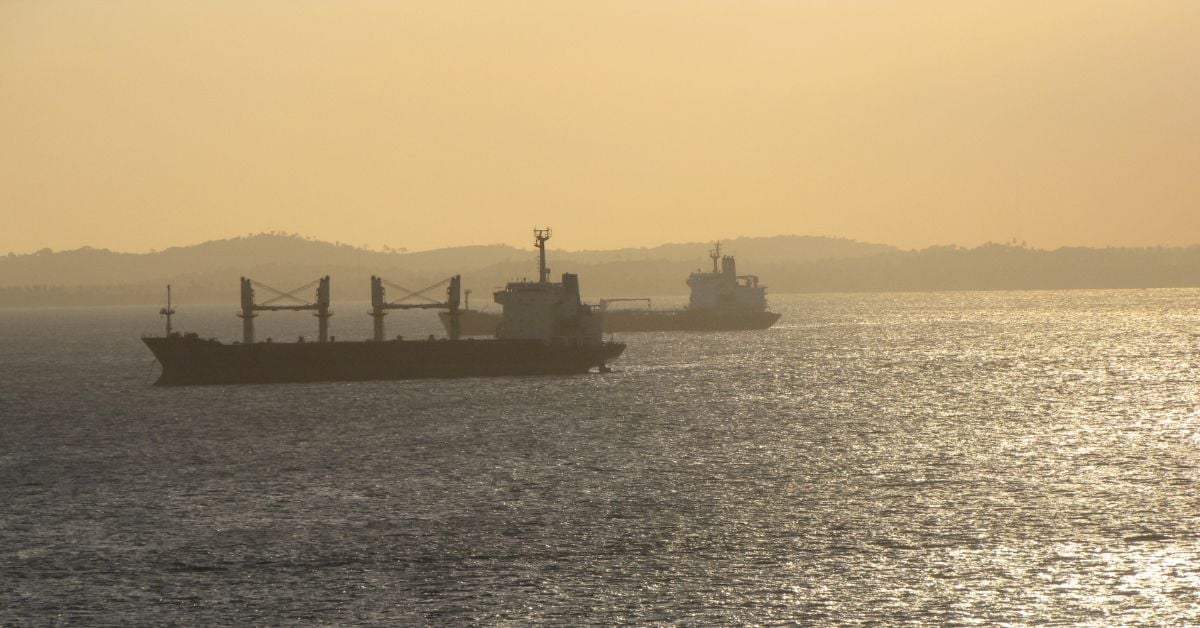
U.S. Coast Guard and FBI personnel boarded two foreign-flagged commercial vessels bound for the United States in the Gulf of Mexico last month after receiving indications that hackers had broken into their computer networks, the agencies said on Thursday.
U.S. authorities boarded the two vessels on August 21 and August 24 as they deal with a series of cyber incidents that media reports have linked to Iran since the outbreak of conflict between the U.S. and Iran.
The FBI said a joint Coast Guard-FBI team boarded the vessels after receiving “indications that the networks of both vessels were compromised.”
The Coast Guard, which referred only to the August 21 boarding, said “foreign cyber actors” were involved but did not identify them.
Corey Ranslem, CEO of maritime security group Dryad Global, said his company had confirmed that one of the vessels was the Liberian-flagged VL Prosperity.
The vessel is currently anchored in waters around Galveston, Texas, according to LSEG and MarineTraffic ship-tracking data.
Iran’s Mehr news agency reported on August 20 that VL Prosperity had suffered a “major cyberattack” while transiting the Strait of Gibraltar.
The report said the vessel’s communications were knocked out for 30 hours.
Mehr also reported that hackers had entered the ship’s engine-room systems. They reduced the engine’s cooling flow, increased the engine speed and disabled the ship’s fuel and engine-oil tank.
Mehr did not say who it believed was behind the alleged attack.
Ranslem said a cyberattack targeting an individual ship was not particularly difficult to carry out, despite the effects reported in the case of VL Prosperity.
The U.S. authorities have not said what systems on the two vessels were compromised or whether the incidents were connected.
They have also not provided further details about the second vessel or disclosed the full impact of the suspected cyber intrusions.
References: Reuters, CBS News
Read on the original site
Open the publisher's page for the full experience