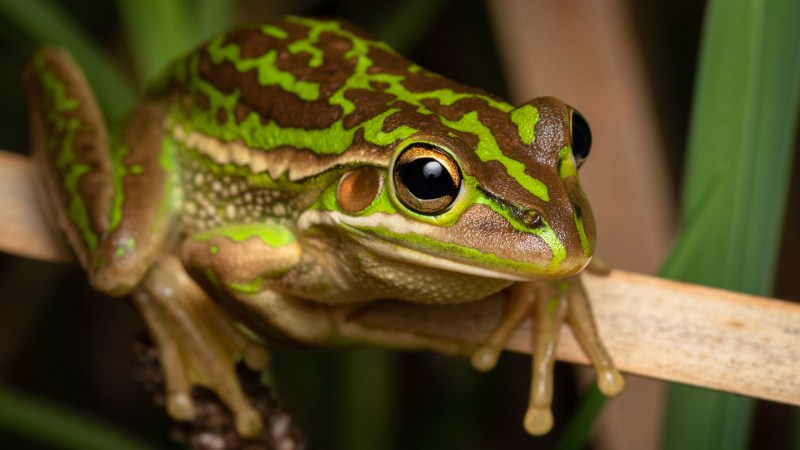
The decision to apply heat to a frog's enclosure reads, at first, like a clean solution. A fungus that thrives in cool, damp conditions meets its end under a warming lamp. But the latest observations remind us that intervention is never a single variable. When researchers raise the temperature to clear a lethal infection, they are not just adjusting a dial; they are reshaping the entire physiological landscape of the animal. The trade-off, as the work suggests, may be a direct hit on reproductive health. This is the quiet, difficult arithmetic of conservation: the cure and the cost are often the same coin.
For our readers, this is not an abstract laboratory footnote. It is a practical warning about the limits of short-term thinking. We often look for a single lever to pull in the fight against chytridiomycosis, the fungal disease that has devastated amphibian populations worldwide. Thermal treatment is one of the few levers that works in a controlled setting. But the moment we pull it, we are also triggering a cascade of physiological responses that we may not fully understand until it is too late. The finding here is not that heat is useless. It is that we cannot treat it as a standalone fix. Any responsible application must now account for the reproductive consequences, which means measuring more than just survival rates. It means tracking offspring viability, breeding behavior, and the long-term health of the next generation.
What would we tell a reader who asks, "So what do I do with this information?" The honest answer is that we need to stop viewing thermal treatment as a universal remedy and start treating it as a targeted tool with known side effects. For researchers, this is a call to integrate reproductive metrics into every thermal intervention study. For conservation managers, it is a reminder that a frog that survives but cannot breed is a dead end in all but name. The real value of this work is not in the heat itself, but in the calibration. It forces us to ask how much thermal stress is acceptable, and for how long, before the long-term cost outweighs the immediate gain. We are not advocating for abandoning the method. We are advocating for a more informed, integrated approach that treats the animal as a whole system, not just a host for a fungus.
The specific point to watch is whether future studies begin pairing thermal exposure with reproductive hormone assays or breeding trials. If they do, we may finally get the data needed to set safe thermal windows for different species. If they do not, we will continue to operate in the dark, trading one extinction threat for another. The question is not whether heat works. It is whether we can learn to use it without breaking what we are trying to save. That is the next empirical step, and it cannot come soon enough.