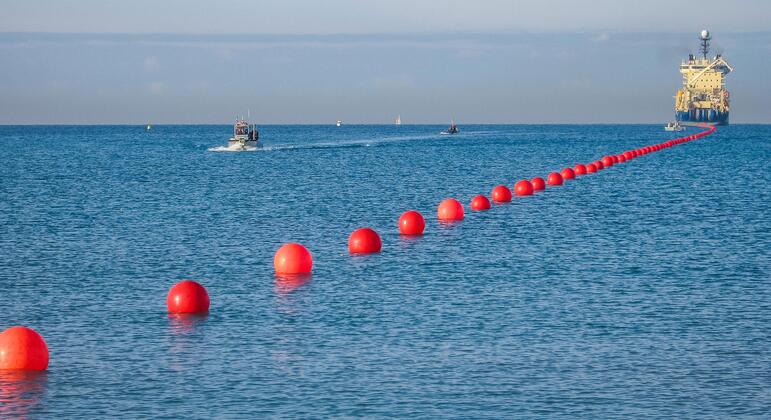
The cables lying on the ocean floor are the most critical piece of digital infrastructure most people never think about, and that silence is becoming a vulnerability we can no longer afford. As Tomas Lamanauskas of the International Telecommunication Union reminds us, 99 percent of international internet traffic travels through submarine fiber-optic highways, every email, every video call, every search query depends on strands of glass the width of a garden hose, stretched across 1.7 million kilometers of seabed. The 2025 Global Temperature Data Confirms Measurable Warming Trends published by Berkeley Earth provides a parallel: just as we rely on calibrated, empirical climate indicators to understand planetary change, we must now apply the same rigor to understanding the physical network that transmits that data. The ocean is not just a source of climate intelligence, it is the substrate for global knowledge itself.
The practical reality is that this network is both astonishingly resilient and surprisingly fragile. With 150 to 200 cable incidents each year, roughly three to four per week, disruptions are not anomalies but routine events. The recent Red Sea incidents, which cut an estimated 25 percent of data traffic between Europe and Asia, demonstrate how a single geographic choke point can ripple through the global economy. While earthquakes and volcanic eruptions cause damage, roughly 80 percent of incidents come from human activity: ship anchors and fishing trawlers. This is not an act of nature we must accept; it is a measurable, addressable failure of coordination. As the ITU works to streamline permitting and establish clear points of contact for repairs, the data from From waste to wave: measuring ocean plastic's true share reminds us that the ocean's capacity to absorb human impact has limits, whether plastic or severed cables.
The coming summit in Portugal must move beyond awareness toward integrated, empirical strategies. The cables laid during the dot-com boom of 2000 are reaching their 25-year design lifespan, and replacing them is a multi-year, multi-million-dollar undertaking. For remote regions like Tonga, which has experienced three major outages since 2019, the consequence of a single cut is not a delayed Netflix stream but the loss of access to digital healthcare and education for an entire community. Every millisecond matters, as Lamanauskas noted, for stock traders and for patients alike. The question we should be watching is whether the international community can build the same kind of collaborative, data-driven governance for submarine cables that we are slowly assembling for climate monitoring. The ocean connects us; the question is whether we will manage that connection with the same precision we demand of the data it carries.