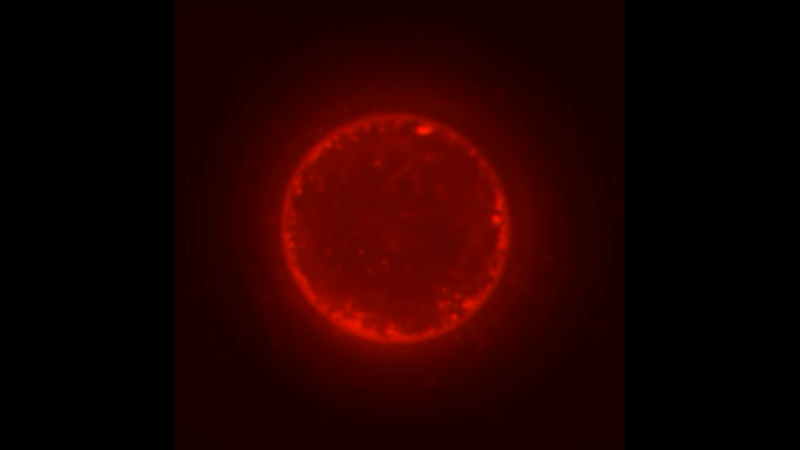
The lab-made cells open a window into what's possible for synthetic life, researchers say, and for those of us watching the intersection of biology and data, that window is not just a curiosity. It is a calibration point. When scientists construct a cell from the ground up, they are not merely mimicking nature; they are testing the assumptions we hold about what life requires. For our readers, whether you are a marine biologist, a policy advisor, or a student tracking climate indicators, this is a moment to pay attention to how we measure the living world. The same logic that drives ocean intelligence applies here: you cannot protect what you cannot predict, and you cannot predict what you do not understand at a mechanistic level.
Our take is straightforward: this is not about playing god, and it is certainly not about alarmist headlines. It is about empirical rigor. Synthetic cells force us to ask which components are essential and which are optional, a question that has direct practical value for how we monitor ocean health. If we can build a minimal biological system, we can better isolate the variables that matter in complex ecosystems. That means more precise sensors, better models for climate indicators, and a clearer path to validating the assumptions buried in our current environmental datasets. We would tell a reader who asks, "What does this mean for me?" that it means our tools for observing the planet are about to become more precise, not less. The challenge is integrating these lab-grown insights into the integrated data ecosystem we already rely on, without overstating what a synthetic cell can tell us about the open ocean.
But we would also offer a caution. The temptation is to treat synthetic life as a separate category, a laboratory curiosity with little bearing on the messy, uncalibrated world of the deep sea. That would be a mistake. The same principles that make a synthetic cell testable, repeatable, and measurable are the principles we need to bring to ocean observation. We are drowning in raw data but starving for validated, peer-reviewed understanding. Synthetic cells remind us that the bottleneck is not data collection; it is interpretation. For researchers, this means designing experiments that assume less and test more. For policymakers, it means demanding evidence that is not just longitudinal but also reproducible. And for students, it means the next generation of biology will be written in code as much as in cells.
The specific consequence to watch is the evolution of the word "life" itself. As synthetic cells become more complex, our definitions will shift, and with them, the legal and ethical frameworks that govern everything from biosecurity to ocean resource management. We would tell our readers to keep an eye on how these lab-made systems are used to test environmental stress responses, because that is where the practical payoff will land. A synthetic cell that can mimic a phytoplankton's response to warming water is not a science fair project; it is a calibrated sensor for the future. The open question is whether we will have the discipline to use it wisely, or whether we will let the novelty outpace the science. For now, the takeaway we would quote is this: synthetic life is not a replacement for observation. It is a sharper lens for it.