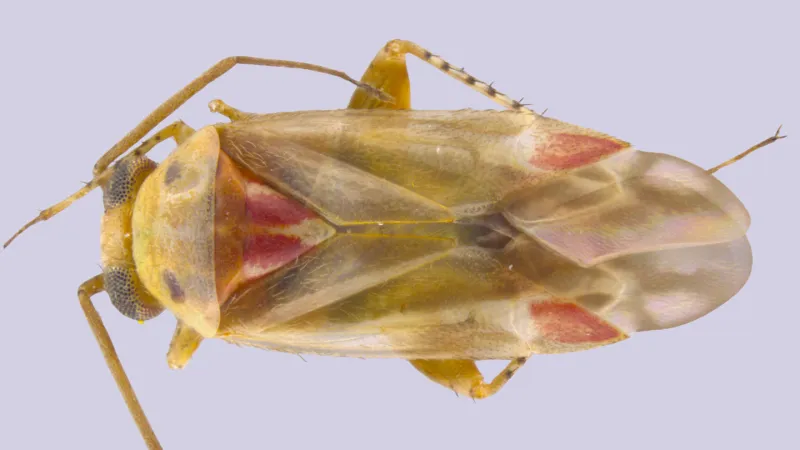
Four newly described species of Australian plant bug now carry the names of Taylor Swift songs, and the choice is far from a pop-culture gimmick. The taxonomists behind the discovery selected names like *Taylor swiftia* and *Swiftia* variants as a way to draw public attention to the underappreciated diversity of insects, a group that remains largely uncharacterized even as ecosystems shift under climate pressure. For a publication focused on ocean intelligence and integrated data ecosystems, this might seem like a departure. It is not. The same scientific rigor that drives our coverage of species distribution models and unexpected chiton discoveries in Puerto Rico applies here: naming is a form of data, and visibility is a form of protection.
The connection between naming and conservation is direct. When we reported on the Unexpected Chiton Discovery in Puerto Rico Challenges Species Distribution Models, we noted how a single misidentified specimen can reshape what we think we know about a region's biodiversity. Similarly, the Unidentified Specimen Found in Oahu Waters Sparks Ocean Data Inquiry reminded us that gaps in our taxonomic records are not abstract problems; they are blind spots in our ability to track environmental change. Naming four bugs after a global pop star does not close those gaps, but it does something practical: it invites a new audience to ask why these names matter, and why cataloging life on Earth is a frontline climate strategy. The celebrity association is a hook, not the story. The story is that we still have more undescribed species than described ones, and every name, whether inspired by a song lyric or a shipwreck, is a piece of empirical evidence we can measure against future losses.
What would we tell a reader who asks why this matters? That taxonomy is not a luxury. It is the foundation of every ecological model, every conservation priority list, and every claim about biodiversity loss. A species without a name cannot be tracked, protected, or studied longitudinally. The Taylor Swift bugs are not a distraction from the urgent work of ocean stewardship; they are a reminder that the natural world still holds surprises, and that public engagement is part of the scientific process. In an era of alarmist headlines and performative outrage, this is a quiet, factual, and genuinely joyful piece of science communication. It does not exaggerate the threat or overstate the finding. It simply says: here are four new species, here is why we named them, and here is why that matters.
The concrete point to watch is whether this kind of naming strategy translates into measurable public interest or research funding for insect taxonomy, which remains chronically underfunded compared to vertebrates. If the Swiftie effect results in even a small uptick in citizen science participation or museum support, it will have done more than most academic papers to secure the next generation of biodiversity research. That is the metric we should watch, not the headlines. Understanding drives protection, and sometimes protection starts with a song.