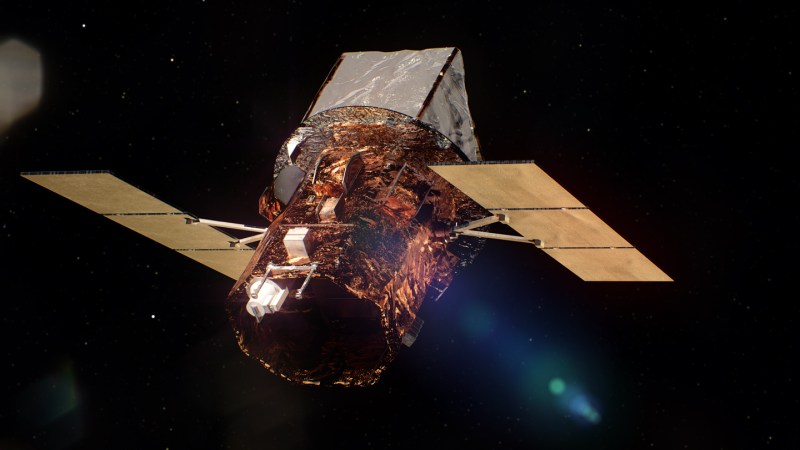
The failure of NASA's attempt to rescue the Swift telescope is not a story about a mission lost; it is a story about the gap between our aspirations in orbit and the physics of falling objects. Swift, a satellite that has spent years cataloging gamma-ray bursts and cosmic explosions, was never designed for a rendezvous. The decision to attempt a salvage operation was bold, but the outcome was always going to hinge on variables that no amount of ground-based calculation could fully control. We should not read this as a defeat for engineering. Instead, it is a rare, honest look at the limits of our current toolkit when a satellite stops being a tool and becomes a hazard.
For our readers, the practical takeaway is uncomfortable but essential: satellite servicing is not a safety net. It is a discipline still in its infancy, and this failure clarifies what is actually feasible. The idea of a rescue mission is attractive because it suggests we can fix our mistakes after launch, but Swift's descent demonstrates that propellant margins, orbital decay rates, and the structural integrity of aging hardware do not care about our intentions. This is the reality that on-orbit servicing programs and commercial debris removal initiatives are trying to address, but the gap between a demonstration mission and an operational rescue is vast. When we talk about "satellite rescue," we are not talking about a tow truck. We are talking about a precision surgical procedure performed remotely, in the dark, on an object moving at 17,000 miles per hour.
The honest reaction here is not to mourn Swift, but to demand better data on what failed and why. The mission's failure is an open question, not a closed book. If we cannot save a satellite we built and tracked for years, what does that mean for the thousands of defunct objects already in orbit? The answer is not to abandon the field, but to calibrate our expectations. The next time someone proposes a rescue mission, the burden of proof must be on the proposal to show that the spacecraft can actually reach, grapple, and maneuver the target before it enters a destructive reentry. That is a technical benchmark, not a marketing slogan.
If you ask us what to watch next, it is not the next launch window. It is the post-mission report. Did the spacecraft lose attitude control earlier than predicted? Was the rendezvous sensor blinded by reflected light? These details will define whether we invest in better robotics or accept that some satellites are simply unrecoverable. Until we treat servicing as a discipline of last resort, not a routine option, we will keep confusing ambition with capability. For now, the ocean remains the default graveyard for our orbital mistakes, and that is a fact we should all carry with us.