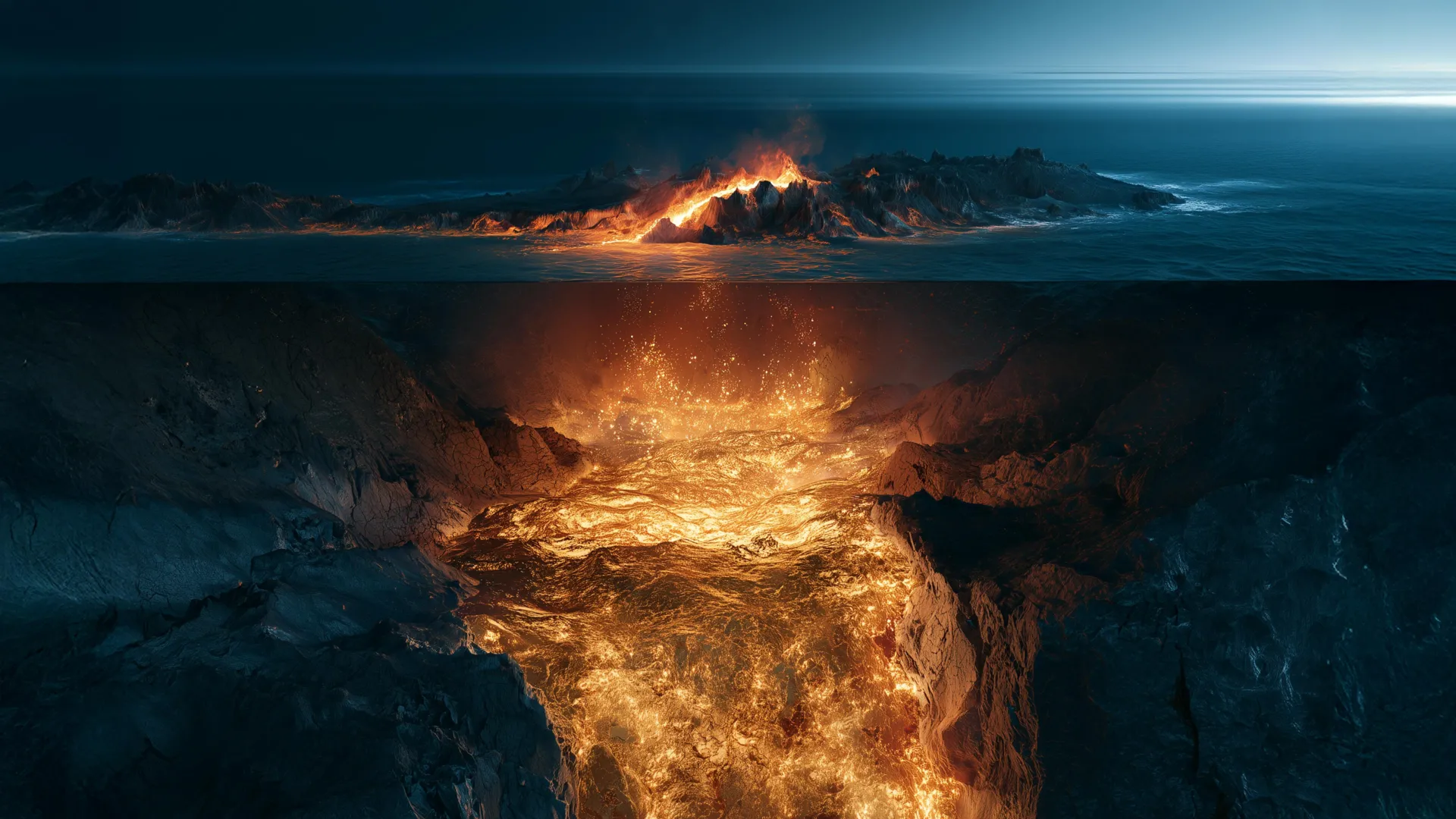
The discovery that submarine volcanoes operate as a natural gold kitchen is a reminder that the Earth's most valuable processes are not found in boardrooms or mining charters, but in the slow, deliberate churn of plate tectonics. Researchers analyzing volcanic glass from the Kermadec island arc north of New Zealand have shown that water-rich mantle melts repeatedly beneath subduction zones, and with each cycle, gold becomes more concentrated in the rising magma. The mechanism is elegant: intense melting breaks down the sulfur-rich minerals that normally sequester gold, releasing it into the melt. This is not a story about striking it rich; it is a story about how we understand ore formation as a dynamic, ongoing system rather than a static rock unit. For our readers, this reframes the question from "where is the gold?" to "how does the Earth concentrate it in the first place?"
What strikes us as most significant is the implication for how we read volcanic systems. The research suggests that gold enrichment is not a one-off event but a cumulative process, where repeated melting events act like a series of refining steps. This aligns with the broader push in our field toward integrated data ecosystems that track magmatic and tectonic activity over time. We are moving away from isolated geochemical snapshots and toward a more empirical, calibrated understanding of how subduction zones evolve. In practical terms, this means that exploration models should not just look for the presence of gold, but for evidence of multiple melting episodes. The Kermadec arc gives us a natural laboratory to test this, and it raises the possibility that other island arcs may show similar patterns of progressive enrichment if we look with the right tools.
If a reader asked us what this means for them, we would say this: the ocean floor is not a barren plain but a chemical engine. The same processes that build volcanic islands are concentrating metals in ways that we are only beginning to quantify. This is not a call to rush out and mine the seafloor; rather, it is a call to fund more research into ocean intelligence and longitudinal studies of magmatic systems. The gold kitchen metaphor is useful, but it should not obscure the fact that we are still in the early stages of understanding the pressure, temperature, and fluid conditions that govern metal mobility. The takeaway here is specific and actionable: map the melting history of a subduction zone, and you may be mapping its metal endowment.
We would end on this concrete point: the next step is not to drill for gold, but to drill for the volcanic glass that records these events. The Kermadec samples are a starting point, not a conclusion. Watch for follow-up studies that quantify how many melting cycles are needed to reach economic grades, because that number will define whether this process is a curiosity or a target. Until then, the gold kitchen stays open, and we are just beginning to read its recipe.