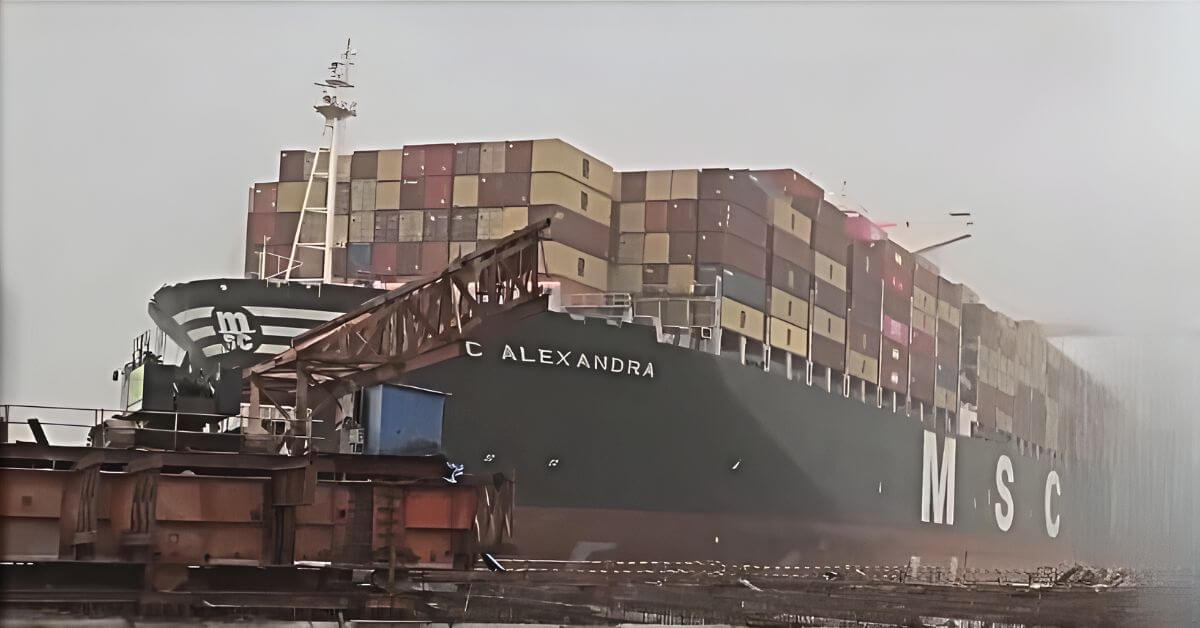
The recent incident at a major Indian port, where a vessel collided with a jetty following a sudden thunderstorm and the failure of mooring lines, underscores a critical, often overlooked, intersection of extreme weather and maritime infrastructure resilience. While the immediate cause was a confluence of atmospheric conditions and mechanical failure, this event serves as a tangible reminder of the increasing vulnerability of global shipping operations to a changing climate. The intensity and unpredictability of weather systems, amplified by broader climatic shifts, present a clear and present challenge to the established norms of port operations and vessel management. Understanding these dynamics, through rigorous data collection and analysis, is paramount to developing more robust and adaptive maritime strategies.
World Data Ocean is dedicated to providing the validated, measurable data necessary to understand and mitigate such risks. Our work focuses on integrating real-time environmental observations with historical, longitudinal datasets to build a comprehensive picture of oceanographic and atmospheric conditions. This integrated data ecosystem allows for the calibration of predictive models that can forecast extreme weather events with greater accuracy, informing decisions about vessel movement, port operations, and infrastructure design. The ability to anticipate and prepare for events like the one experienced in India is not merely about preventing immediate damage; it is about safeguarding the long-term viability of global trade and the communities that depend on it. By translating complex scientific findings into actionable ocean intelligence, we empower stakeholders to make informed choices that enhance safety and sustainability.
The incident also highlights the necessity of continuous innovation in maritime engineering and operational protocols. The failure of mooring lines, while a specific technical issue, points to a broader need for ongoing assessment and upgrading of infrastructure to withstand more extreme conditions. This necessitates a collaborative approach, bringing together scientists, engineers, port authorities, and shipping companies to share knowledge and develop best practices. Our commitment to global collaboration means fostering an environment where empirical evidence drives technological advancement and policy development. By championing peer-reviewed research and transparent data sharing, World Data Ocean aims to accelerate the adoption of solutions that not only respond to immediate threats but also build a more resilient future for our oceans and the vital human activities they support. Understanding drives protection, and by illuminating the intricate interplay between weather, infrastructure, and global commerce, we can collectively navigate towards a more secure and sustainable maritime domain.