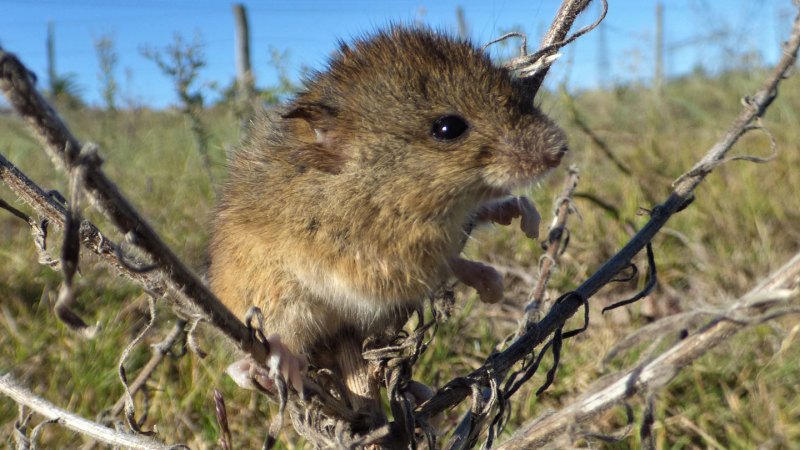
As our world faces the pressing challenges of climate change, the ripple effects on biodiversity and public health present critical new frontiers of concern. Recent research highlights the potential for some South American rodent-borne viruses, such as arenaviruses and hantaviruses, to spread to regions where they were not previously a threat. This underscores the complex interplay between environmental shifts, wildlife, and human health—a nexus of global concern.
The study, while focused on rodents in South America, invites a broader perspective. It's a clarifying note amidst the noise of geopolitical tensions and military strategies, as illustrated by recent developments in the Black Sea and the strategic importance of the Strait of Hormuz. For instance, Russia Cages Black Sea Fleet ‘Grachonok’ Patrol Boats After Repeated Ukrainian Drone Strikes and the implications for regional stability, or the strategic production of India’s Brahmos missile, which threatens to shift the power balance in the Indian Ocean India’s Brahmos Missile Production Collapse Threatens Shift Of Power Balance In Indian Ocean. Yet, it is the interconnectivity of these issues that truly reveals the holistic impact of climate change.
This research also opens a window into understanding the dynamics of emerging infectious diseases and the challenges they pose on a global scale. As climate models predict warmer temperatures, the spread of such viruses could potentially alter the balance of ecosystems and public health landscapes. The "from orbit to ocean floor" narrative of monitoring and data collection is not merely a metaphor but a reflection of the comprehensive approach required to tackle these multifaceted issues. This synergy between environmental monitoring and public health surveillance stands as a testament to the integrated data ecosystem's power in providing real-time insights.
Moreover, the study serves as a sobering reminder of the interconnectedness of global ecosystems and the need for a collective, science-driven response. It echoes the urgency of ocean stewardship and the shared responsibility it entails. While geopolitical strategies may shape the contours of these discussions, it is the empirical data and longitudinal observations that offer a clearer, more reliable pathway forward.
As we navigate these complex challenges, the focus must remain on fostering collaboration and leveraging cutting-edge technology to predict and mitigate the spread of new threats. The study on rodent-borne viruses in South America is a poignant reminder that the shifts in global climate patterns have far-reaching consequences that extend well beyond our immediate shores. The question that lingers is not just "what will happen?" but "how will we prepare?" as we continue to monitor, measure, and respond to the evolving challenges of our changing world.