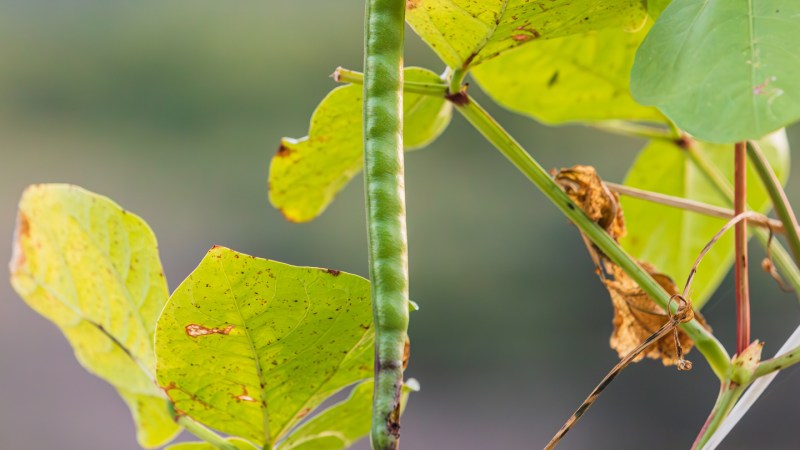
Herbivore attack has always been read as a plant's immediate problem: a leaf chewed, a stem bored, a response triggered. But this work on soil bacteria suggests the signal does not end with the plant under siege. The idea that bacteria might retain a memory of that attack and pass it forward, priming the next generation of plants to recruit wasps as defenders, reframes pest control as a conversation that spans seasons. We are no longer looking at a single organism's reaction. We are looking at a legacy written in the soil.
For our readers who manage crops, orchards, or even research plots, this is not a distant curiosity. The practical shift is this: soil is not just a growing medium, it is a reservoir of ecological information. If bacterial memory holds, then the way we treat a field after an herbivore outbreak matters as much as how we respond during one. Tilling, fungicide applications, or heavy irrigation could disrupt that microbial archive. The takeaway here is direct: what you do to the soil after a pest event may determine whether the next planting arrives with its own defense network already online. We would tell a farmer or a field ecologist to start thinking of pest pressure not as a discrete incident, but as a soil conditioning event with downstream consequences.
That said, we want to be precise about what this study does and does not claim. The excerpt points to a mechanism, not a silver bullet. It does not say every plant will be protected, nor that wasps will arrive in every field. It says bacteria *may* build a memory, and coax new plants toward attraction. That is a hypothesis with weight, not a proven protocol. Our honest read is that the most valuable contribution here is the redirect: from focusing solely on plant chemistry or predator release, we should be asking how microbial communities integrate herbivore cues into the broader ecosystem. The word "integrated" matters. It suggests a system where signals are stored, retrieved, and acted upon, not just triggered and forgotten.
What we would tell a reader who asks about this is simple: watch the soil response time. If bacterial memory is real, the next research step is to measure how long that memory persists and what conditions erase it. A single season? A full rotation? That is the open question that will determine whether this moves from a fascinating lab observation to a management tool. For now, the concrete point to watch is the specificity of the signal. Does the bacteria respond to a general herbivore cue, or can it distinguish between a caterpillar and a beetle? That distinction will decide whether this is a broad priming effect or a targeted defense network. We are not predicting a revolution in pest control tomorrow. We are saying the soil may already be keeping notes. It is time we learned to read them.