Simulating a major maritime disaster is not an exercise in alarm, it is an act of empirical preparedness that every ocean-facing organization should treat as a non-negotiable standard. NYK's full-day drill in the Seto Island Sea on September 30, part of the "Beyond Naka-no-Se" safety campaign, demonstrates what calibrated crisis response looks like when it is grounded in real-world conditions rather than theoretical checklists. This matters because the gap between a well-rehearsed emergency and a chaotic one can mean the difference between a contained spill and a regional ecological crisis, as recent events remind us. The Black Sea incident raises urgent questions on maritime safety and climate risk showed how quickly a vessel fire can escalate when coordination lags, while the Coast Guard Response Validates Real-Time Rescue Coordination Off Odisha proved that structured protocols save lives when they are actually tested under pressure.
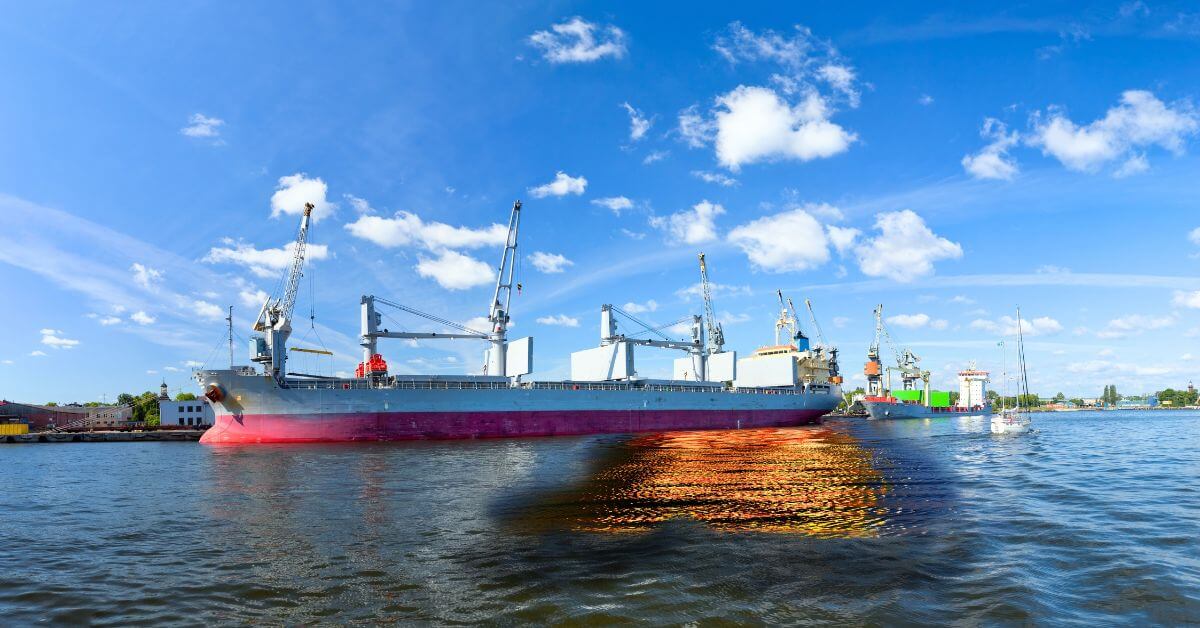
What sets NYK's approach apart is its insistence on integrated, multi-stakeholder realism. The scenario, a 100,000-gross-ton bulk carrier losing steering, grounding in shallow waters off Kagawa Prefecture, and rupturing a fuel tank, is not hypothetical theater. It reflects the kind of cascading failure that keeps marine safety officers awake at night. By involving the Maritime Bureau, the 6th Regional Coast Guard Headquarters, and the Japanese Shipowners' Association in a single coordinated drill, NYK validated that its emergency response headquarters can function as a node in a larger integrated data ecosystem, not as an isolated command post. The inclusion of a mock press conference with senior executives Nobuaki Sumida and Katsuhiko Haruna is a particularly practical detail: in a real crisis, communicating with the public under uncertainty is as critical as deploying containment booms. This is not about corporate reputation management; it is about maintaining public trust in maritime operations when every minute of ambiguity can fuel misinformation.
The "Beyond Naka-no-Se" campaign deliberately extends the legacy of the 1997 Diamond Grace spill in Tokyo Bay, but it also points forward. NYK has turned a painful historical data point into a longitudinal commitment to safety culture. For our readers, whether researchers tracking climate indicators, policymakers drafting shipping regulations, or students studying ocean governance, the takeaway is direct: measurable preparedness reduces response time, and response time directly reduces environmental harm. The drill covered oil spill containment and recovery operations, but the real value lies in the after-action analysis. What communication channels failed under stress? Which coordination steps took too long? Those empirical findings, if peer-reviewed and shared across the industry, could become a template for other straits and inland seas facing rising traffic volumes and extreme weather.
One concrete detail to watch: NYK's choice of the Seto Inland Sea, a constrained waterway with high ecological sensitivity and dense maritime traffic, is not incidental. The same geography that makes the area a vital shipping corridor also amplifies the consequences of any accident. The question this drill raises is whether other operators in similarly confined waters, the Malacca Strait, the English Channel, the Bosporus, are running exercises of equal rigor. If not, the gap in global maritime safety is not a theoretical risk; it is a measurable liability.