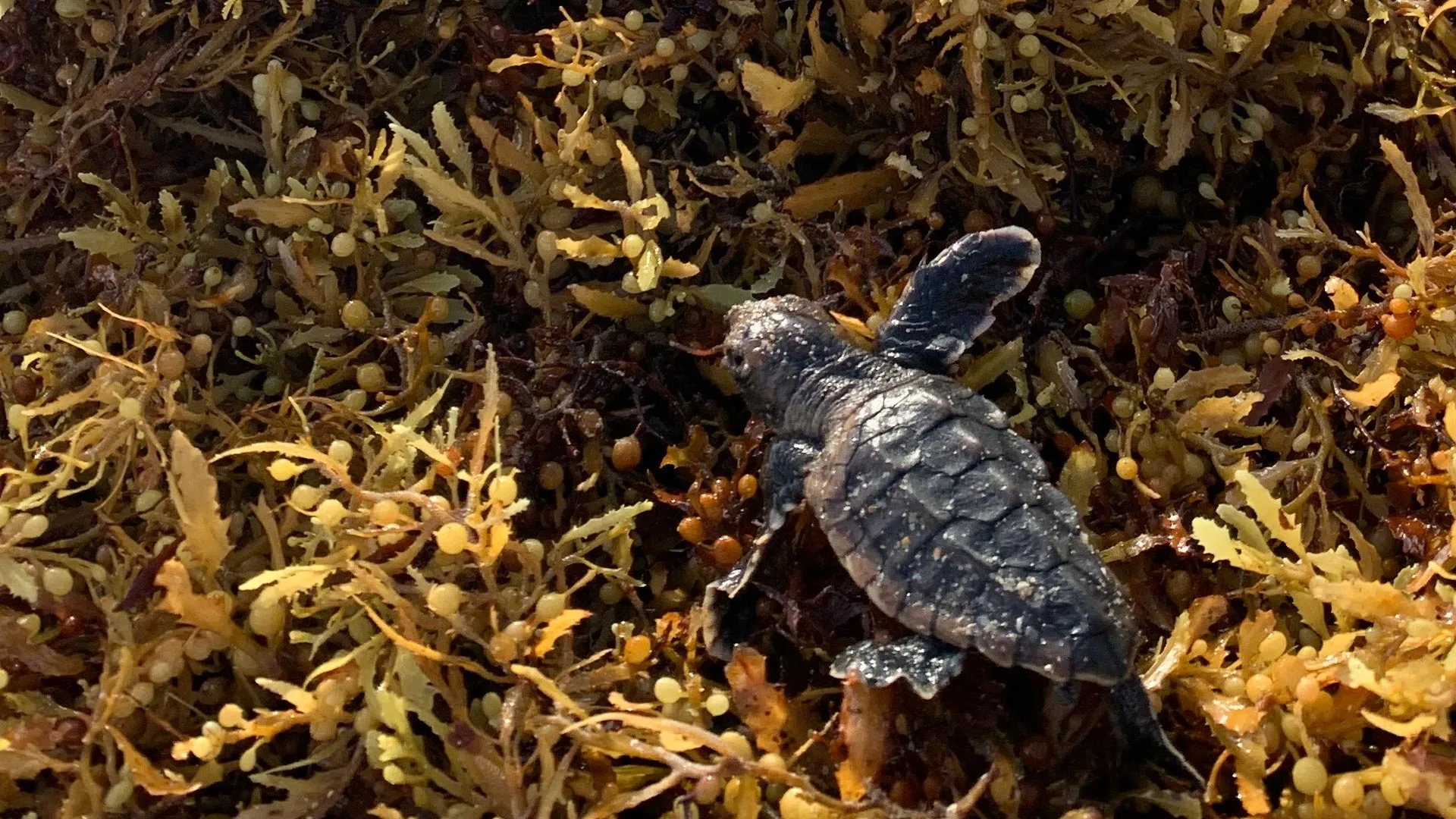
Our Take: Sargassum's Impact on Sea Turtle Hatchlings
The recent findings regarding sargassum seaweed's detrimental impact on sea turtle hatchlings on Florida beaches underscore a critical consequence of evolving ocean conditions. This dense accumulation of seaweed presents a significant physical barrier, drastically impeding the hatchlings' vital journey from nest to sea. While their physiological resilience, evidenced by stable energy stores, is a testament to their inherent survival mechanisms, the prolonged exposure to the surface environment introduces a cascade of heightened risks. Predators, both terrestrial and avian, find an easier target in these delayed hatchlings, and the extended time spent on increasingly hot sands significantly elevates the threat of heat stress, a factor often underestimated in the immediate aftermath of hatching.
This phenomenon serves as a stark, empirical illustration of how interconnected marine ecosystems are responding to broader environmental shifts. The increasing frequency and density of sargassum blooms, often linked to nutrient runoff and warming ocean temperatures, are not isolated events. They represent tangible impacts on vulnerable species, highlighting the cascading effects that can arise from subtle yet persistent changes in oceanographic conditions. World Data Ocean's commitment to generating and integrating real-time, validated data allows us to track such developments with precision. By providing a clear, measurable understanding of these challenges, we empower researchers, conservationists, and policymakers with the intelligence needed to implement effective, data-driven stewardship strategies.
The survival of sea turtle hatchlings is more than a localized conservation concern; it is a key indicator of ocean health. The challenges they face due to sargassum are a microcosm of larger issues impacting marine biodiversity and coastal ecosystems globally. Our approach, rooted in scientific authority and a collaborative spirit, is essential for translating these observations into actionable insights. By fostering a shared understanding of the complexities involved, from the physical impediments on a beach to the underlying climate drivers, we can collectively work towards solutions that protect not only these hatchlings but the entire ocean that sustains us. The urgency of this situation demands a purposeful, impact-oriented response, guided by the validated data that forms the bedrock of our ocean intelligence.