Russia Ships First Crude From Its Giant Vostok Oil Project Through Arctic
Our take
The recent shipment of crude oil from Russia’s Vostok Oil project through the Arctic’s Northern Sea Route marks a significant, albeit concerning, development in global energy logistics and geopolitical strategy. This milestone validates years of investment in infrastructure designed to exploit the receding Arctic ice cap, opening a potentially shorter and cheaper route for Russian oil to reach Asian markets. The move comes amidst heightened tensions in other crucial maritime chokepoints, such as the Strait of Hormuz, where [Iran Threatens To Set Up ‘Exclusion Zone’ Near War-Torn Strait Of Hormuz Following Tanker Attacks] and escalating conflicts are disrupting established trade routes. Furthermore, the operational risks inherent in Arctic navigation were recently highlighted by [Russia’s 20,000-Ton Icebreaker Admiral Makarov Catches Fire During Repairs At Kronstadt Shipyard], a reminder of the challenging environment and potential for unforeseen incidents. The Vostok project itself, with its vast reserves, represents a substantial component of Russia’s long-term energy export strategy, and this initial shipment underscores its growing viability.
The implications extend beyond mere logistical efficiency. The Northern Sea Route's increased utilization directly correlates with the accelerating impacts of climate change on the Arctic, a region undergoing warming at a rate significantly faster than the global average. While the reduced transit times are attractive from an economic perspective, they exacerbate the environmental vulnerabilities of the Arctic ecosystem. The potential for oil spills in this fragile environment is a grave concern, particularly given the challenging conditions for response and remediation. Increased shipping traffic also poses risks to marine wildlife, disrupting migration patterns and increasing the potential for collisions. The events surrounding the recent U.S. strikes on Iranian oil tankers, as detailed in [Video: U.S. Strikes 3 Iranian Oil Tankers After IRGC Targets 2 Navy Warships With Ballistic Missiles], further highlight the volatile nature of global maritime trade and the potential for conflict to disrupt even established routes. The Arctic, previously considered a remote and relatively stable region, is increasingly becoming a theater of strategic competition and heightened risk.
From a data perspective, the accelerated use of the Northern Sea Route necessitates enhanced real-time monitoring and predictive modeling capabilities. Accurate, validated sea ice data, coupled with calibrated weather forecasts and integrated vessel tracking, are crucial for ensuring safe navigation and mitigating environmental risks. Our integrated data ecosystem aims to provide precisely this – a longitudinal, empirical record of Arctic conditions, enabling informed decision-making for shipping operators, policymakers, and environmental agencies. The long-term sustainability of this route, and the associated economic and environmental impacts, hinges on the ability to collect and analyze vast datasets, leveraging peer-reviewed methodologies to understand the complex interplay between climate change, ice dynamics, and maritime activity. The reliance on icebreakers, like the Admiral Makarov, and the infrastructure supporting them, also highlights vulnerabilities and dependencies that warrant careful assessment.
Looking ahead, the question is not whether the Northern Sea Route will continue to develop, but rather how its growth will be managed. Will international collaboration prioritize environmental safeguards and maritime safety, or will the pursuit of economic gain overshadow these crucial considerations? The ongoing geopolitical tensions and the inherent risks of operating in the Arctic demand a measured and data-driven approach. The validation of Vostok Oil’s initial shipment is a clear signal of the shifting landscape of global energy flows, and it underscores the urgent need for robust ocean intelligence to navigate this increasingly complex and volatile environment.
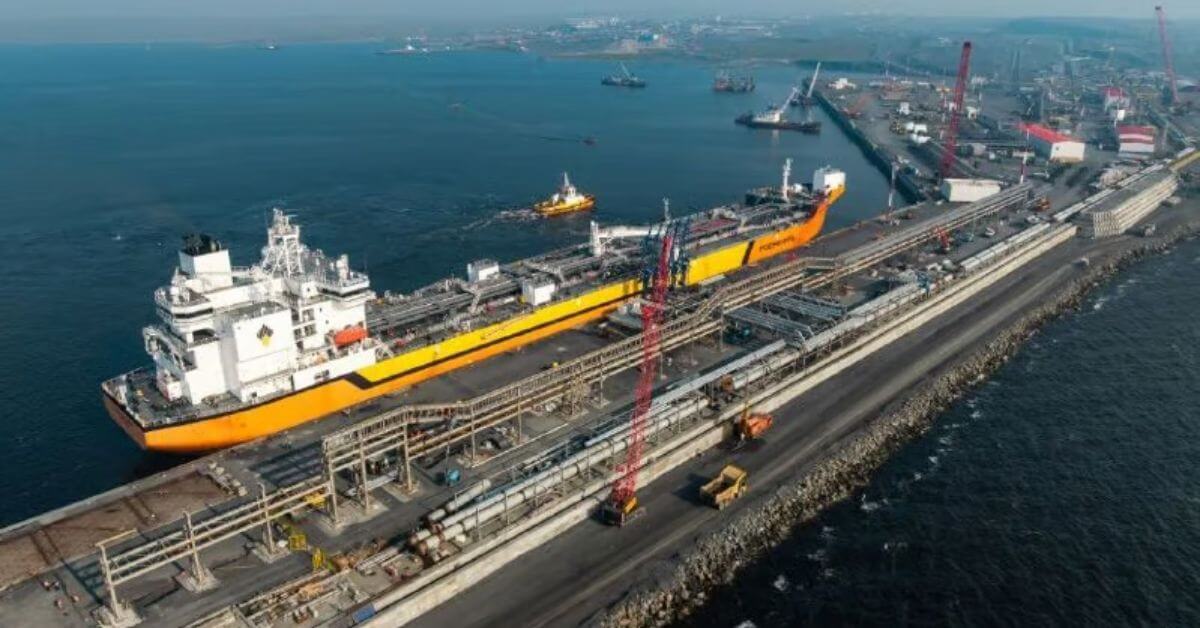
Russia has shipped the first crude oil from its Vostok Oil project through the Arctic.
The first batch was loaded onto the high-ice-class tanker Valentin Pikul at the newly built Sever Bay terminal in Russia’s Taimyr region.
The opening ceremony at the terminal was broadcast on Russian state television.
Another Arctic-class tanker, Akademik Gubkin, was anchored near the terminal and waiting to dock, Sechin told Russian President Vladimir Putin, who watched the ceremony from his office.
The shipment starts crude exports from Vostok Oil, one of Russia’s biggest oil projects. The project is expected to increase the amount of oil moving through the Northern Sea Route as its production grows.
Russia has promoted the Northern Sea Route as a shorter shipping link between Europe and Asia. The route runs along the country’s northern coast.
Vostok Oil Targets 50 Million Tons by 2030
Sechin said Vostok Oil has a resource base of more than 7 billion tons of high-quality oil with low sulfur content.
Russian Deputy Prime Minister Alexander Novak said the oil would be shipped to buyers in the Asia-Pacific region and in the western direction.
Sechin said Vostok Oil is expected to supply 30 million metric tons of crude to the global market in the second half of next year.
By 2030, deliveries are expected to reach 50 million tons a year, he said.
That would be about 1 million barrels per day, or around 10% of Russia’s current oil production, according to Bloomberg calculations.
Sechin said the project could eventually supply up to 100 million tons of crude a year if market demand and economic conditions support it.
He said Vostok Oil could operate for hundreds of years, and potentially longer if exploration continues.
Northern Sea Route Could See More Oil Cargo
More Vostok Oil production could mean more tanker traffic on the Northern Sea Route.
The route has faced several problems, including Western sanctions against Russia, harsh weather and ice conditions, and a shortage of high-ice-class vessels.
Vostok Oil was originally being developed by Rosneft with international traders Trafigura Group, Vitol Group and Mercantile & Maritime.
The three companies sold their stakes in the project in 2022, following Russia’s invasion of Ukraine.
Rosneft had also been looking for other international partners. Two days before Russia invaded Ukraine, then-first vice president Didier Casimiro told reporters to “keep watching this space” when discussing Vostok Oil.
South Korea Tests the Arctic Route
South Korea is also testing the Northern Sea Route for commercial shipping.
The PanStar Acro is the first South Korean container ship to make a trial voyage through the route. It entered Arctic waters on Aug. 31 after leaving Busan New Port on Aug. 22.
The ship is travelling west along Russia’s northern coast. It is expected to pass through the Vilkitsky Strait around Sept. 10.
The Vilkitsky Strait lies between Russia’s Taimyr Peninsula and the Severnaya Zemlya archipelago. It is an important passage on the Northern Sea Route.
The PanStar Acro is travelling through an area close to the Taimyr region, where Vostok Oil’s new export facilities are located.
The ship is scheduled to reach Felixstowe in Britain around Sept. 14.
References: Bloomberg, ajupress
Read on the original site
Open the publisher's page for the full experience