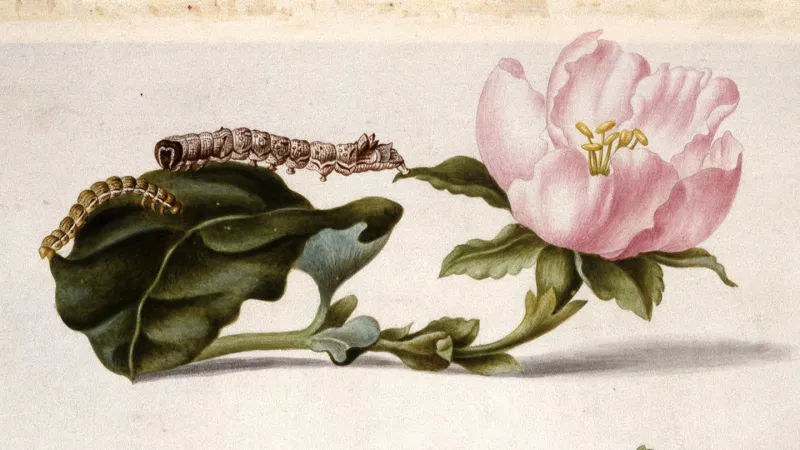
Paintings are not the first place scientists look for hard data. A canvas from the 17th century seems an unlikely candidate for empirical observation. Yet researchers are now working alongside art historians to extract scientific documentation from historic artworks. This is not about subjective interpretation or aesthetic judgment. It is about treating a painted sky as a calibrated record of atmospheric conditions, or a ship's rigging in a seascape as a reference for vessel design and maritime engineering. The collaboration acknowledges that before modern instruments, artists were often the most meticulous observers of their world.
This approach resonates with a principle we see across our coverage: data exists in unexpected forms. Consider the recent Unidentified Specimen Found in Oahu Waters Sparks Ocean Data Inquiry. In that case, a single unexplained observation triggered a need for better documentation and classification. Historic paintings offer a similar challenge, they are visual specimens whose context must be decoded. Another piece in our publication, First West Coast Sea Turtle Nest Documented on Southern California Beach, shows how a single validated event can reshape our understanding of species range shifts. Old paintings may hold comparable longitudinal records of species presence, ice extent, or coastal morphology that predate any written log.
What matters here is the method. The scientists are not guessing. They are cross-referencing pigment chemistry, brushstroke patterns, and known historical weather events. This is peer-reviewed detective work. It turns a static image into an integrated data point in a longer climate or ecological timeline. For our readers, whether researchers, students, or policy advisors, the practical takeaway is clear: historical archives are underutilized sources of measurable, real-time (for their era) environmental baselines. If you are studying marine biology or ocean intelligence, do not ignore the library's art collection. A painting of a Dutch harbor in 1650 may contain validated information about sea level, fish stocks, or storm frequency that no written record preserved.
The honest reaction here is one of calibrated optimism. This work is promising, but it demands discipline. It is easy to overinterpret a cloud formation or a wave pattern. The value comes only when empirical standards are applied: What is the pigment's age? Was the artist known for realism or exaggeration? Can the scene be geolocated and dated? These are the questions that turn an artwork into a climate indicator.
One specific consequence to watch is how this method might apply to underwater or coastal environments. If paintings can document historical marine conditions, we may soon have a more complete picture of how ocean systems have changed over centuries, not just decades. That would give us a longitudinal record that satellite data, which only goes back to the late 20th century, cannot provide. The next step is validation. A reader who asks about this should watch for peer-reviewed studies that compare a painting-derived estimate with independent historical records, such as ship logs or tide gauge readings. That is where the claim becomes actionable. Until then, treat the canvas as a hypothesis, but a hypothesis worth testing.